
10 Incredible David Lynch Movie Scenes That Highlight Just How Much Of A Genius He Was
David Lynchwas always a visionary, and he was able to instill feelings of unease and awe into every project down to every frame. With haunting themes, strange occurrences, and difficult-to-follow scripts, his stories require a lot of concentration and as much attention as he had given to every detail. As mind-bending as some of his movies may be, having the opportunity to gain at least some insights into this creative genius's mind can only be viewed as an honor.
He so sometimes chose to film in black and white, used long camera shots to create scenes that seemingly never ended, and utilized music in the most disturbing and beautiful ways. David Lynch's films may not always have followed a linear structure, his characters were very often not what they seemed, and his twists left audiences aghast as the credits were rolling. Most of his films also happen to contain some of the most shocking and mesmerizing scenes in cinema history.
10 Dune (1984)
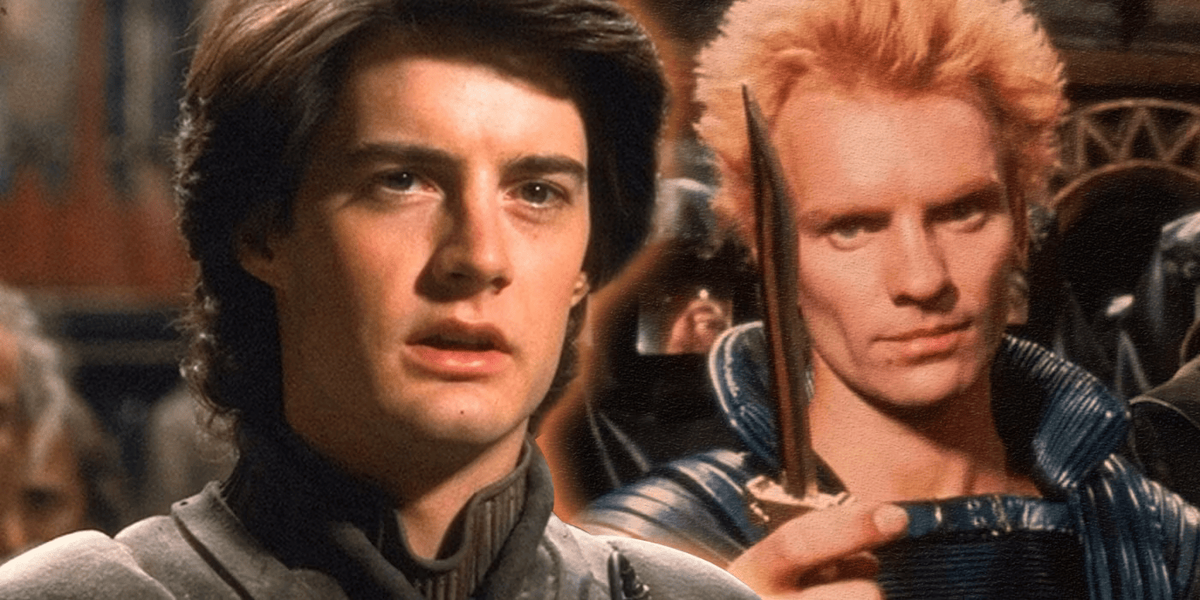
Paul Atreides And Feyd-Rautha Harkonnen Meet For The First Time

Denis Villeneuve may have given the world a completely new and in-depth interpretation of the Frank Herbert classic, but David Lynch attempted to tell this story back in 1984. His version was not quite as well-received, and the director himself admitted it was not his best work. The long, convoluted story felt too rushed to fit into one movie, which is probably why the current version is being told across multiple installments.
However, it still being a David Lynch film, there are quite a few beautiful scenes to be found in this sci-fi adventure. The climactic scene of the film sees Paul Atreides (Kyle MacLachlan) meeting his long-time antagonist, Feyd-Rautha Harkonnen (Sting) in the most dramatic of settings. The gothic throne room is full of moody shadows and surreal designs that fit in so well for world-building, and emphasize the importance of this high-stakes event.

Dune
- Release Date
- December 14, 1984
- Runtime
- 137 minutes
- Director
- David Lynch
- Writers
- David Lynch
Cast
 Paul Atreides
 Francesca AnnisLady Jessica
Dune, released on December 14, 1984, is a science fiction film directed by David Lynch. Set in a distant future, it follows the journey of Paul Atreides on the desert planet of Arrakis, where the precious spice Melange is found. This substance is pivotal for space travel and consciousness expansion.


The way both characters behave towards each other, with Paul more subdued and honorable and Feyd-Rautha full of arrogance, shows Lynch's clear vision. The use of light and shadow really added to the feel of both the characters and felt like a good way of highlighting their animosity.
9 Inland Empire (2006)
Laura Dern's Disconcerting Smile

Lynch was known for many things, including his confounding plots and atmospheric lighting. He was also certainly known for scaring his audiences senseless. While many scenes across his vast filmography have had the honor of eliciting a gasp or even a shriek, sometimes the more subtle frights can be just as effective.
This seemingly simple scene contains so much artistry both on Dern and Lynch's part.
On the surface, the scene itself can be simply described as an actor smiling at the camera, but in Lynch's capability, it becomes so much more. In a film filled with dream-like sequences and disjointed storytelling, Laura Dern's role shifts depending on what story is currently unfolding.

Your comment has not been saved
Inland Empire
- Release Date
- September 6, 2006
- Runtime
- 180 minutes
- Director
- David Lynch
- Writers
- David Lynch
Cast
 Laura Dern
 Jeremy Irons
 Justin Theroux
- Karolina Gruszka
Inland Empire, directed by David Lynch, is a surreal psychological thriller released in 2006. The film stars Laura Dern as an actress whose reality begins to unravel when she takes on a challenging role in a mysterious film. With a narrative that blends multiple storylines and dream-like sequences, the film explores themes of identity, illusion, and the boundaries of reality.
This seemingly simple scene contains so much artistry both on Dern and Lynch's part. With his choice of lighting, close-ups, and framing, the director manages to create an atmosphere of almost claustrophobic isolation. The viewer cannot look away as the actor's face fills the screen. Meanwhile, Laura Dern's shift from a regular curl of the lips to an almost horror-like snarl is acting at its finest, as she follows Lynch's direction to a tee.
8 Lost Highway (1997)
Car Chase Scene
Audiences are more than used to watching car chases in action movies, where the vehicles speed through cities or picturesque landscapes, leaving a trail of destruction in their wake and displaying the hero driver's impressive skills. But, when David Lynch films a car chase, there is very little of that.
Instead, in Lost Highway, he focused on the primal fear and psychological torment of this particular interaction. As the streetlights blur, so do the lines between reality. Lynch's use of sound is particularly exceptional here, as the guttural roars of the engine instill feelings of rage and dread in both viewers and the characters onscreen.

Your comment has not been saved
Lost Highway
- Release Date
- January 15, 1997
- Runtime
- 134 minutes
- Director
- David Lynch
- Writers
- David Lynch, Barry Gifford
Cast
 Bill Pullman
Lost Highway is a psychological thriller directed by David Lynch. Released in 1997, the film stars Bill Pullman as Fred Madison, a jazz saxophonist entangled in a complex mystery involving his wife and a parallel existence. The narrative combines elements of surrealism and noir, weaving a story that challenges perceptions of identity and reality. Patricia Arquette co-stars, and the enigmatic plot unfolds through Lynch's signature atmospheric and stylistic approach.
The intermittent silence highlights that feeling of panic and isolation, and the close-ups of Robert Loggia and Balthazar Getty's faces show a range of emotions as the terrifying tailgating happens. In a film full of genre-bending ideas, this sequence is a prime example of how David Lynch was able to take a well-known trope and put his own stamp on it.
7 The Straight Story (1999)
The Story Of The Deer Lady

It's quite telling of Lynch's surreal mind that a film that centers on an elderly man traveling across state lines on a lawn tractor is one of his most conventional projects. While the story may be mostly straightforward, as it follows Alvin's (Richard Farnsworth) journey to visit his ailing brother, there are still many moments that are "classic Lynch".
As he encounters various characters on his road trip of sorts, viewers are introduced to a host of quirky and strange personalities. One that stands out is the distraught Deer Woman (Barbara E. Robertson), who tells her surreal story with so much emotion and heart, all the while leaving the audience baffled and confused.

Your comment has not been saved
The Straight Story
- Release Date
- November 3, 1999
- Director
- David Lynch
- Writers
- Joan Roach, Mary Sweeney
Cast
- Richard Farnsworth
 Sissy Spacek
The Straight Story, directed by David Lynch, is a biographical film depicting Alvin Straight's journey across the Midwest on a lawn mower to reconcile with his ailing brother. Richard Farnsworth stars as the elderly Alvin, joined by Sissy Spacek as his supportive daughter, Rose. Based on a true story, the film explores themes of family, perseverance, and redemption.
The scene could have been played purely for comedy, to add an extra laugh, or to entertain, but Lynch was able to make it so much more. Filled with anxiety, showcasing how certain obstacles play such an important role in life, this seemingly mundane speech is certainly food for thought.
6 Twin Peaks: Fire Walk With Me (1992)
Bowie's Cameo
Just as in the TV series, there are many memorable moments in the Twin Peaks film, but having David Bowie involved adds another layer of importance to this particular scene. The two artists had been quite close and shared a deep respect for one another, and having a star of Bowie's caliber in this surreal cameo was a stroke of genius that ensured viewers would pay attention.
Even if they weren't sure exactly what was going on. Bowie as Philip Jeffries, enters in a haze of chaos and confusion, seeing as he had technically been missing for two years. His acting is purposefully erratic and works well with the surreal intention of the scene that proceeds to unfold.

Your comment has not been saved
Twin Peaks: Fire Walk With Me
- Release Date
- June 3, 1992
- Runtime
- 135 minutes
- Director
- David Lynch
- Writers
- Robert Engels
- Producers
- Francis Bouygues, Gregg Fienberg
Cast
 Leland Palmer
- Sheryl LeeLaura Palmer
Twin Peaks: Fire Walk with Me is a prequel to the television series Twin Peaks, exploring the last seven days of Laura Palmer's life. Set in the towns of Deer Meadow and Twin Peaks, the film follows FBI Agent Dale Cooper's investigation into dark visions and the mysterious disappearance of Agent Desmond.
The use of flickering lights and the ever more baffling words coming out of Jeffries' mouth culminate in his character just disappearing without a trace. The audience is left with even more questions, and Lynch's presence in the scene seems like a tongue-in-cheek nod to the viewers.
5 Wild at Heart (1990)
Nicolas Cage Singing "Love Me"
A lot of Lynch's films centered around the exploration of the human psyche, and love is a very big part of being human. This feeling is on full display in the bar scene in Wild at Heart, as Sailor (Nicolas Cage) and Lula (Laura Dern) take a break from their chaotic road trip. The scene starts out like a rock music video, complete with a full band and rowdy crowd, but transforms into a moment of genuine affection and beauty among the mayhem of the film.

Your comment has not been saved
Wild at Heart
- Release Date
- August 17, 1990
- Runtime
- 125 Minutes
- Director
- David Lynch
- Writers
- Barry Gifford, David Lynch
Cast
 Sailor
- Laura DernLula
Wild at Heart is a 1990 film directed by David Lynch, based on the novel by Barry Gifford. The story follows Sailor Ripley, played by Nicolas Cage, and Lula Pace Fortune, played by Laura Dern, as they embark on a violent and surreal road trip across the American South. The film intertwines elements of romance, crime, and dark fantasy, earning the Palme d'Or at the Cannes Film Festival.
As Cage begins to sing an Elvis Presley classic, the crowd's reaction becomes reminiscent of a group of adoring fans who cheer and swoon at every lyric. The connection between the two characters is electric, and Cage's performance is full of passion and desire. Dern seems to melt at this display of affection, while the lights become softer and the formerly-ruffian band seemingly accompanies this love ballad on their instruments. The scene manages to be romantic while remaining distinctly Lynchian.
4 Elephant Man (1980)
The Last Sleep Speech

In one of Lynch's most emotional and heartbreaking films, he tells the story of John Merrick (John Hurt) who has spent his life isolated and cast out due to his physical appearance. The audience spends the entire film seeing how badly Merrick was treated, abused, and ostracized, resulting in a complete loss of dignity for this tragic character.
Though he was able to experience some joy and companionship when Dr. Treves (Anthony Hopkins) took him under his wing and ushered him into society, it inevitably ended badly. As Merrick is forced back into a life of hiding, filled with solitude and isolation, he also feels a sense of longing for what he once had and has now lost.

Your comment has not been saved
The Elephant Man
- Release Date
- October 10, 1980
- Runtime
- 124 Minutes
- Director
- David Lynch
- Writers
- Christopher De Vore, Eric Bergren, David Lynch, Frederick Treves, Ashley Montagu
Cast

The Elephant Man is a 1980 film directed by David Lynch, chronicling the life of Joseph Merrick, known as John Merrick in the film. Set in 19th-century London, it follows a Victorian surgeon who discovers the intelligence and sensitivity behind Merrick's severe disfigurement.
Filled with the knowledge that he is doomed to a never-ending feeling of loneliness, he decides to have "one last sleep", knowing full well that it will kill him. The way Hurt delivers the emotional lines and the way Lynch shot the scene make the moment even more gut-wrenching. Sadness is mixed with anger and frustration, as the director ends this devastating story in the most devastating way possible.
3 Eraserhead (1977)
The Baby Scene
David Lynch's feature film directorial debut remains one of his most iconic and revered. Filled with so many surreal and grotesque moments, it made a huge impact on audiences and allowed the director to introduce himself on his own terms. The scene where Henry Spencer (Jack Nance) is tasked with taking care of his "inhuman baby" has got to be one of Lynch's most controversial and thought-provoking segments.
The horror is both real and metaphorical, and the use of practical effects and camera trickery produces terrifying results.
The horror is both real and metaphorical, and the use of practical effects and camera trickery produces terrifying results. The genius of this scene lies in the fact that its intention isn't simply to evoke dread in the frightening imagery, but to highlight a universal fear of the responsibility of parenthood.

Your comment has not been saved
Eraserhead
- Release Date
- March 19, 1977
- Runtime
- 89minutes
- Director
- David Lynch
- Writers
- David Lynch
Cast
- Jack Nance
David Lynch's Eraserhead is a surrealist horror movie where Henry Spencer, played by Jack Nance, deals with the terrifying challenges of fatherhood, including caring for his deformed child. Released in 1977, the black-and-white film has sparked many discussions about its meaning and themes.
By exaggerating the frightening features and behavior of the child he's meant to protect, Lynch could highlight the emotional burden brought by the fear of caring for a child in a very visual way. As per the director's trademark, the surrealism onscreen isn't just meant to shock, but rather convey a much deeper meaning. That being said, the gruesome visual impact of the scene is unforgettable in itself.
2 Mulholland Drive (2001)
The Club Silencio Scene
By the time the scene at Club Silencio arrives, viewers have already been on a journey of confusion, trauma, and jump scares. The non-linear storytelling and dreamlike scenarios are all very Lynchian, but just as the story seems to be going one way, he creates a whole sequence of events that change the course of the whole movie.
The way he sets the scene, with his signature use of dim lighting and eerie surroundings, is a clear indication that something important is about to happen. Naomi Watts and Laura Harring's performances are beautiful and visceral as they take in this unknown dreamscape that unfolds before them onstage.

Your comment has not been saved
Mulholland Drive
- Release Date
- October 19, 2001
- Runtime
- 147 minutes
- Director
- David Lynch
- Writers
- David Lynch
Cast
 Laura Elena Harring
David Lynch's Mulholland Drive is a neo-noir mystery about aspiring actress Betty, who becomes involved with a woman suffering from amnesia and a mysterious blue box. Starring Naomi Watts and Laura Harring, the 2001 surrealist film explores themes of identity, memory, and Hollywood's dark side.
The outstanding Rebekah Del Rio's voice tells a heartbreaking story, which becomes a film within a film. It's a genius way of providing a twist in the most surreal and theatrical way, which Lynch did better than anyone. This particular scene in Mulholland Drive is a masterclass in subversion.
1 Blue Velvet (1986)
Baby Wants A Blue Velvet Scene
One of David Lynch's most iconic but also divisive films, Blue Velvet has as many dreamy shots in its two-hour run, as it has nightmarish scenarios that have left viewers haunted since the very first showing. As he explores what lies beneath the picture-perfect lawns of American suburbia, he uncovers a seedy underbelly that's worse than possibly imaginable.
Frank Booth (Dennis Hopper) is one of the most heinous villains in cinema, and his perversion and abuse of power are on full display in this scene. The use of the seemingly luxurious and soft fabric which became the overarching metaphor of the film as well as its title, is at its most literal in this truly disturbing scene.

Your comment has not been saved
Blue Velvet
- Release Date
- January 1, 1986
- Runtime
- 120 minutes
- Director
- David Lynch
- Writers
- David Lynch
Cast

Written and directed by David Lynch, Blue Velvet is a 1986 Thriller and Mystery film. Starring Kyle MacLachlan and Isabella Rossellini, the film follows a young man that becomes embroiled in a crime.
Isabella Rossellini gives a harrowing performance in which she is forced to endure this horrific abuse while remaining sensual and compliant with her abuser. While the scene is designed to shock, it does not veer into being gratuitous. It remains one of those incomparable David Lynch moments that are completely unique to his vision.






Your comment has not been saved