
20 Years Later, I'm Still Convinced Revenge Of The Sith Is The Best Star Wars Movie
20 years after the release of Star Wars: Episode III - Revenge of the Sith, I still believe it is the best Star Warsmovie. Although I grew up in the 90s, which made me more than a little biased toward the prequels, I also grew up watching the original Star Wars trilogy. I still have a deep love for those movies, and agree that they are among Star Wars' best movies, but there are also many special things about Revenge of the Sith.
The prequels received plenty of flak when they were released, Star Wars: Episode I - The Phantom Menace in particular. While the prequel trilogy wasn't without its flaws, I believe the strengths of the movies far outweigh their weaknesses. This is particularly true of Revenge of the Sith. Despite persistent criticism about the movie's dialogue and certain plot points, I believe the movie's importance to the Star Wars timeline, the critical events depicted in the movie, and the significance of the characters' journeys at this point in time all make Revenge of the Sith the best Star Wars movie.
Revenge Of The Sith Is Key To The Star Wars Story
Anakin's Fall To The Dark Side Defined So Much Of The Star Wars Timeline
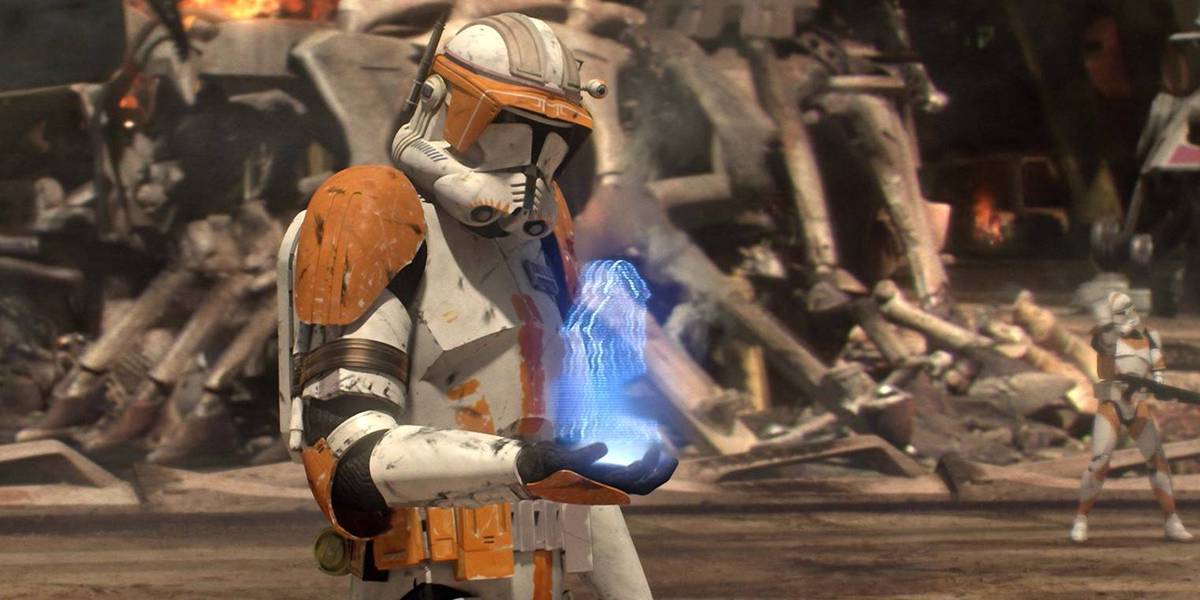
One of the most important arcs in Revenge of the Sith is of course Anakin's fall to the dark side, but that turn has implications far beyond just Anakin's story. Yes, this is the creation of Darth Vader, but it is also the catalyzing event for so much in Star Wars. Undoubtedly, Palpatine would have carried out Order 66 at this point whether Anakin fell or not, as his true identity had already been uncovered. Anakin's turn to the dark side made the Jedi so much more susceptible during this attack, though.
This is true not only because Vader (sadly) slaughtered the younglings in the Council Chambers within the Jedi Order, but also because being a Jedi had made him so much more dangerous than the clones alone. The clones could execute Jedi effectively, as deaths like Aayla Secura's made quite clear, but at the same time, Jedi like Yoda, Obi-Wan Kenobi, and Ahsoka Tano proved that there were ways to survive Order 66 when attacked by clones alone. Perhaps, had Anakin not been the one leading the 501st, the Jedi in the Temple would have had a better chance of survival.
Anakin's turn to the dark side also impacted so many other characters' stories. Although the circumstances of Padmé's death in Revenge of the Sith remain somewhat unclear (the droid seems to only guess that she 'lost the will to live'), it's evident that Anakin's fall was a major factor. Both his fall and Padmé's death also meant that Luke and Leia had to be raised separately and in hiding, priming them for the roles they would ultimately play in the Rebellion. This also shaped how Yoda and Obi-Wan responded to the fall of the Jedi and the Republic.
Anakin Skywalker's fall to the dark side also perfectly reinforced the message George Lucas intended Star Wars to have. That is, Anakin's prequel trilogy story proved that even the most innocent can turn to evil when subjected to the right circumstances—this is why Lucas chose to have Anakin begin as a young boy in The Phantom Menace, as controversial as that decision was. In the end, this message was just as important as that of the original trilogy: even the most evil people can still be redeemed.
Anakin Skywalker's fall to the dark side also perfectly reinforced the message George Lucas intended Star Wars to have.
Many Of Star Wars' Most Important Events Happen In Revenge Of The Sith
The Jedi And The Republic Also Fall In Revenge Of The Sith

In addition to Anakin's fall to the dark side, Revenge of the Sith depicts the end of the Republic and the near eradication of the Jedi. Both events had long-lasting effects in Star Wars. In fact, both still have yet to be truly resolved in Star Wars movies and TV shows. Even by the end of the sequel trilogy, the Jedi had not returned to their former glory—not even close—and the New Republic had met a gruesome end. Revenge of the Sith therefore sees the biggest change to the galaxy shown throughout all of Star Wars so far.
Much more than just representing these events on screen, though, Revenge of the Sith details how these things transpired. After all, Padmé's quote about liberty dying has become one of Star Wars' most famous lines, and for good reason. Revenge of the Sith shows in painful detail how institutions as mighty as the Jedi Order and the Republic were able to be taken down, and that insight into these major events makes Revenge of the Sith not only fascinating to watch but also absolutely essential to fully understand Star Wars.
Revenge of the Sith shows in painful detail how institutions as mighty as the Jedi Order and the Republic were able to be taken down.
Revenge Of The Sith Is The Peak Of Anakin's Power
Before The Darth Vader Suit, This Was When Anakin Was Most Powerful

Anakin Skywalker is easily one of Star Wars' most powerful Jedi, and he becomes one of Star Wars' most powerful Sith. In both cases, Revenge of the Sith represents Anakin Skywalker/Darth Vader at the height of his power. George Lucas himself has indicated that this is the case, adding that the limitations of Vader's suit and his significant injuries following his battle with Obi-Wan on Mustafar caused a steep decline in Anakin's increasing power.
While Anakin's ego and overestimation of his abilities may have led him to his defeat on Mustafar at the hands of Obi-Wan, it's nevertheless true that he was at his most powerful in Revenge of the Sith. He proves this early in the movie, finally defeating Count Dooku, a Sith Lord, after he lost to him in Star Wars: Episode II - Attack of the Clones. As the dark side also allows for more immediate access to power, when Anakin turns to the dark side, he also taps into a newfound (and much less contained) power.
Anakin And Obi-Wan's Battle On Mustafar Is Iconic
This Is One Of The Best Lightsaber Battles In Star Wars
One of the best aspects of Revenge of the Sith is the battle between Obi-Wan and Anakin/Vader on Mustafar. This is one of the best duels in Star Wars, if not the single best, rivaling even the fan-favorite Duel of the Fates fight between Qui-Gon Jinn, Darth Maul, and Obi-Wan in The Phantom Menace. Beyond just a beautifully choreographed duel (although it is that as well), this battle is also profound because it has such massive implications for Obi-Wan and Anakin's Star Wars stories.
During this battle, Anakin reveals how disillusioned he has become with the Jedi and the Republic, confirming that his fall was due in large part to his skewed perspective, which Palpatine's manipulations had directly shaped. In turn, Obi-Wan's responses to Anakin reveal how painful Anakin's turn to the dark side was for him personally. This set the stage for not only what Obi-Wan says in A New Hope about Anakin but also Obi-Wan's feelings in Obi-Wan Kenobi.
It's also simply one of the most enjoyable lightsaber duels to watch in the franchise. Ewan McGregor and Hayden Christensen are both incredibly skilled with lightsabers, and behind-the-scenes footage has confirmed how hard they worked to get to that point. That certainly paid off, as the Mustafar duel ranks among the very best in the franchise, even 20 years later. While the original Star Wars trilogy will always be cherished in the franchise, I'm still convinced that Star Wars: Episode III - Revenge of the Sith is the single best Star Wars movie.

Star Wars: Episode III - Revenge of the Sith

- Release Date
- May 19, 2005
- Runtime
- 140 Minutes
- Director
- George Lucas
- Writers
- George Lucas, John Ostrander, Jan Duursema
- Producers
- Rick McCallum
Cast
 Obi-Wan Kenobi
 Anakin Skywalker / Darth Vader
Star Wars: Episode III - Revenge of the Sith details the fall of the Jedi Order and Anakin Skywalker's transformation under the influence of Darth Sidious. Released in 2005, the film explores Anakin's internal conflict and the shifting political landscape, leading to the rise of the Galactic Empire.
- Sequel(s)
- Solo: A Star Wars Story, Rogue One: A Star Wars Story, Star Wars: Episode IV - A New Hope, Star Wars: Episode V - The Empire Strikes Back, Star Wars: Episode VI - Return of the Jedi, Star Wars: Episode VII - The Force Awakens, Star Wars: Episode VIII - The Last Jedi, Star Wars: Episode IX - The Rise of Skywalker
- Franchise(s)
- Star Wars
- Budget
- $113 Million
- Studio(s)
- Lucasfilm
- Distributor(s)
- 20th Century Fox





Your comment has not been saved