Tranding
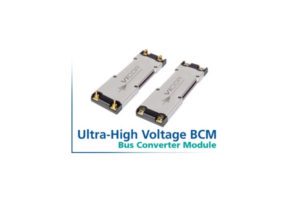
A number of different power systems, including 3-phase power supplies and tethered unmanned autonomous vehicles (UAVs) operate with bus voltages in the hundreds of volts, yet have been faced with a lack of suitable ultra-high voltage power products. Industrial 3-phase systems, for example, have historically used large, expensive custom products that frequently require significant engineering effort to develop systems to convert to lower, more manageable voltages. Our applications engineers have seen such systems being developed across the world and recognized the lack of good solutions.
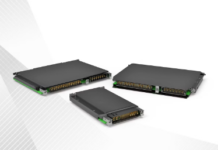
Previously, easy-to-use power components haven’t been available for voltages above 400V; some customers have even called this range a “wasteland” of power products. The introduction of the new Vicor Ultra High Voltage Bus Converter Module (UHV BCM), however, changes this. Using the same Sine Amplitude Converter (SAC) technology as our existing low-voltage and high-voltage BCMs and non-isolated NBMs, these new products provide designers with a simple power component that operates in the high hundreds of volts, making these systems cheaper, more efficient and much smaller.
Systems generally use 3-phase supplies because they need to deliver high power, frequently more than the 1.75kW throughput of the current device. To meet this need, the UHV BCM can be paralleled; most of the early applications parallel two, four or eight UHV BCMs to meet the requirements of multi-kW loads.
Although 3-phase front ends are a big opportunity for the product, there is also huge interest from designers of UAVs. Whether designing airborne UAVs, marine UAVs, even UAVs for caves, the big challenge engineers must overcome is transmitting power through the tether cable.
Like other BCMs, the UHV BCMs can operate bidirectionally. A pair of back-to-back modules will step up the voltage by a factor of 16, transmit the power along the cable, then step the voltage back down by the same factor of 16. The UHV BCMs provide isolation, which is important in some UAV applications, but the big benefit is the reduction in power loss across the cable using the higher distribution voltage (power loss increases with the square of current). This means that the tether cables can be smaller and lighter, while reducing any voltage drop across the tether.
With the first UHV BCM already helping engineers to overcome their high-voltage power design challenges, 400V to 700V is no longer a power component “wasteland”, and designing systems for these voltages has become a much more straightforward proposition.
For more Information Visit: powerblog.vicorpower.com

Be the first to know about new products and promotions.