Here are some of the ways scientists are using CRISPR to create healthier, more appealing, and more resilient foods — putting us closer to a future in which every person not only has access to the healthy foods they need, but actually wants to eat those foods, too.
Boosted tomatoes
In September 2021, Japanese startup Sanatech Seed began selling the first CRISPR’d food to reach the consumer market: a variety of tomatoes containing high amounts of gamma aminobutyric acid (GABA).
GABA is a compound produced naturally in our brains. Research has linked it to reduced feelings of stress and anxiety, and some scientists suspect that increasing GABA levels may be able to treat high blood pressure, insomnia, and other health problems, too.
Tastier greens
Mustard greens are a low-calorie, nutrient-dense leafy vegetable, but they have a distinctly bitter flavor caused by a reaction between two components — and that flavor can discourage some grocery shoppers from putting the healthy veggie in their carts.
“People want healthy salads, but they keep buying romaine because they’re used to the flavor,” Tom Adams, CEO of food-tech startup PairWise, told Singularity Hub.
Using CRISPR, Pairwise edited out one of the two bitterness-causing components, creating mustard greens with a milder taste. The FDA has already approved the greens, and shoppers in California and the Pacific Northwest should start to see them in the produce section in 2023.
…
Prettier potatoes
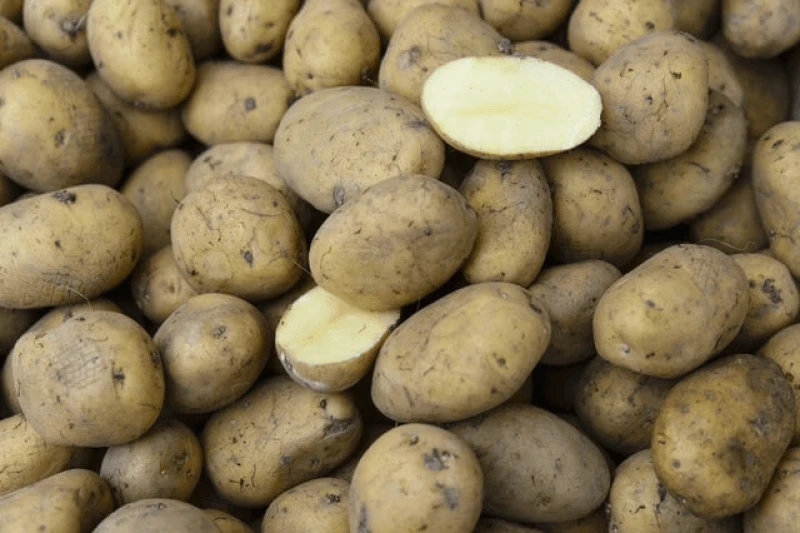
When you slice or peel a potato, enzymes called “polyphenol oxidases” (PPOs) cause the starches in the tuber to react with the air and turn the potato’s flesh brown — this can affect its nutritional value, as well as make the potato look less appealing.
In 2020, researchers at the Instituto Nacional de Tecnología Agropecuaria Balcarce in Argentina revealed that they’d used CRISPR to silence a gene that instructs cells to produce PPOs, resulting in potatoes with reduced browning.
This is an excerpt. Read the original post here













 Viewpoint — Fact checking MAHA mythmakers: How wellness influencers and RFK, Jr. undermine American science and health
 Viewpoint: Video — Big Solar is gobbling up productive agricultural land and hurting farmers yet providing little energy or sustainabilty gains
 Fighting deforestation with CO2: Biotechnology breakthrough creates sustainable palm oil alternative for cosmetics
 Trust issues: What happens when therapists use ChatGPT?
 California, Washington, Oregon forge immunization alliance to safeguard vaccine access against federal undermining
 30-year-old tomato line shows genetic resistance to devastating virus
 The free-range chicken dilemma: Better for birds, but with substantial costs
 ‘You have to treat the brain first’: Rethinking chronic pain with Sanjay Gupta