Advancing Medical Data Sharing: A Study on Synthetic Ultrasound Images of Breast Tissue
Advancing Medical Data Sharing: A Study on Synthetic Ultrasound Images of Breast Tissue
In the rapidly evolving landscape of healthcare, the integration of artificial intelligence (AI) into medical data analysis has emerged as a transformative force. A significant challenge within this realm is the effective sharing of medical data across various institutions. While the potential benefits of sharing medical big data are vast, the concerns surrounding patient privacy and data misuse present formidable barriers. As healthcare systems continue to grapple with these challenges, innovative approaches are necessary to facilitate secure and efficient data sharing while ensuring patient confidentiality.
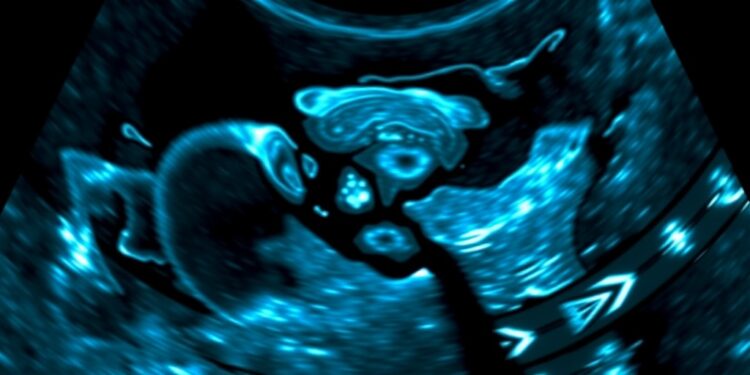
At the forefront of this discussion is the work of Professor Zhou and his distinguished team, who have developed CoLDiT, a groundbreaking conditional latent diffusion model. This model harnesses the power of a diffusion transformer (DiT) backbone to generate highly realistic breast ultrasound images, conditioned specifically on Breast Imaging-Reporting and Data System (BI-RADS) categories. This innovation represents a significant step towards overcoming the data-sharing barriers that have long hindered medical research.
The CoLDiT model was trained on an extensive and diverse dataset, comprising 9,705 breast ultrasound images sourced from 5,243 patients across 202 hospitals. By incorporating images obtained from various ultrasound vendors, the team ensured a comprehensive representation of the variations inherent in real-world breast ultrasound imaging. This multidimensional approach not only enhances the diversity of the dataset but also fosters the generation of more realistic synthetic images.
A critical aspect of this study was the validation of privacy protection during the image generation process. To demonstrate the efficacy of their approach, the team conducted a nearest neighbor analysis. This analysis revealed that the synthetic images produced by CoLDiT did not reproduce any images from the original training dataset, thereby safeguarding patient privacy and upholding ethical standards in data use. This achievement is particularly noteworthy given the increasing scrutiny on data privacy in the health sector.
Further reinforcing the value of CoLDiT, the team invited a cohort of seasoned radiologists to evaluate both the realism and diagnostic accuracy of the generated images. The assessment demonstrated that while one senior radiologist exhibited commendable performance with an area under the receiver operating characteristic curve (AUC) exceeding 0.7, the remaining radiologists achieved AUC scores ranging from 0.53 to 0.63. These findings indicate a promising foundation for the application of synthetic data in clinical scenarios.
To showcase the model’s practical utility, the team also utilized the synthetic breast ultrasound images for data augmentation within a BI-RADS classification model. The results from this experiment were enlightening; substituting half of the real images in the training set with synthetic ones maintained the model’s performance levels, highlighting the potential for synthetic imagery to enrich training datasets without compromising diagnostic accuracy.
This pioneering research stands out for several reasons. First, the utilization of a vast, multicenter dataset encompassing diverse sources fosters the ability to capture a wide array of variations found in real breast ultrasound images. This comprehensive approach leads to the creation of synthetic images that are not only visually realistic but also clinically relevant, thus enhancing their applicability in medical contexts.
Second, the decision to employ a pure transformer backbone rather than traditional U-Net architectures leverages the transformers’ innate capabilities in capturing long-range dependencies. This critical technological choice enables CoLDiT to produce images that are more coherent and detailed compared to previous models, thus pushing the boundaries of what synthetic data can achieve.
Moreover, the conditioning of image synthesis on BI-RADS labels represents a significant advancement in medical imaging. By generating ultrasound images that align closely with specific BI-RADS categories, the CoLDiT model enables tailored image synthesis for various clinical scenarios. This functionality is essential for accurate diagnosis and treatment planning, offering a powerful tool for radiologists and clinicians alike.
Professor Zhou’s team firmly advocates for the role of synthetic data as a pioneering solution to the privacy challenges faced in medical data sharing. They perceive this advancement as a crucial driver in the secure utilization of medical big data, aimed at accelerating innovations in both medical research and clinical applications. The ability to generate high-quality synthetic datasets not only supports the training of diagnostic models but also enhances the overall quality of medical services provided to patients.
Looking ahead, the potential applications of the CoLDiT model are expansive. The team envisions a future where generative artificial intelligence is seamlessly integrated with a variety of medical imaging modalities, ranging from MRI and CT scans to digital pathology. Such integration would not only validate the adaptability of their approach across different medical scenarios but also foster a new era of precision in medical imaging.
In conclusion, the development of CoLDiT heralds a progressive shift in how medical data can be utilized safely and effectively. By addressing the dual challenges of privacy and data utility, this innovative model not only protects patient confidentiality but also enhances the quality of medical research and diagnosis. The implications of this research are profound, paving the way for the secure sharing of medical data and the potential for AI-driven advancements in healthcare.
As the healthcare landscape continues to evolve rapidly, breakthroughs like CoLDiT serve as a testament to the importance of fostering innovation while prioritizing patient privacy. The work of Professor Zhou and his team exemplifies the convergence of technology and medicine, ultimately committing to improving patient health and medical services.
Subject of Research: Medical data sharing and synthetic imaging
Article Title: Synthetic Breast Ultrasound Images: A Study to Overcome Medical Data Sharing Barriers
News Publication Date: 3-Dec-2024
Web References: DOI: 10.34133/research.0532
References: Not applicable
Image Credits: Not applicable
Keywords: medical big data, synthetic data, breast ultrasound, privacy protection, artificial intelligence, BI-RADS, CoLDiT, image generation, healthcare innovation, federated learning, data augmentation
Enhancing Acquisition Speed: Multiplying Dual-Comb Performance in a Single Short Fiber
Next PostInnovative Strategies for Addressing Interconnected Urban Risks: A People-Centric and Complex Systems Approach
Related Posts

FBXW11 Ubiquitinates YB1, Suppressing Hepatocarcinoma Growth
Advancing Liver Transplantation for Cancer with Genomics
Tumor Microenvironment Dynamics in Breast Cancer Therapy
Blocking Tumors: PD-L1 siRNA Boosts Immunotherapy
Non-Coding RNAs Crucial in Topotecan Cancer Response