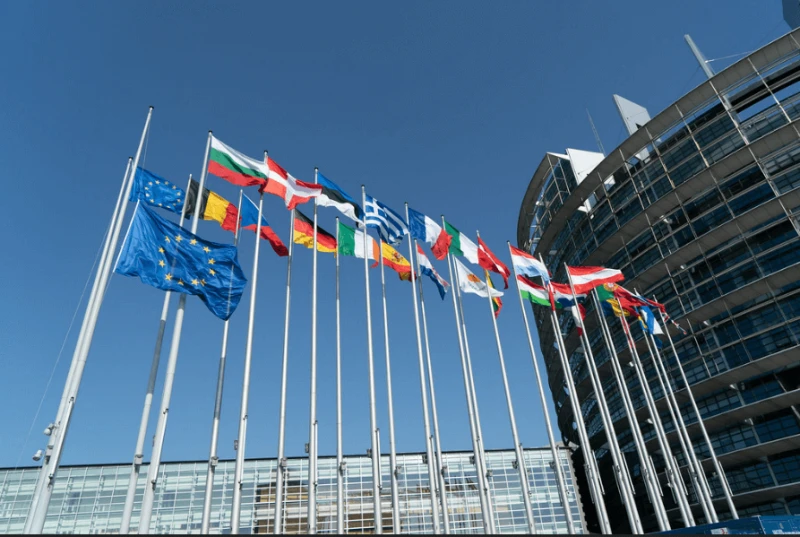
[T]he aim to promote inclusive forms of sustainable intensification through public-private partnerships may eventually clash with the popular view in many affluent societies, expressed also in the aftermath of last year’s UN Food Systems Summit that economic and technological change associated with industrial agriculture is the main driver of health-related and environmental problems in agriculture, a major cause of global greenhouse gas emissions as well as a driver of global food insecurity and social inequality (Canfield et al., 2021).
This view was also embraced in an influential report called International Assessment of Agricultural Knowledge, Science and Technology for Development (IAASTD) published during the Global Food Crisis in 2008. Back then, it reassured many policy makers in Europe that the concept of multifunctional agriculture, which underpins the EU’s Common Agricultural Policy (CAP), would help mitigate the negative impact of industrial agriculture on human health and the environment (Stoian and Caprita, 2019; Gargano et al., 2021).
Yet, the impact of multifunctional agriculture on greenhouse gas mitigation, biodiversity as well as the reduction of agricultural input was marginal (Tscharntke et al., 2021; García-Navas et al., 2022; Rosenheim et al., 2022).
A recent paper by Paarlberg (2022) even suggests that Europe lags behind the United States in terms of agri-environmental and social performance in view of the fact that European farmers continue to use roughly one third more in chemical input and fertilizer per hectare than US farmers while seeing farm household earnings continuously decreasing.
The EU seems to have recognized some of the shortcomings of the multifunctionality approach (Gravey et al., 2021) and its new “Farm-to-Fork” strategy aims to improve the performance of the CAP through prescriptive policies that are meant to render the food systems more fair, healthy and environmentally-friendly.Yet, some scholars warn that the strategy may also result in many unintended side affects that are likely to undermine the laudable goals (Cortignani et al., 2022; Paarlberg, 2022; Wynn and Webb, 2022).
…
As highlighted in this paper, the EU’s Farm-to-Fork strategy, in its current form, tends to regard business and new technologies in agriculture as part of the problem rather than part of the solution. The reason for this view is related to the fact that prior advances in agricultural productivity in affluent countries tend to be taken for granted while the potential environment and public health risks associated with modern agriculture have become the major focus of attention (Aerni, 2009). Europe’s tendency to export its defensive understanding of sustainable agriculture to low-income countries through bilateral and multilateral development cooperation is however highly problematic since the benefits of modern agriculture that are largely taken for granted in Europe have not yet arrived in many low income tropical countries. Moreover, it is not in line with the ownership principle in development assistance (Oijio et al., 2013; Aerni et al., 2015).
However, the review of recent surveys and policy initiatives in this paper indicates that European attitudes as well as European regulation toward sustainable agriculture are in a process of change. This change of mind may be related to the growing pressure to create a productive post-fossil agricultural economy that is less dependent on environmentally problematic agricultural input while still producing increasing yields to ensure affordability of healthy and sustainable food even in times of global crisis. This is only possible by making use of all currently available options to promote sustainable intensification.
This is an excerpt. Read the original post here












 Viewpoint — Fact checking MAHA mythmakers: How wellness influencers and RFK, Jr. undermine American science and health
 Viewpoint: Video — Big Solar is gobbling up productive agricultural land and hurting farmers yet providing little energy or sustainabilty gains
 Fighting deforestation with CO2: Biotechnology breakthrough creates sustainable palm oil alternative for cosmetics
 Trust issues: What happens when therapists use ChatGPT?
 California, Washington, Oregon forge immunization alliance to safeguard vaccine access against federal undermining
 30-year-old tomato line shows genetic resistance to devastating virus
 The free-range chicken dilemma: Better for birds, but with substantial costs
 ‘You have to treat the brain first’: Rethinking chronic pain with Sanjay Gupta