Control harmful insect populations using CRISPR gene editing? Here’s how it could work

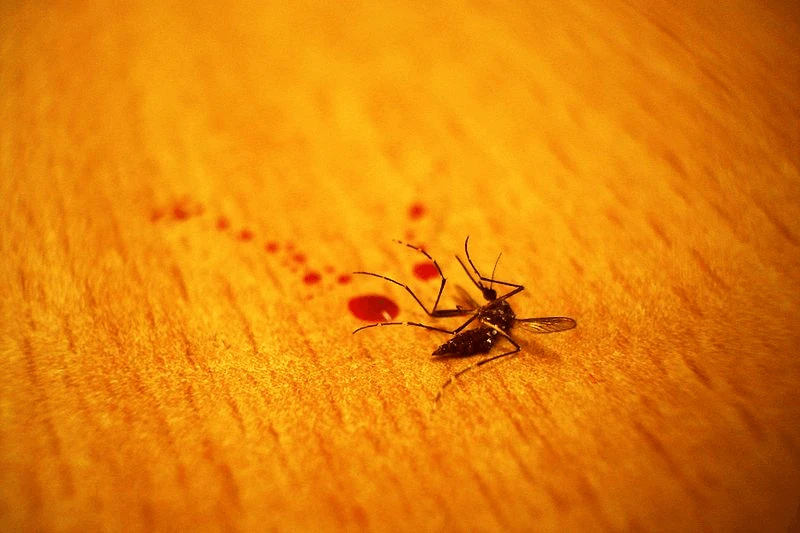
Biocentis has received investment to use CRISPR-based gene-editing to control insect populations that harm health, food security and biodiversity.
The Imperial startup was founded in 2022 by Imperial researchers in partnership with technology-focused investment group Neurone to create a more effective and sustainable alternative to pesticides.
“Our solutions will address a future green economy – a sustainable model that combines reduced environmental impact with improvements in the health and livelihoods of communities around the world.” —Professor Andrea Crisanti
While insects play an essential role in the global ecosystem, among the planet’s millions of insect species are some that spread devastating human diseases such as Dengue Fever and Zika virus, exacerbate food insecurity by spoiling up to 25% of crops, and reduce biodiversity by invading new ecosystems to the detriment of local species.
At present, these harmful insect populations are controlled primarily with pesticides. But the growth of pesticide resistance is prompting control programmes to increase the dose and frequency of the toxic chemicals, causing increasing harm to bees and other non-target species.
Building on the sterile insect technique
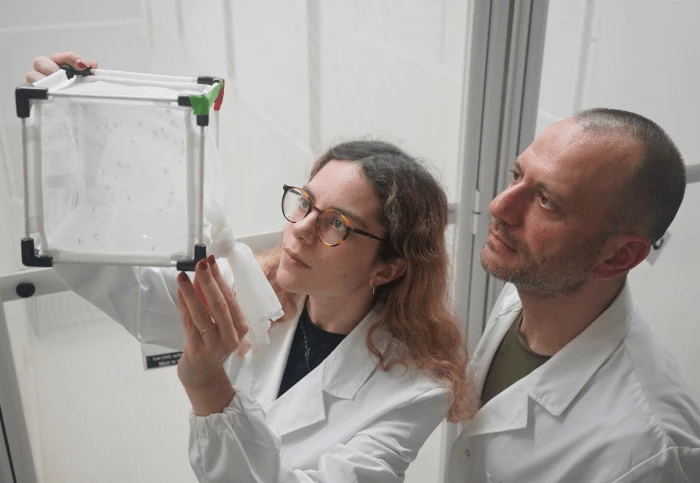
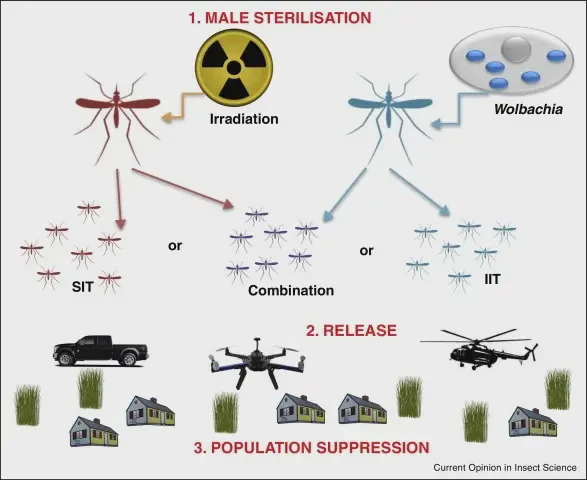
The company’s proposed alternative, which builds on Imperial research, combines a long-established approach known as the sterile insect technique (SIT) with new possibilities enabled by CRISPR, an advanced gene-editing technology that won its creators the Nobel Prize for Chemistry in 2020.
SIT, first developed in the 1950s, involves rearing insects of the target species and sterilising them before releasing them into the environment, thereby reducing the frequency of successful matings in the wild. The technique is used worldwide as a non-toxic and species-specific alternative to pesticides.
“SIT’s main limitation,” explains Biocentis co-founder and CEO Giorgio Rocca, formerly of Boston Consulting Group, “is that it requires continuously releasing a huge number of insects, as the flow of sterile insects needs to be heavily sustained over time to substitute at each generation those that die. As a result, its cost-effectiveness has been questioned and its applications often rely on public subsidies.”
Under the proposed approach, which builds upon SIT, the reared insects are genetically engineered to enable transmission of female sterility in a self-limited fashion by disrupting the doublesex gene using CRISPR technology. This approach reduces the number of successful matings in the target population over multiple generations, causing a local reduction in population size.
Inspired by gene drive technologies that have already been successfully trialled in Imperial labs, the company aims to offer a solution that is both effective and highly controllable. The solution will be designed to target geographically circumscribed insect populations over finite generations before coming to a halt.
Toward a new green economy
The company – whose founding team includes internationally recognised experts from Imperial in genetic insect control such as Professor Andrea Crisanti, Dr Andrew Hammond and Dr Kyros Kyrou – believes that the approach could retain the safety and environmental credentials of SIT while being widely adopted due to its improved cost-effectiveness.
Professor Andrea Crisanti in Imperial’s Department of Life Sciences, a co-founder of Biocentis, said: “Our solutions will alleviate the burden imposed by vector-borne diseases, improve agriculture productivity, and reduce the damage from the use of traditional pesticides, addressing the agenda of a future green economy – a sustainable model that combines reduced environmental impact with significant improvements in the health and livelihoods of communities around the world.”
Responsible R&D
Since its formation in January 2022, Biocentis has established its R&D activities and already assembled a growing team of scientists from all around the world, who are working on the first target species, including the invasive pest of berries and other soft-skinned fruits Drosophila suzukii and the vector of dengue fever and other diseases Aedes aegypti.
The company is also investing in capabilities to apply data science to research and development, manufacturing, and field operation activities.
CEO Giorgio Rocca said: “We are working in a relatively new field, where ideas that were nurtured in universities are yet to reach their full potential. Our success will depend not only on the excellence of our gene editing solutions but also on our ability to imagine and implement innovative ways to handle biological and ecological data using machine learning to further differentiate ourselves from other players in the market and efficiently scale up our activities.”
Technologies like those being developed by Biocentis are recent innovations, and as such require extensive research in several domains. Dr Andrew Hammond, Biocentis co-founder and Head of R&D, said: “Biocentis has been launched to promote sustainability and make a positive impact on society and the environment. Our development approach is grounded in responsible research and innovation principles and will incorporate direct inputs from expert molecular biologists, ecologists, regulators, farmers and stakeholders into the solutions we’re developing to ensure they are fit for purpose. We believe this work will pave the way to a new paradigm of research in this field.”
Biocentis is active in Italy, UK and USA and has received seed funding from Neurone, which has helped bring together a management team with a strong track record in technology, company building and administration to complement the scientific experience from Biocentis’ scientific founders.
Dr. David Silverman was postdoc in philosophy of cognitive science at Paris Descartes University, working with scientists on an embodied theory of perception and consciousness. Follow David on Twitter @davesilverman
A version of this article was posted at Imperial College of London and is used here with permission. Check out Imperial College of London on Twitter @imperialcollege

 | Videos | More... |

Video: Nuclear energy will destroy us? Global warming is an existential threat? Chemicals are massacring bees? Donate to the Green Industrial Complex!
 | Bees & Pollinators | More... |

GLP podcast: Science journalism is a mess. Here’s how to fix it

Mosquito massacre: Can we safely tackle malaria with a CRISPR gene drive?

Are we facing an ‘Insect Apocalypse’ caused by ‘intensive, industrial’ farming and agricultural chemicals? The media say yes; Science says ‘no’
 | Infographics | More... |

Infographic: Global regulatory and health research agencies on whether glyphosate causes cancer
 | GMO FAQs | More... |

Why is there controversy over GMO foods but not GMO drugs?

How are GMOs labeled around the world?

How does genetic engineering differ from conventional breeding?
 | GLP Profiles | More... |

Alex Jones: Right-wing conspiracy theorist stokes fear of GMOs, pesticides to sell ‘health supplements’

 Viewpoint — Fact checking MAHA mythmakers: How wellness influencers and RFK, Jr. undermine American science and health
 Viewpoint: Video — Big Solar is gobbling up productive agricultural land and hurting farmers yet providing little energy or sustainabilty gains
 Fighting deforestation with CO2: Biotechnology breakthrough creates sustainable palm oil alternative for cosmetics
 Trust issues: What happens when therapists use ChatGPT?
 California, Washington, Oregon forge immunization alliance to safeguard vaccine access against federal undermining
 30-year-old tomato line shows genetic resistance to devastating virus
 The free-range chicken dilemma: Better for birds, but with substantial costs
 ‘You have to treat the brain first’: Rethinking chronic pain with Sanjay Gupta