Dragon Ball Daima Is the Perfect Prequel to Dragon Ball Super: Here's Why
It always felt random when the Dragon Ball Super anime stopped after the Tournament of Power, especially when the manga finished the arc featuring the villain Moro and continued into the Granolah the Survivor Saga. The anime had at least one full arc of material to adapt. The situation got even stranger when Dragon Ball Daima came out of nowhere, ostensibly replacing the Super anime completely. However, episode #16 of Daima just proved that it now serves as a perfect prequel to Super whenever the anime decides to resume.
In episode #16, Goku uncharacteristically asks for his friends to fight alongside him when the recently transformed Gomah suddenly interrupts the Saiyan's battle against Majin Duu. Goku's request for additional assistance is so shocking to Bulma who's been watching everything unfold from the sidelines that she can't help but announce out loud how unlike it was of him to do so, to which the mysterious Namekian Neva responds by saying that it just goes to show how formidable Gomah is as an opponent.
Goku and Vegeta Fight Together Many Times in Dragon Ball Super
Daima Sets a Precedent for Super
This matters contextually not just because Goku does, in fact, never ask for help, but because of what will happen next in the Dragon Ball Super anime whenever it gets adapted. During Super's Galactic Patrol Prisoner Saga, Vegeta and Goku initially fight against the new villain Moro as they normally would have by taking turns. Vegeta goes first and gets easily defeated. However, because of Moro's special powers, Goku begins in a weakened state, resulting in Goku losing shortly thereafter. When they face off against Moro again in chapter #47, Goku winks at Vegeta and the two of them attack their enemy together rather than alone.
Originally, most fans didn't realize just how monumental their decision was to fight side by side. Of course, Goku and Vegeta had already learned that the best way to defeat Moro was to beat him as quickly as possible, so even if more savvy readers were able to pinpoint how this was unlike Goku and Vegeta, there was still enough doubt to minimize the moment or disprove the theory. However, thanks to Bulma going out of her way to announce in Daima that Goku never asks for help, it allows fans to more easily appreciate Goku and Vegeta's decisions in Super.
Incredibly, this dynamic continues in Super soon afterward. In chapter #48, the Great Lord of Lords, who had taken over Buu moments earlier, informs Goku and Vegeta that the best way to defeat Moro is for the three of them to fight together, and Goku actually agrees. This character development even continues long after Moro during the Granolah the Survivor Saga. After previous attempts to defeat Gas failed, Goku and Vegeta, in chapter #84, team up again to beat villain, in what seemed once again uncharacteristic behavior.
Dragon Ball Daima's Bulma Scene Helps Fulfill One of Super's Most Defining Qualities
Dragon Ball Super Has Always Been Subtle
The addition of Daima's new scene also creates another narrative effect. Even without Bulma's explanation, what Goku is asking from his friends is much more significant than anything he does in Super. Goku hadn't even fought Gomah yet but still asks everyone to fight alongside him. As Neva said, the Saiyan was able to recognize just how formidable Gomah was. So, before possibly trying alone and failing, he doesn't even take that risk and asks for everyone to help him.
By comparison, Goku and Vegeta's actions in Super serve as subtle continuations of what Goku learned during Daima. During both the Galactic Patrol Prisoner and Granolah the Survivor Sagas, Goku and Vegeta decide to fight together after trying and failing when they initially fought separately. Although it might seem like a more realistic decision to build up to what happens in Daima, it actually fits in with Super's style.
The most obvious example is how Vegeta grows as a character in Super. By comparison, Vegeta changes more dramatically in DBZ because he goes from being a straight-up villain to a begrudging ally. At first, it might not seem that Vegeta grows as a character less in Super when compared to DBZ. But, upon closer inspection, readers will soon come to understand that there are more instances of growth in Super. They are just more subtle.
Although Vegeta gives up on surpassing Goku during the Buu Saga, Super sees him get obsessed with getting stronger his own way, the most obvious being with Ultra Ego. But as he does this, Vegeta soon sacrifices other ideals in the pursuit thereof, like learning Goku's Instant Transmission. Meanwhile, Vegeta might later succumb to his old villainous ways and even put aside his family values when fighting Granolah, but they only last for a short while and, especially in the latter case, it's not as obvious, since his family isn't even there with him.
Dragon Ball Daima Is Helping Protect Super From Possible Critiques
It's Now Much Less Likely that Dragon Ball Super Will Be Blamed for Disregarding Goku's Character

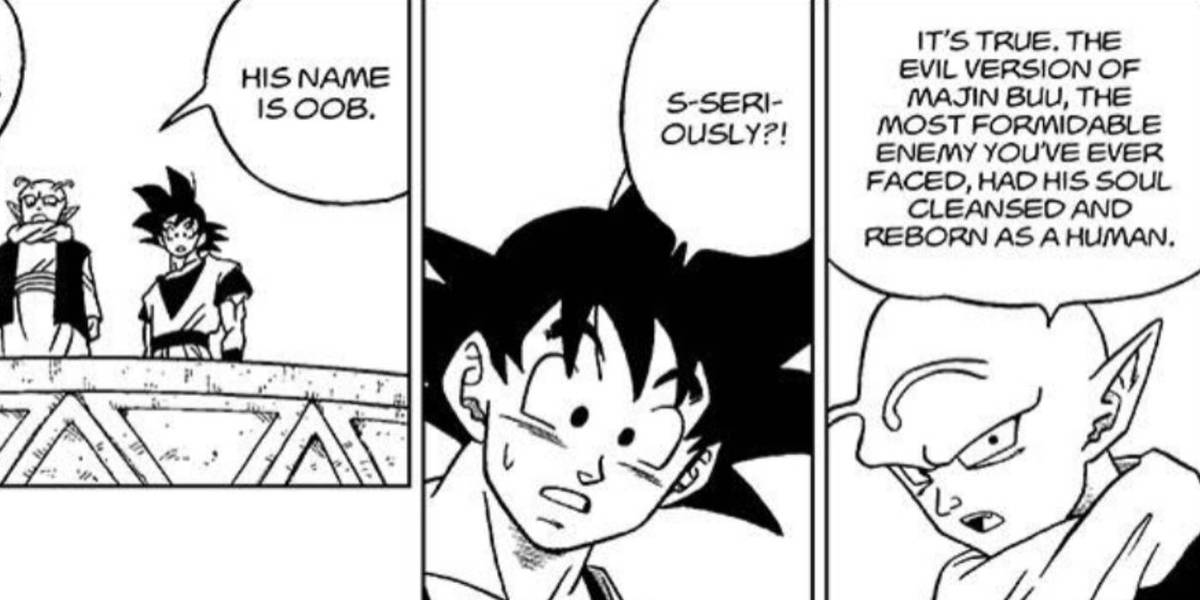
Additionally, Daima's contribution helps underscore that what later happens in Super won't be a mistake or random retcon. This is important because Super has been accused of retconning key aspects of the franchise for the worse. While many of these accusations are baseless, there have been instances where the criticisms have been more justified. Probably the worst example is when chapter #31 of Super has Dende show Goku the boy Uub for the first time and convince the Saiyan to train him because he's a prodigy and Buu's reincarnation.
This effectively ruined the final scene in Dragon Ball Z because Goku originally assumed that Uub is Buu's reincarnation in part because he could sense it, and he was excited to test him for himself. Super's retcon therefore prevents Goku from exercising what he's known for - blindly trusting in the strength and abilities of others and being genuinely interested in how strong people are.
With Daima's interjection, the anime-only series is making it more difficult for fans to accuse Super of sloppily retconning Goku later on. Of course, many can argue that it's a more effective form of storytelling to not have characters state the obvious so that readers or viewers can make the connections themselves. However, Dragon Ball fans are understandably very passionate about their favorite series, and changing Goku or Vegeta without any explanation can result in it coming across as a mistake or a blatant disregard for its characters.
Regardless, fans who have read the Super manga beyond what the anime has adapted now have yet another explanation as to why Dragon Ball Daima was randomly released in the middle of Super's adaptation. Of course, these other correlations to Super are just theories. However, in this instance, episode #16 has made it a much more obvious prequel to the rest of Dragon Ball Super.