
Fallout creator's original ending idea didn't make the cut, but thankfully Fallout 3 brought it back bigger and better
The creator of the Falloutseries has revealed some of his ideas that ultimately didn't make the cut, but at least one of them would eventually be realized in a later game – and in a better way. Originally starting out under the working title Vault-13: A GURPS Post-Nuclear Role-Playing Game, the first game in the Fallout franchise was released in 1997, but the project went through several upheavals during the course of its three-year development that saw many ideas being tweaked or even completely thrown out along the way.
Developer Interplay Productions would eventually settle on Fallout's final subtitle, A Post Nuclear Role Playing Game, beginning the still-running, iconic RPG series. Now helmed by Bethesda, Fallout has become largely a first-person experience, using its turn-based roots to inspire its time-dilating V.A.T.S. system. Bethesda's first foray into the series, Fallout 3, is in many ways a far cry from the first two games, but retains and improves on an idea cut from the original Fallout.
Fallout Could Have Ended With A Party
The Original Ending Celebrated The Player's Efforts

Tim Cain was the creator, producer, and lead programmer for Fallout, and was initially the only person working on the game when it began development. Over on his YouTube channel, Cain uploaded a video detailing some of his rejected ideas for the many games he's worked on throughout his career, including several for the original Fallout. One of those ideas regarded the game's ending.
As Cain laid out in his video, his vision for the ending of Fallout would have seen the player's return to Vault 13 celebrated with a party, complete with cake and balloons. The game ends with much for you to celebrate. After all, the player character has saved the vault not just once, but twice, after both bringing back a new water chip and foiling the plans of the Master and his army of Super Mutants. This all stands in very stark contrast to the actual ending seen in the finished product of Fallout, however.
Fallout 1 technically has two endings, as the player can choose to side with the Master to obtain an alternate bad ending. This ending is considered non-canonical.
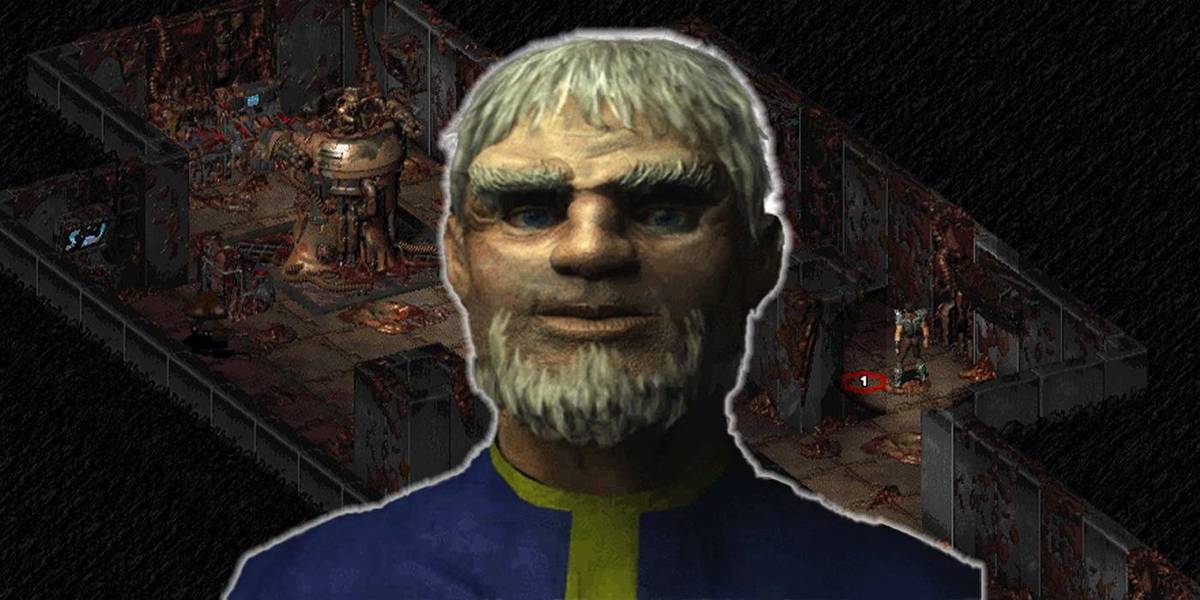
In the actual ending of Fallout, the player returns to the Vault victorious after defeating the Master only to have their re-entry blocked by the Vault's Overseer. While the player's exploits have ensured the safety of the people dwelling within, their time spent outside the Vault has made them a threat to the Overseer, who fears their example will inspire others to leave the Vault. Cain credits artist Leonard Boyarsky with the idea for this ending, and though he had misgivings about how it would be received by players, he now agrees that it was a better idea.
Fallout 3’s Birthday Party Makes More Sense
The Good Times Should Come Before The Wasteland, Not After

Cain's party idea would eventually make its way into a Fallout game, but not until a full decade later with the release of Fallout 3 in 2008. The game's prologue begins with the player character's birth, introducing basic gameplay mechanics and character creation as it segues into their 10th birthday party. Much like Cain's idea, there are in fact balloons and cake (until the cake gets destroyed in a robot-related mishap), and the player gets to celebrate with their friends and family as they take their first steps into the world of Fallout.

All 8 Fallout 3 Companions, Ranked By Likability
Fallout 3's companions are one of the many reasons it remains so memorable, but some definitely make for better friends than others.
The biggest difference between Cain's idea and what we see in Fallout 3 is obviously that the party happens at the beginning of the game rather than the end, but this inversion actually makes the idea work so much better. Not only does it serve as a natural framing device for the game's tutorial, but placing such a cheerful event before sending the player into the wasteland does much more to properly establish the tone and themes that have made Fallout so iconic. The world of Fallout rarely gives us happy endings, so the cake and balloons never would've felt right.
Fallout’s World Is Silly, But It’s Rarely Optimistic
Fallout Games Are Satirical, Not Saccharine
To call the Fallout series pessimistic is a bit of an understatement given that it takes place in a post-apocalyptic setting that still bears the scars of nuclear war. It's a harsh world that forces players to make tough decisions, often with terrible consequences for the characters, regardless of what you choose. This bleakness is contrasted by its comedic elements found in the witty dialog and the satirization of retro Americana. Ending the story of Fallout with a party may have been funny, but in a way that goes against the tone of the story.

10 Fallout 4 Quests With The Biggest Choices & Outcomes
Fallout 4 has plenty of quests to keep players occupied and some of them force the Sole Survivor to make some big choices with permanent consequences.
The birthday party scene in Fallout 3 perfectly encapsulates the series with its outwardly charming and happy appearance that masks the darker aspects lurking under the surface. It's a celebratory occasion for the player character, but it's also when they become fully indoctrinated into the Vault's way of life – the same way of life that forbade the hero of Fallout 1 from returning home after their journey. Discussions of death and a dystopian society undercut the sounds of laughter, bracing the player for their impending introduction to the world beyond the Vault.
Fallout games often flip the lever between comedy and tragedy, but Cain's proposed ending for the original game would have swung it the wrong way. After everything the game has put the player through, a celebratory party would be out of place, like a discordant note at the end of a symphony. Ultimately, it's for the best that the idea was left on the cutting room floor until Fallout 3 could deliver it in a way that fits the series far more comfortably.
Source: Tim Cain/YouTube








Your comment has not been saved