
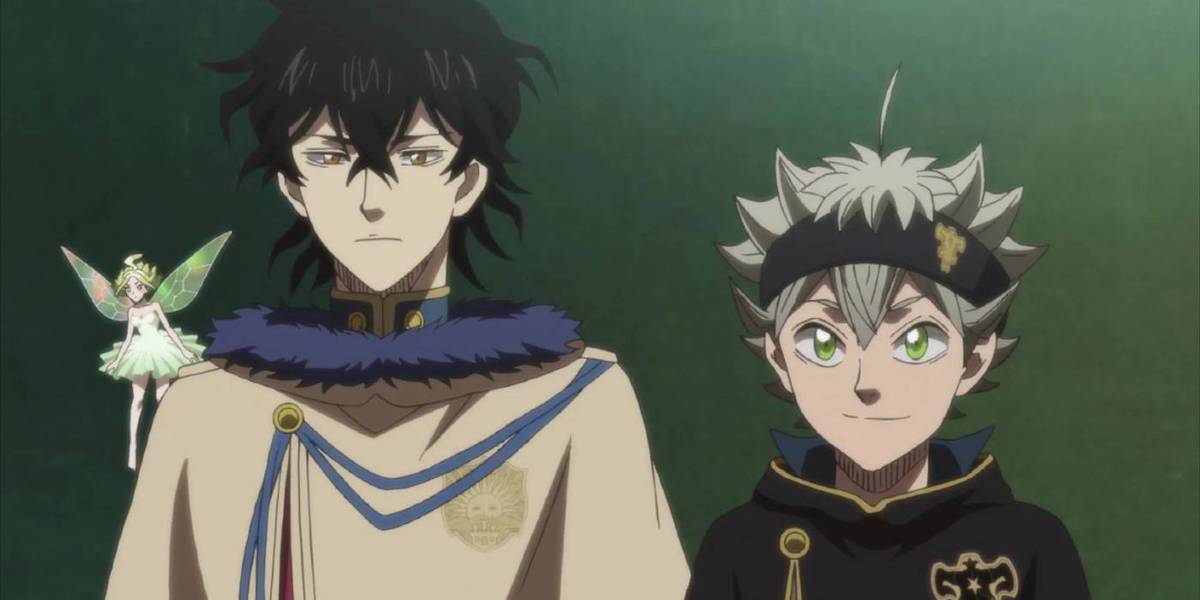
Fans May Call Black Clover a Naruto Clone, But There's One Element It Nails Compared to its Inspiration
Naruto has earned its reputation, acclaim, and a diverse catalog of derivative series. In many ways, Naruto has become the archetype for modern shōnen with its intelligent characterization, involved plot, and slick action sequences. Among the many series it's inspired, Naruto has left a deep mark on Black Clover—with many going so far as to claim Black Clover is a copycat of Naruto.
There's one key way, though, in which Black Clover overcomes its predecessor: world-building. Naruto's world is deeply lacking in some major ways, and Black Clover picked up the slack from the very start in order to forge an identity all its own. Naruto's world is incredibly wide, but compared to Black Clover, it can't help but feel flat. One major detail is the perfect example of this: Black Clover's emphasis on social classes.
Black Clover Builds on Something Naruto Mostly Forgot
Naruto Largely Avoids the Idea of Social Classes

At the very beginning of his story, Naruto is shown to be living in less-than-stellar conditions. His milk is spoiled, and his abode is, to say the least, humble. Nonetheless, despite that fact, Naruto's ostracization has very little to do with his social or economic position. It's all, in the end, because he's the jinchuriki of the Nine Tails.
That's not to say that Naruto's world is absolutely devoid of any sort of class distinctions—they're there, to a certain extent. There are small-time shopkeepers and professionals of various stripes, there are rulers and leaders, there are underclass clans like the Uchiha, and there are prestigious clans like the Hyuga. However, for the most part, Naruto is a series about shinobi: a flattened, relatively egalitarian plane where what gets one ahead is combat prowess and notoriety.
Such is not the case for Black Clover. From the very beginning, the distinction between the lower and more impoverished peoples of villages stands in stark contrast to the working class and (especially) nobility living within the capital. There's a correlation between the strength of magical power and one's class status. More importantly, Yuno and Asta's common origin as orphans growing up together in a poor village forgotten by royal power provides a fertile ground for their mutual desire to become Wizard King, well beyond what's provided by Naruto's idealistic notion of the Hokage and shinobi power structures.
Black Clover's Relationships Feel Better Because of Its World-Building
Black Clover Has One Big Advantage Over Naruto Because of Its Early Attention to Detail
This isn't a minor thing, because it makes Asta and Yuno feel generally more realistic than Naruto's characters, let alone Naruto and Sasuke. Asta and Yuno share common ground with a lot of external connections that feel, well, real—Sister Lily, for example. Their brothers and sisters from the orphanage or their foster father are another great example. They come from the same place, and they have a very good reason for making the decisions they make: they have struggled together, and this struggle is intimately connected with the political and class structures of the Clover Kingdom.
Because of this, their mutual respect and support also feel fundamentally real—and far more substantial than Naruto and Sasuke's eventual mutual support. This small detail makes Black Clover's cast of characters altogether feel more substantial, because it feels like they slot into a living, breathing world with political stakes. By comparison, Naruto feels like a fairy tale. That's not a knock on Naruto, either; its idealism and its simple narrative are part of its appeal. Black Clover, though, goes for something much more visceral and human.
Consider Noelle's struggles to slot into her noble family's expectations. Even if the fantasy setting has the strange effect of making it feel unreal, it nonetheless feels uniquely tangible and relatable at the same time. If Naruto's greatest advantage is its empathy, then there's something to be said about how Black Clover builds on that. It's as easy to empathize with Noelle, from a revered noble lineage, as with Asta, an orphan from a destitute background. Somehow, Black Clover makes its world work with mutual stakes making every social class feel simultaneously endearing and fantastically distant.
Black Clover's Universe Feels so Much More Alive
Black Clover's World Breathes in a Way Naruto's Never Could

In some of the moments that might otherwise be accused of falling into shōnen trappings, Black Clover shows its unique heart. Consider, for example, the Star Awards Festival (episodes #67-#70). Against the backdrop of a fun festival, Asta and Noelle are roped into a double date. The festival takes place within the Royal Capital and shows the intermingling of all different classes of citizens—including Asta and Noelle themselves. Little moments like this breathe so much life into Black Clover's world and make it feel like it's truly populated with individuals.
Many chapters earlier, the Royal Capital had fallen victim to an assault and invasion; the festival is a short arc, but it shows the resilience of the Clover Kingdom. Asta's constant interactions with ordinary everyday people make the world feel like it has a sense of continuity that is sorely lacking in Naruto. Compare Pain's assault in Naruto, which left Konoha in shambles. A lot of screen time is devoted to the rebuilding efforts, but the actual impact on those outside of the main plot feels negligible.
This is one of Naruto's sore spots, and it has been for a while. One Piece Fan Letter showed how Naruto could have been so much better if more time had been devoted to showing the real-life impact of the series' events. Even within Konoha, Naruto's world would have been lifted significantly by spending some time with characters who aren't shinobi—who, for the record, comprise the majority of Konoha's population.
Many fans would have surely appreciated such approach. It's no coincidence that One Piece's best episode in years is a filler special that focuses on the lives of the common people in the world of the series. This isn't a problem from which Black Clover is entirely insulated, but there's no question that Black Clover manages to identify and correct Naruto's problems with world-building.
Naruto's inability to show the real distinctions between the different people within its society gives it a certain kind of mythical grandeur, but it also makes it feel flat in comparison to stories like Black Clover. The latter doesn't get nearly enough credit for its willingness to innovate on Naruto, and this is one of the most significant ways. It's easy to look at Black Clover's setting and compare it to the medieval-inspired royal intrigue that abounds in modern isekai and pokes its head in here and there in stories like Fairy Tail and Seven Deadly Sins.
Even if that is the case, though, would it be so bad? Black Clover might not break new ground with its political setting, but the way it uses it to fill out Naruto's gaps deserves attention from fans.
- Latest Film
- Boruto: Naruto the Movie
- First TV Show
- Naruto
- Latest TV Show
- Boruto: Naruto Next Generations
- First Episode Air Date
- October 3, 2002
- Cast
- Junko Takeuchi, Maile Flanagan, Noriaki Sugiyama, Chie Nakamura, Kazuhiko Inoue, Nana Mizuki, Hideo Ishikawa, Yûko Sanpei
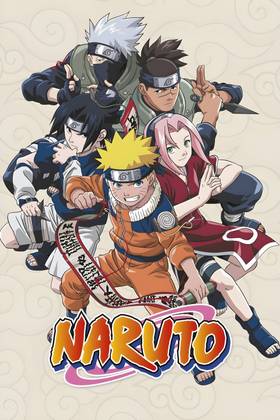
Naruto is a franchise spawned from the manga series penned by Masashi Kishimoto that began in 1999. Generating several tv series, games, movies, and more, Naruto follows the exploits of a young outcast ninja harboring the spirit of a demon fox who seeks to become the Hokage, the leader of his ninja village, to break the stigma against him. Upon the conclusion of the initial series, Naruto expanded into Boruto, following many series protagonists' children and returning faces.
- Current Series
- Boruto: Naruto Next Generations
- TV Show(s)
- Naruto, Naruto: Shippuden, Boruto: Naruto Next Generations
- Video Game(s)
- Naruto: Clash Of Ninja Revolution 3, Naruto: Ultimate Ninja (2003), Naruto Shippuden: Ultimate Ninja Storm Generations, Naruto Shippuden: Ultimate Ninja Storm 2, Naruto Shippuden: Ultimate Ninja Storm 3, Naruto Shippuden: Ultimate Ninja Storm 4, Naruto: Rise Of A Ninja, Naruto: The Broken Bond, Naruto to Boruto: Shinobi Striker, Naruto Shippuden Dragon Blade Chronicles, Naruto: Path Of The Ninja, Naruto x Boruto: Ultimate Ninja Storm Connections

Black Clover
- Release Date
- 2017 - 2021
- Network
- TV Tokyo, TV Osaka, TV Aichi, TVh, TVQ, TSC
- Directors
- Matsuo Asami, Rokou Ogiwara, Tazumi Mukaiyama, Akira Shimizu, Fumio Maezono, Daisuke Chiba, Toshihiro Maeya, Yoshimitsu Tsuda, Toshiaki Kanbara, Takahiro Enokida, Yasumi Mikamoto, Kenichi Maejima, Chihiro Kumano, Naoki Horiuchi, Yoshino Miwa
- Writers
- Kanichi Kato, Mio Inoue, Masanao Akahoshi, Momoko Murakami, Kunihiko Okada
- Franchise(s)
- Black Clover
Cast
 Gakuto KajiwaraAsta (voice)
- Nobunaga ShimazakiYuno (voice)
Black Clover, released in 2017, follows orphans Asta and Yuno who aspire to become the Wizard King in a world where magic is paramount. Despite Asta's lack of powers, their journey unfolds as they receive their grimoires and embark on individual paths towards their ultimate goal.
- Main Genre
- Animation
- Creator(s)
- Yūki Tabata
- Seasons
- 1
- Streaming Service(s)
- Crunchyroll, Hulu, Netflix






Your comment has not been saved