Food security challenge: How Africa can benefit from the emerging agricultural bioeconomy

“Africa’s rich natural resources offer a vast pool of possibilities for the development of a vibrant bioeconomy, which can contribute to driving economic growth and climate-proofing food production for a growing, urbanizing population,” said Ousmane Badiane, co-chair of the Malabo Montpellier Panel, which produced the report.
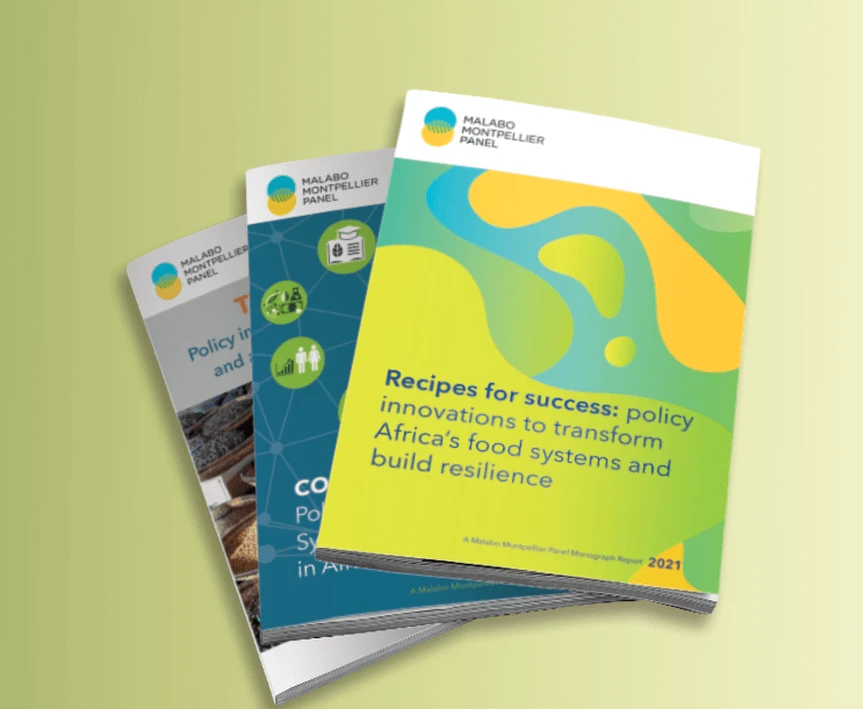
Despite the abundance of resources, the report states that the bioeconomy — the production, utilization, and conservation of biological resources, including nature-based solutions, to offer products and services — can be inherently unsustainable.
“Like any finite resource [the] bioeconomy must be developed sustainably and efficiently, by diverting resources to the most value-adding and high-priority needs while also minimizing or eliminating trade-offs, such as the overuse of, and competition for, water resources and land,” Badiane told AFN.
“By adopting a circular approach, Africa can develop a bioeconomy that ensures resources are utilized and re-utilized, building a more sustainable production system that promotes higher productivity, better nutrition, and more resilient livelihoods. Fundamentally, the success of a bioeconomy will rely on identifying trade-offs in advance and collaborating across stakeholder groups to develop inclusive solutions.”
Implications in agriculture
According to the report, agriculture can play a key role in Africa’s transition to a bio-based economy as:
- It will supply renewable biomass.
- Smallholder farmers will get more connections to expanded markets, value chains, and agro-processing opportunities.
- It will create more employment opportunities, specifically in production.
- The use of biofertilizers can enhance soil health with lower environmental impacts. In turn, crops will register improved nutritional benefits and yield – contributing towards improved food security and nutrition.
Pioneers in bioeconomy development
Ghana, Namibia, Uganda and South Africa are highlighted in the report as countries that have combined biosciences, technology, and political commitment to positive effect.
- Ghana and Uganda have rich biodiversity and consequently have a significant capacity when it comes to biomass.
- Due to its commitment to a bioeoconomy strategy, Uganda has become a regional leader in agricultural R&D, according to the report. Select institutions in the country have become a beacon for advancing food and agricultural biotechnology and launching companies on the back of this. It’s also developing talent to commercialize traditional medicines and biopharmaceuticals.
- Ghana has made strides in its cocoa sector, and has diversified its product and service offerings around cashew, shea, and their byproducts.
- South Africa has developed a leading biopharmaceutical and biotechnology sector and is an attractive destination for investment.
- Namibia, on the other hand, has shown strong political commitment in developing its bioeconomy. It has led with a number of policies and initiatives to promote sustainable management and use of its biodiversity.
Learning from the four countries, the report makes the following policy recommendations:
- Identifying gateway sectors through which to initiate the development of transition to a bioeconomy
- Strengthening links to R&D and markets for new bioproducts and biosolutions
- Developing demand for bioproducts and biosolutions
- Regulating sustainability incentives and managing trade-offs
- Setting up independent national advisory boards to inform and guide the development of bioeconomies
[Editor’s note: Read the full report here.]
Read the original post here
 | Videos | More... |
Video: Nuclear energy will destroy us? Global warming is an existential threat? Chemicals are massacring bees? Donate to the Green Industrial Complex!
 | Bees & Pollinators | More... |

GLP podcast: Science journalism is a mess. Here’s how to fix it

Mosquito massacre: Can we safely tackle malaria with a CRISPR gene drive?

Are we facing an ‘Insect Apocalypse’ caused by ‘intensive, industrial’ farming and agricultural chemicals? The media say yes; Science says ‘no’
 | Infographics | More... |

Infographic: Global regulatory and health research agencies on whether glyphosate causes cancer
 | GMO FAQs | More... |
Why is there controversy over GMO foods but not GMO drugs?

How are GMOs labeled around the world?
How does genetic engineering differ from conventional breeding?
 | GLP Profiles | More... |

Alex Jones: Right-wing conspiracy theorist stokes fear of GMOs, pesticides to sell ‘health supplements’

 Viewpoint — Fact checking MAHA mythmakers: How wellness influencers and RFK, Jr. undermine American science and health
 Viewpoint: Video — Big Solar is gobbling up productive agricultural land and hurting farmers yet providing little energy or sustainabilty gains
 Fighting deforestation with CO2: Biotechnology breakthrough creates sustainable palm oil alternative for cosmetics
 Trust issues: What happens when therapists use ChatGPT?
 California, Washington, Oregon forge immunization alliance to safeguard vaccine access against federal undermining
 30-year-old tomato line shows genetic resistance to devastating virus
 The free-range chicken dilemma: Better for birds, but with substantial costs
 ‘You have to treat the brain first’: Rethinking chronic pain with Sanjay Gupta