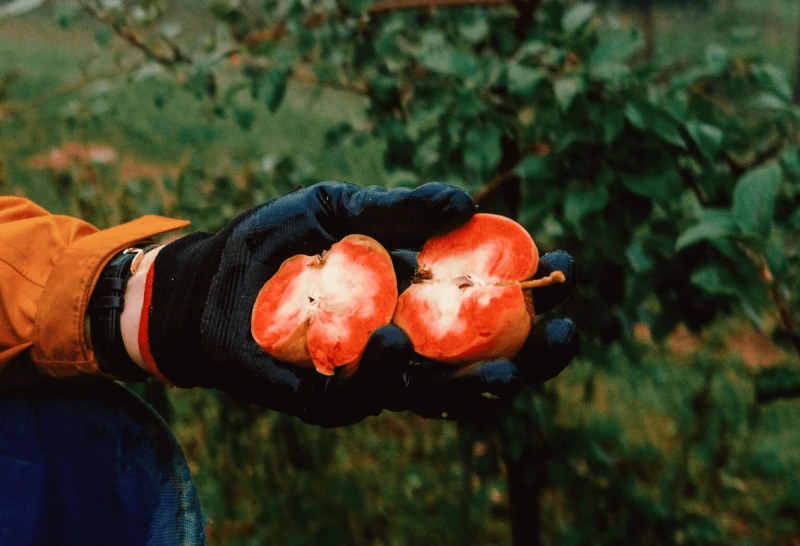
Imagine reaching up to a tree branch and plucking an apple that’s unusually tall and narrow — a variety called Kandil Snap, native to the Black Sea region. In an adjacent arboreal row, 11 trees to the north, you’ll find the equally exotic dark purple Black Oxford apples, resembling large plums.
Add 1,000-plus more varieties of the fruit genus Malus, which is bursting with an autumn-themed rainbow of red, orange, yellow, green and even purple, to this scene, and you’re in the Apple Biodiversity Collection in the Annapolis Valley of Nova Scotia, Canada.
The apples won’t end up in pies or the baskets of autumn leaf peepers. Instead, scientists there are working on understanding the genetics that result in this bonanza of apple diversity, with the ultimate goal of improving the fruit in different ways — tastier, heartier, more disease-resistant and with longer shelf-life in the face of changing climates.
“It’s tremendous to be able to walk through what is essentially the United Nations of apples and see the world’s genetic diversity all in one place,” said Sean Myles, who started the orchard in 2011, “and that feeling is quickly replaced with a tremendous urgency to get all this work done.”
You might not realize it, but many popular apples in grocery stores in recent years — Cosmic Crisps from Washington State, SnapDragons from New York and Honeycrisps, originally from Minnesota — originated with the efforts of scientists examining the qualities of different apple types and crossbreeding them. With some 7,500 varieties of apple in the world, there’s plenty to discover.
This is an excerpt. Read the original post here















 Viewpoint — Fact checking MAHA mythmakers: How wellness influencers and RFK, Jr. undermine American science and health
 Viewpoint: Video — Big Solar is gobbling up productive agricultural land and hurting farmers yet providing little energy or sustainabilty gains
 Fighting deforestation with CO2: Biotechnology breakthrough creates sustainable palm oil alternative for cosmetics
 Trust issues: What happens when therapists use ChatGPT?
 California, Washington, Oregon forge immunization alliance to safeguard vaccine access against federal undermining
 30-year-old tomato line shows genetic resistance to devastating virus
 The free-range chicken dilemma: Better for birds, but with substantial costs
 ‘You have to treat the brain first’: Rethinking chronic pain with Sanjay Gupta