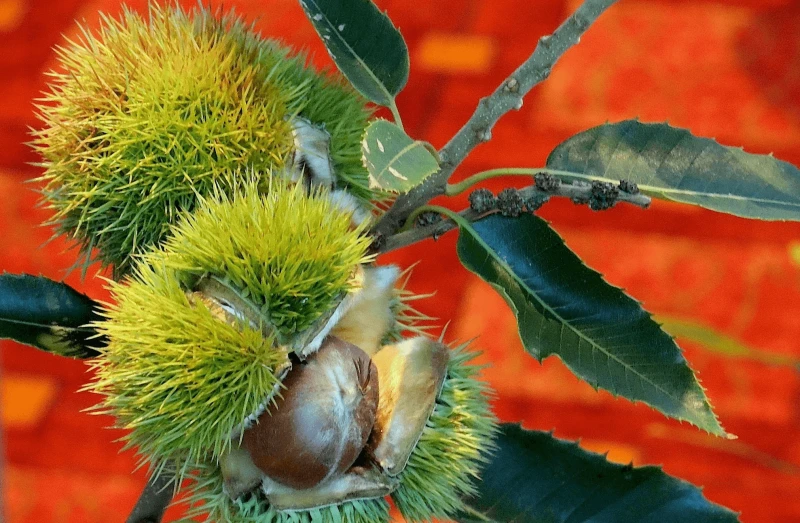
These trees once ruled the canopies of much of Appalachia, with billions of mature American chestnut trees that towered in leafy forests from Maine to Mississippi. But around the beginning of the 20th century, an exotic fungus nearly drove the tree out of existence. Today, they still sprout in the wild but rarely reach maturity. Outside of growers’ orchards, scientists say, the tree is “functionally extinct.”
[Kyra] LoPiccolo and other researchers at SUNY ESF are growing American chestnut trees in the fields of Syracuse that can withstand that infection: Half of the nuts produced with the genetically engineered pollen will carry DNA meant to fight the blight. The researchers are now ready to sow the seeds in the wild, pushing to become the first in the United States to use genetic engineering to bring a forest tree back to its former glory.
But first, the project is seeking approval not only from three federal agencies but also from chestnut aficionados concerned about altering the genome of a beloved tree.
Anne Petermann, executive director of Global Justice Ecology Project, which helped organize the campaign against Darling 58, is worried the project will lead to more commercial use of transgenic trees, to produce paper and lumber. She noted biotech firms hoping to make greater use of genetically modified organisms have helped fund SUNY ESF’s work.
“There are studies coming out weekly that show just how much we don’t know about forest ecosystems,” she said.
This is an excerpt. Read the original post here















 Viewpoint — Fact checking MAHA mythmakers: How wellness influencers and RFK, Jr. undermine American science and health
 Viewpoint: Video — Big Solar is gobbling up productive agricultural land and hurting farmers yet providing little energy or sustainabilty gains
 Fighting deforestation with CO2: Biotechnology breakthrough creates sustainable palm oil alternative for cosmetics
 Trust issues: What happens when therapists use ChatGPT?
 California, Washington, Oregon forge immunization alliance to safeguard vaccine access against federal undermining
 30-year-old tomato line shows genetic resistance to devastating virus
 The free-range chicken dilemma: Better for birds, but with substantial costs
 ‘You have to treat the brain first’: Rethinking chronic pain with Sanjay Gupta