Genetic engineering is not as trivial and straightforward as activists against GM crops try to portray it


DNA refers to molecules that carry the genetic information needed for an organism to develop and function.
Unlike the English alphabet which has 26 letters, DNA comprises only four letters (A, C, T, and G).
Just as the letters of the English alphabet can be combined to make a word (and therefore meaning), the four letters of DNA can be arranged in millions of unique combinations to produce a specific characteristic.
These four letters are collectively organized in pairs to form a string-like DNA structure that stores information.
Genetic engineering involves using established molecular biology technologies to modify the genetic makeup of organisms by combining DNA from two sources to produce novel or improved organisms.
Populist statements based on emotions
As a field, genetic engineering follows specific laws and principles similar to other engineering disciplines.
At the onset of the genetic engineering process, the intent is to produce a new desired trait ( for instance, sweetness) or improve a particular characteristic of an organism (for instance, the color of a flower).
Genetic engineering is used extensively in agriculture, industry, and medicine.
For instance, in medicine, it is used to produce insulin, vaccines, and antibiotics.
However, it is in agriculture where the application of genetic engineering to grow genetically modified (GM) food has generated controversies.
Most of these controversies are based on unverified reports, political rhetoric, and populist statements based on emotions rather than facts.
One major controversy is the link between GM foods and the development of cancer, which is always accompanied by inflammatory photos that misrepresent how GM crops are made. (Figure 1 below).
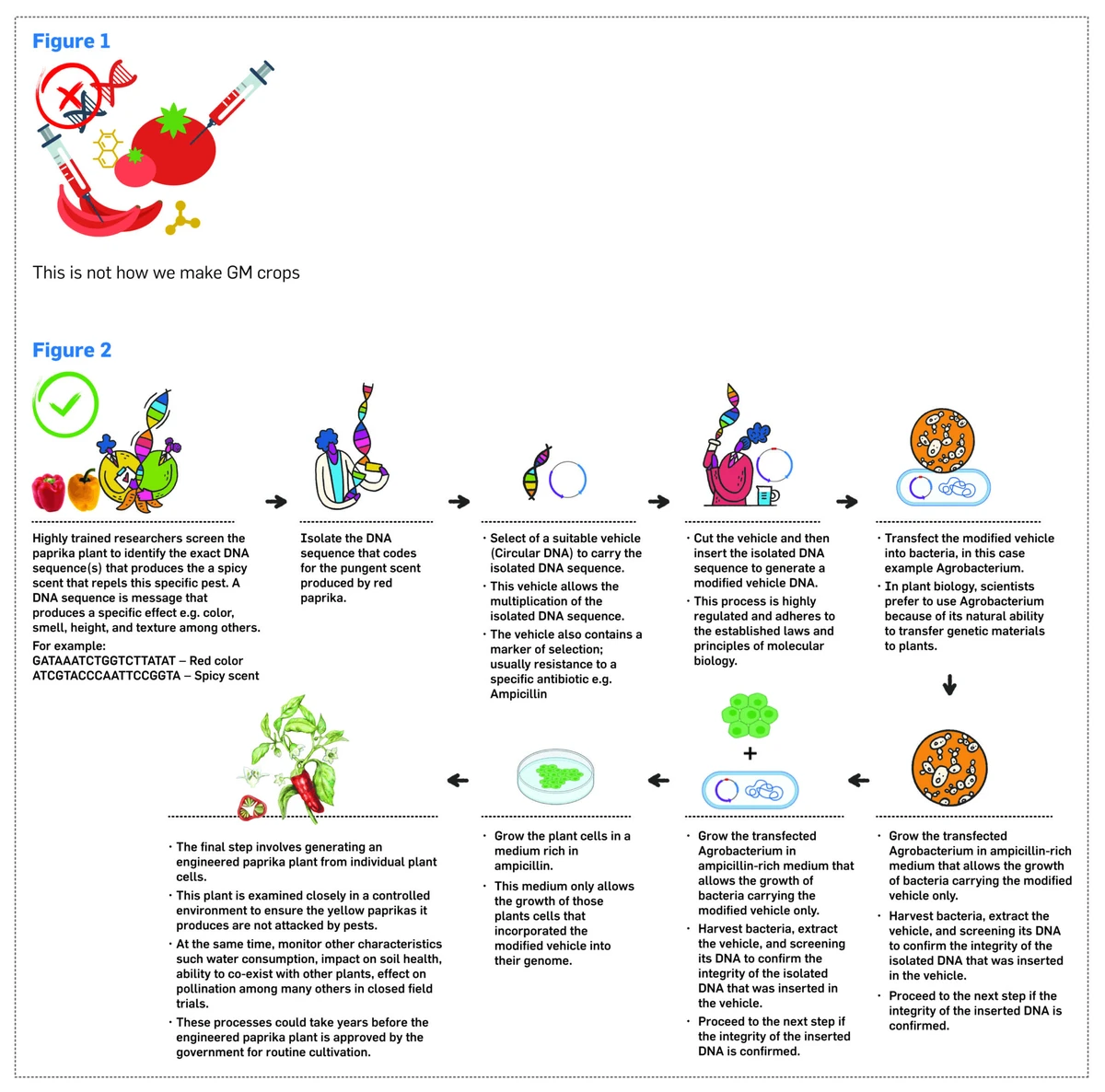
A picture of a syringe with unknown components injected into a tomato or maize does not inspire confidence from the public.
On the contrary, these pictures breed fertile ground for misinformation, such as the lie that GM foods are harmful to human health, the lie that consuming GM foods can change one’s DNA or the misconception that GM crops always destroy environmental biodiversity.
These are outright fabrications because no scientific evidence supports any of these allegations.
Second, creating a single GM crop takes around 13 to 15 years and millions of dollars.
Why would a company and its researchers spend so many resources to make harmful products? In addition, why would regulatory agencies knowingly approve unsafe products for human or animal consumption?
These are questions that anti-GM activists find challenging to answer.
Pesticides have many side effects
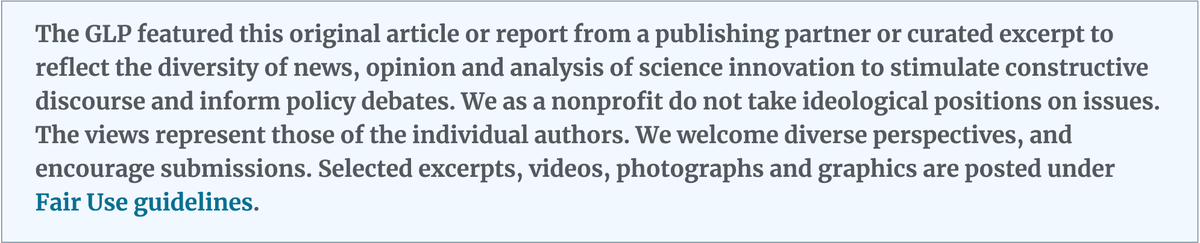
A practical example of how genetic engineering can solve a problem is summarized in Figure 2 above.
Let us assume that we have paprika farmers in Kenya that produce red and yellow paprikas.
Unlike red paprikas, yellow paprikas are severely affected by a specific pest lowering their yield.
Farmers use pesticides that have become less effective with time in managing this pest.
Overusing pesticides has many side effects, including raising soil toxicity that may eventually lower the yields of red and yellow paprikas.
Why this pest only attacks yellow and not red paprikas is beyond the farmers’ understanding.
After extensive research, scientists discover that red paprikas produce a slightly spicy smell that repels this pest.
On the contrary, yellow paprikas do not produce this scent, making them susceptible to this pest.
A practical solution is to make yellow paprikas have the same smell that repels this pest away.
Figure 2 describes the many complex steps necessary to develop a GM crop.
As demonstrated in Figure 2, we can use genetic engineering to solve this pest problem.
An important take-home message is that genetic engineering is not conducted in a closed environment, given its consequences if misused.
Highly regulated process
In Kenya, for example, several regulatory bodies govern this process from the beginning.
They include the National Biosafety Authority (NBA), National Environmental Management Authority (NEMA), Kenya Bureau of Standards (KEBS), Kenya Plant Health Inspectorate Service (KEPHIS), and the Pest Control Products Board (PCPB).
Their core mandate is to protect the public interest by ensuring that GM products are safe and solve the intended problem effectively.
Genetic engineering is not as trivial and straightforward as anti-GM activists try to portray it.
It is a complex, outcome-oriented, and highly regulated process and can therefore be trusted.
Dr. Victor Oria is a cancer biologist at Biotech Research and Innovation Centre in Copenhagen, Denmark.
A version of this article was originally posted at Alliance for Science and has been reposted here with permission. Any reposting should credit the original author and provide links to both the GLP and the original article. Find Alliance for Science on Twitter @ScienceAlly
 | Videos | More... |
Video: Nuclear energy will destroy us? Global warming is an existential threat? Chemicals are massacring bees? Donate to the Green Industrial Complex!
 | Bees & Pollinators | More... |

GLP podcast: Science journalism is a mess. Here’s how to fix it

Mosquito massacre: Can we safely tackle malaria with a CRISPR gene drive?

Are we facing an ‘Insect Apocalypse’ caused by ‘intensive, industrial’ farming and agricultural chemicals? The media say yes; Science says ‘no’
 | Infographics | More... |
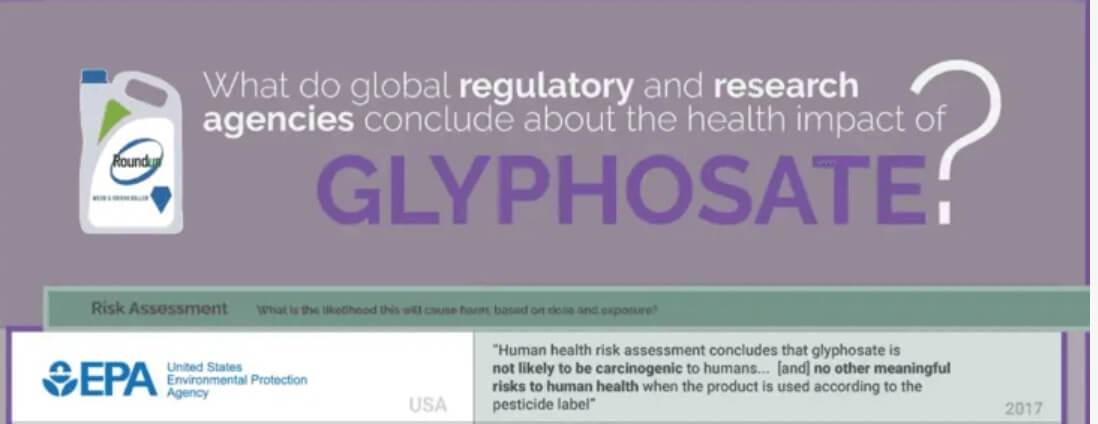
Infographic: Global regulatory and health research agencies on whether glyphosate causes cancer
 | GMO FAQs | More... |

Why is there controversy over GMO foods but not GMO drugs?

How are GMOs labeled around the world?

How does genetic engineering differ from conventional breeding?
 | GLP Profiles | More... |

Alex Jones: Right-wing conspiracy theorist stokes fear of GMOs, pesticides to sell ‘health supplements’

 Viewpoint — Fact checking MAHA mythmakers: How wellness influencers and RFK, Jr. undermine American science and health
 Viewpoint: Video — Big Solar is gobbling up productive agricultural land and hurting farmers yet providing little energy or sustainabilty gains
 Fighting deforestation with CO2: Biotechnology breakthrough creates sustainable palm oil alternative for cosmetics
 Trust issues: What happens when therapists use ChatGPT?
 California, Washington, Oregon forge immunization alliance to safeguard vaccine access against federal undermining
 30-year-old tomato line shows genetic resistance to devastating virus
 The free-range chicken dilemma: Better for birds, but with substantial costs
 ‘You have to treat the brain first’: Rethinking chronic pain with Sanjay Gupta