Give farmers a chance: Pro-GMO activists march through Nairobi and Kampala calling for the adoption of improved seeds

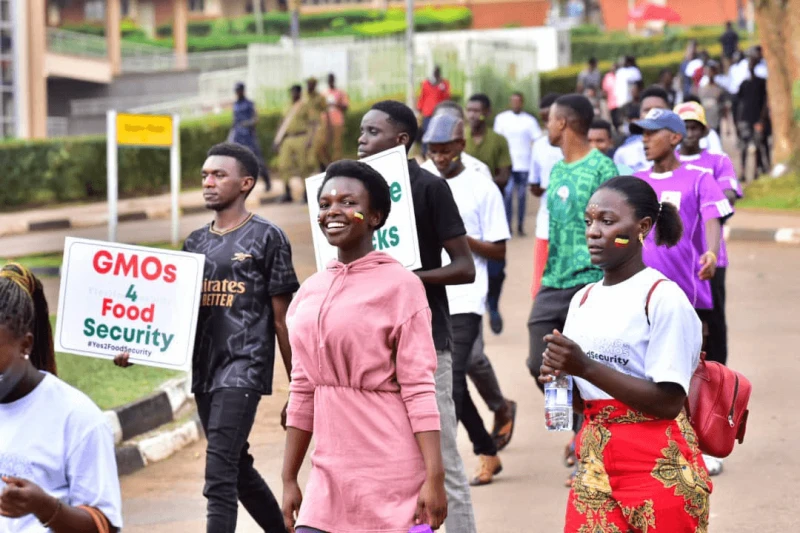
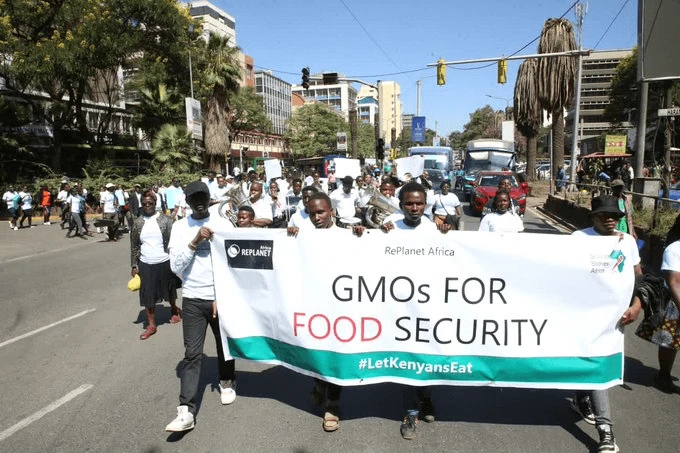
They carried placards with pro-GMO slogans such as Genetically Modified Crops are Safe and Nutritious and Yes to Food Security.
This was in response to a petition filed at the East African Court of Justice in January by anti-GMO activists who are asking the court to block Kenya from adopting GM crops after President William Ruto lifted a decade-old ban on the same in 2022.
“We have come to show solidarity with (Kenyan) President William Ruto and to reiterate that his decision is correct and to call his Ugandan counterpart to follow suit,” said Patricia Nanteza, one of the organizers of the march and founder of Science Stories Africa.
Reduce hunger and counter effects of drought
President Ruto lifted the ban on the cultivation and importation of GMOs in the east African country in October 2022, in response to the effects of the drought that has been experienced in the region for almost two years.
But certain voices are second-guessing President Ruto. In November 2022, the Kenyan High Court suspended the adoption of GM crops until a petition by some Kenyan farmers was heard.
In Uganda, President Yoweri Museveni cannot seem to make up his mind to assent to a Parliamentary Bill that would guide the usage of GM crops.
Uganda’s Parliament has passed the Genetic Engineering Regulatory Bill twice, but Museveni has rejected it.
But Nanteza says genetically modified crops and other varieties which are drought and pest-tolerant and high-yielding could reduce hunger in the region and counter the effects of drought.
“These varieties are nutritious and above all, safe,” said Nanteza. “They could help.”
It is politics, not safety
Scientists at the Kenya Agricultural and Livestock Research Organisation have developed cotton resistant to bollworms and maize s and maize that is resistant to pests.
In Uganda, scientists have developed a bio-fortified banana rich in Vitamin A (an essential nutrient for children) and resistant to bacterial wilt.
They have also developed cassava resistant to brown streak and mosaic diseases, a potato resistant to late blight disease, and maize tolerant to drought and resistant to pests such as fall armyworm.
But farmers cannot access these crop varieties because of the indecision surrounding GMOs in the region.
Some anti-GMO activists say they aren’t sure about the safety of the crops while the Centre for Food and Adequate Living Rights says GMOs will outcompete indigenous seeds and leave smallholder farmers in the region suffering at the hands of big seed makers.
However, Andrew Kiggundu, a plant biotechnologist at the National Agricultural Research Organisation in Uganda, said all this wasn’t true.
“The notion that GMOs aren’t safe is all lies. It is all politics, nothing about safety. Science has proven that these technologies are safe. People in America, Brazil, and even South Africa have been eating these foods. Have you heard anyone die?” Kiggundu posed.
“Some people are calling for fresh consultations (before the region can adopt these varieties). Surely, we have consulted enough. We can’t keep in this maze of consulting and discussing. We just need to move forward now.”
Rising commodity prices
Deborah Wendiro, a farmer in Kamuli district in central Uganda, called for the adoption of GM crops to give farmers a chance.
“The climate is changing. Soils have become less fertile. Pests are vicious now more than ever. We need more resilient crop varieties,” she said. “We want to get out of poverty.”
Alfred Namaasa, a farmer and local leader in Mbale District in Uganda, made the same plea.
“They should give farmers options so whoever wants to plant organic foods can do so and those who want to plant improved seeds can plant them,” Namasa said, and cited the cost of living which has gone up in the last two years.
“A bunch of matoke that cost $1.37 two years ago now costs $10. A kilogram of corn flour that cost half a dollar now goes for $1.10. Cassava is very expensive. Things can’t stay the same.”
Matter of when not if
But Kiggundu was hopeful and said it was a matter of when and not if the region will adopt these varieties, especially after Ruto’s “bold move.”
“He (Kenyan President) has opened the door for us. And when Kenyan farmers start to plant these improved crops and people see their benefits, it will be a matter of time before Uganda follows suit,” said Kiggundu.
“The varieties (we are advocating for) have been developed by African scientists. So, the thinking that some big seed manufacturers want to monopolize the industry is flawed.”
The researcher said President Museveni was so passionate about science. “We just don’t know why it is taking long (to have a law to regulate the usage of GMOs in place).
“But science and technology have no borders. These technologies will come here.”
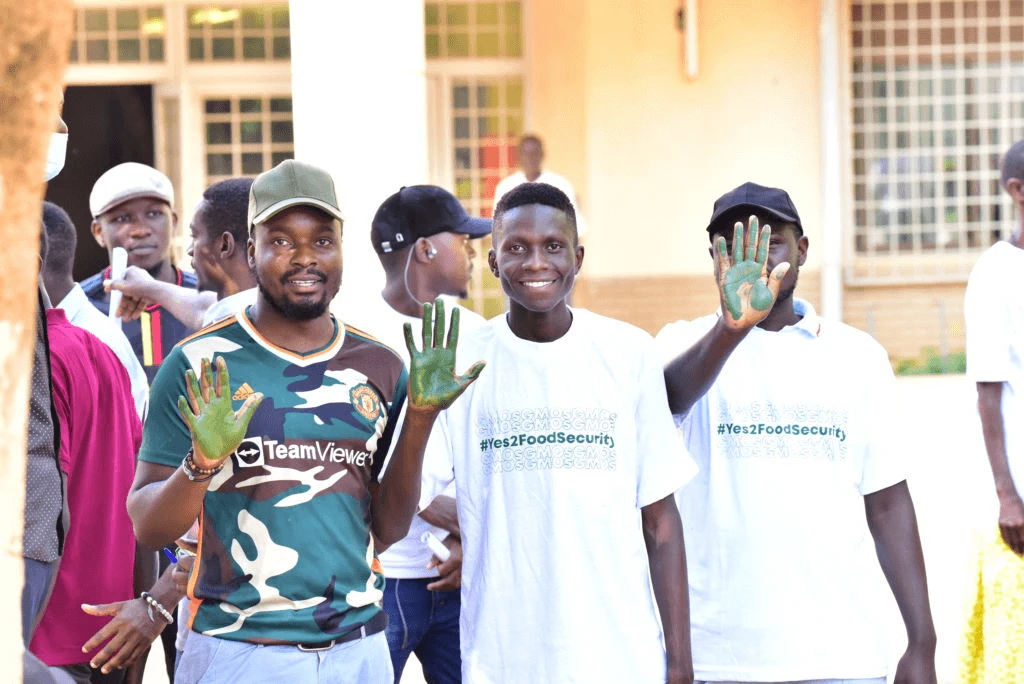
That is what the organizers of the GMO solidarity walk also hope for.
John Agaba is a freelance journalist based in Kampala, Uganda. He covers agriculture, environment, health and higher education. Find John on Twitter @jonnyagaba
A version of this article was originally posted at the Alliance for Science and is reposted here with permission. The Alliance for Science can be found on Twitter @ScienceAlly
 | Videos | More... |
Video: Nuclear energy will destroy us? Global warming is an existential threat? Chemicals are massacring bees? Donate to the Green Industrial Complex!
 | Bees & Pollinators | More... |

GLP podcast: Science journalism is a mess. Here’s how to fix it

Mosquito massacre: Can we safely tackle malaria with a CRISPR gene drive?

Are we facing an ‘Insect Apocalypse’ caused by ‘intensive, industrial’ farming and agricultural chemicals? The media say yes; Science says ‘no’
 | Infographics | More... |

Infographic: Global regulatory and health research agencies on whether glyphosate causes cancer
 | GMO FAQs | More... |

Why is there controversy over GMO foods but not GMO drugs?

How are GMOs labeled around the world?
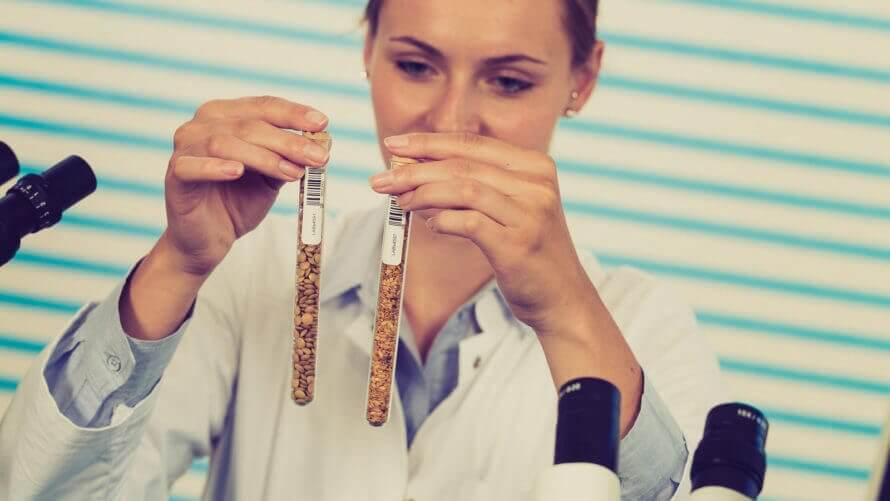
How does genetic engineering differ from conventional breeding?
 | GLP Profiles | More... |

Alex Jones: Right-wing conspiracy theorist stokes fear of GMOs, pesticides to sell ‘health supplements’

 Viewpoint — Fact checking MAHA mythmakers: How wellness influencers and RFK, Jr. undermine American science and health
 Viewpoint: Video — Big Solar is gobbling up productive agricultural land and hurting farmers yet providing little energy or sustainabilty gains
 Fighting deforestation with CO2: Biotechnology breakthrough creates sustainable palm oil alternative for cosmetics
 Trust issues: What happens when therapists use ChatGPT?
 California, Washington, Oregon forge immunization alliance to safeguard vaccine access against federal undermining
 30-year-old tomato line shows genetic resistance to devastating virus
 The free-range chicken dilemma: Better for birds, but with substantial costs
 ‘You have to treat the brain first’: Rethinking chronic pain with Sanjay Gupta