‘Infusing beans with a new genetic blueprint’: Synthetic biology startup engineers soybeans to produce ingredients for cancer drugs, vaccines and infant formula


When Brian DeDecker drives past the bucolic green soybean fields en route to his childhood home in rural Illinois, his mind drifts not to the past but to the future.
As a first-generation college student turned molecular biologist, DeDecker imagines a day when these humble beans, which his family has grown for generations, pack a bounty of therapeutic but hard-to-obtain natural compounds.
Some will be loaded with chemotherapy drugs typically stripped from old growth trees. Others will burst with vaccine additives, now mainly accessed by harvesting the livers of endangered sharks or immune-boosting proteins accessible only through human breast milk.
“Since the discovery of DNA in the 1950s, we have amassed an amazing amount of knowledge about how biology works at the molecular level,” said DeDecker, a teaching associate professor in the Department of Molecular, Cellular and Developmental Biology at CU Boulder. “We are now in a position to use that knowledge to actually build new life—to engineer organisms to do new things that can address some of the world’s biggest problems.”
In recent years, DeDecker and former student Simon Kalmus have put that vision into action, working with members of CU’s iGEM (International Genetically Engineered Machine) student research team to devise a magic bean of sorts—one that can shapeshift into a custom-made chemical factory depending on what genetic instructions they give it.
Their new company Seedling Biosystems is among a host of startups sprouting from the burgeoning field of synthetic biology, a $9 billion and growing industry combining the ancient wisdom of evolution with cutting-edge genetic engineering tools. Many companies already genetically program microorganisms to churn out desired chemicals. For instance, insulin, which was once harvested from dog pancreases, is now produced by heaping vats of yeast and bacteria.
But there’s a hitch:
“You have to feed yeast and bacteria plants in order to make the chemicals. We make it directly in plants,” said DeDecker, whose company will begin producing bean-borne protein supplements for baby formula this spring. “Someday, there could be soybean fields across the Midwest dedicated to biopharming.”
Endangered sharks and old growth trees
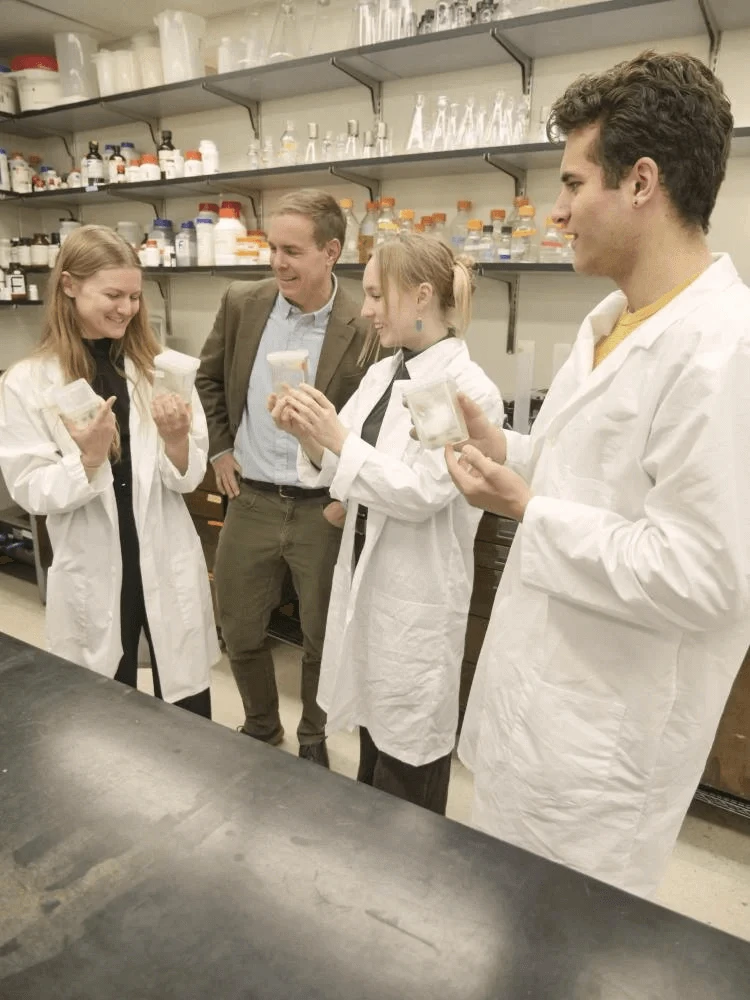
Kalmus, a Colorado-raised prodigy, left high school early and spent a few years farming in southern France before enrolling in the Department of Chemical and Biological Engineering at CU Boulder. He was drawn to the promise of synthetic biology and eagerly joined the iGEM team. One day, DeDecker came into the lab excited about the potential of bioengineering plants. Soon after, Kalmus wandered into DeDecker’s office excited to share his own ideas about how to do it.
“Over the course of a month or two we went from, ““Huh. This is a fun idea,’ to realizing it might actually work,” recalled Kalmus, who graduated in 2019 and has stayed on as a research associate and company co-founder.
As plants go, he explained, soybeans are remarkably efficient, turning the sun’s energy into a cornucopia of proteins and fats while restoring nitrogen to the soil rather than stripping it as many crops do. Because it is cheap and nutritionally dense, it’s used broadly as feedstock for cattle.
It’s also possible to infuse the beans with the genetic blueprint to build something more scarce: the natural oil squalene. The oil is widely used to strengthen vaccines and keep skin and lips supple in cosmetics. But it’s primarily sourced from the livers of sharks. The oil helps them stay buoyant.
“We are decimating shark populations for this and we don’t need to be,” said DeDecker.
Taxol, or paclitaxel, a widely used chemotherapy treatment, comes from the bark of yew trees, which use it to fight off wood-degrading fungi. But as the old growth giants have grown increasingly endangered, environmentalists have become concerned.
Enter DeDecker’s students.
Where scientists used to have to tromp through the forest, get a sample and analyze it to understand the tree’s genetic code, they can now order yew DNA from a commercial vendor and play around with it in the lab.
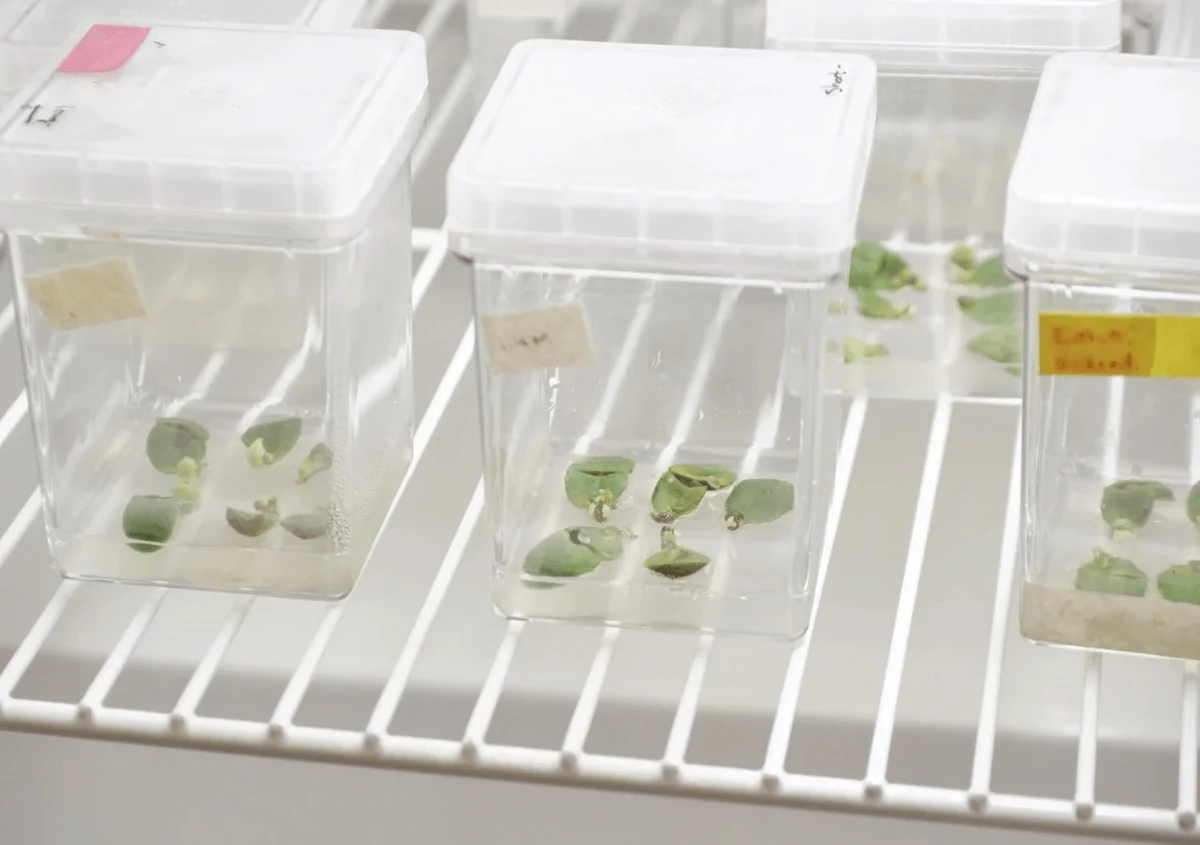
In time, they developed a platform for infusing an otherwise normal soybean plant with the genetic instructions to, when switched on, produce taxadiene—the first step in synthesizing the anti-cancer drug paclitaxel (Taxol).
To switch it on, they essentially make bean soup.
“At the end of the day, you essentially add water to a big pot of beans, let them sit and they start to putter away making whatever it is that you want them to make,” said Kalmus.
A different kind of grow operation
Early on, the two rigged up a grow room in DeDecker’s Boulder garage, taking great pains to reassure neighbors that their crop was really soybeans.
“We’re like, ‘Seriously, we’re growing the world’s most unique tofu in this garage,’” said Kalmus.
With funding and support from Venture Partners, which helps CU faculty members commercialize their research, they launched a startup and obtained a patent. Meantime, the iGEM team, as part of an annual international contest, helped work out the scientific details.
“You are mixing all these things together and it looks like water but is actually the instructions for life,” said team member Maya Nelson, an undergraduate in the Department of Biochemistry. “It’s like magic.”
In October, the team presented its Taxol research in Paris at the iGEM competition.
Well aware of concerns about genetically modified organisms (GMOs), the team is now working on ways to ensure that pollen from their engineered plants doesn’t drift to other farms. (Notably, about 95% of soy is already genetically engineered, and soy possesses both male and female sex organs enabling some varieties to self-propagate without opening and releasing pollen at all.)
This spring, the company will begin scaling production on its first product, a bioengineered milk protein critical for infant development.
Similar proteins can already be extracted from cow’s milk for formula, but cattle farming is extremely water intensive and emits the greenhouse gas methane.
“If we can remove the cow from the system, we can produce these proteins much more sustainably,” said DeDecker.
And he and his students are just getting started.
“We have an opportunity to transform lots of dirty manufacturing processes,” he said. “When you start to think about it, your imagination can just run wild.”
Read the original post here

 | Videos | More... |
Video: Nuclear energy will destroy us? Global warming is an existential threat? Chemicals are massacring bees? Donate to the Green Industrial Complex!
 | Bees & Pollinators | More... |

GLP podcast: Science journalism is a mess. Here’s how to fix it

Mosquito massacre: Can we safely tackle malaria with a CRISPR gene drive?

Are we facing an ‘Insect Apocalypse’ caused by ‘intensive, industrial’ farming and agricultural chemicals? The media say yes; Science says ‘no’
 | Infographics | More... |

Infographic: Global regulatory and health research agencies on whether glyphosate causes cancer
 | GMO FAQs | More... |

Why is there controversy over GMO foods but not GMO drugs?

How are GMOs labeled around the world?
How does genetic engineering differ from conventional breeding?
 | GLP Profiles | More... |

Alex Jones: Right-wing conspiracy theorist stokes fear of GMOs, pesticides to sell ‘health supplements’

 Viewpoint — Fact checking MAHA mythmakers: How wellness influencers and RFK, Jr. undermine American science and health
 Viewpoint: Video — Big Solar is gobbling up productive agricultural land and hurting farmers yet providing little energy or sustainabilty gains
 Fighting deforestation with CO2: Biotechnology breakthrough creates sustainable palm oil alternative for cosmetics
 Trust issues: What happens when therapists use ChatGPT?
 California, Washington, Oregon forge immunization alliance to safeguard vaccine access against federal undermining
 30-year-old tomato line shows genetic resistance to devastating virus
 The free-range chicken dilemma: Better for birds, but with substantial costs
 ‘You have to treat the brain first’: Rethinking chronic pain with Sanjay Gupta