Making sunshine for crops obsolete? Food of the future will be grown 18 times more efficiently with the help of artificial photosynthesis


Photosynthesis has evolved in plants for millions of years to turn water, carbon dioxide, and the energy from sunlight into plant biomass and the foods we eat.
Combined with solar panels to generate the electricity to power the electrocatalysis, this hybrid organic-inorganic system could increase the conversion efficiency of sunlight into food, up to 18 times more efficient for some foods.
Growing food in difficult conditions imposed by climate change
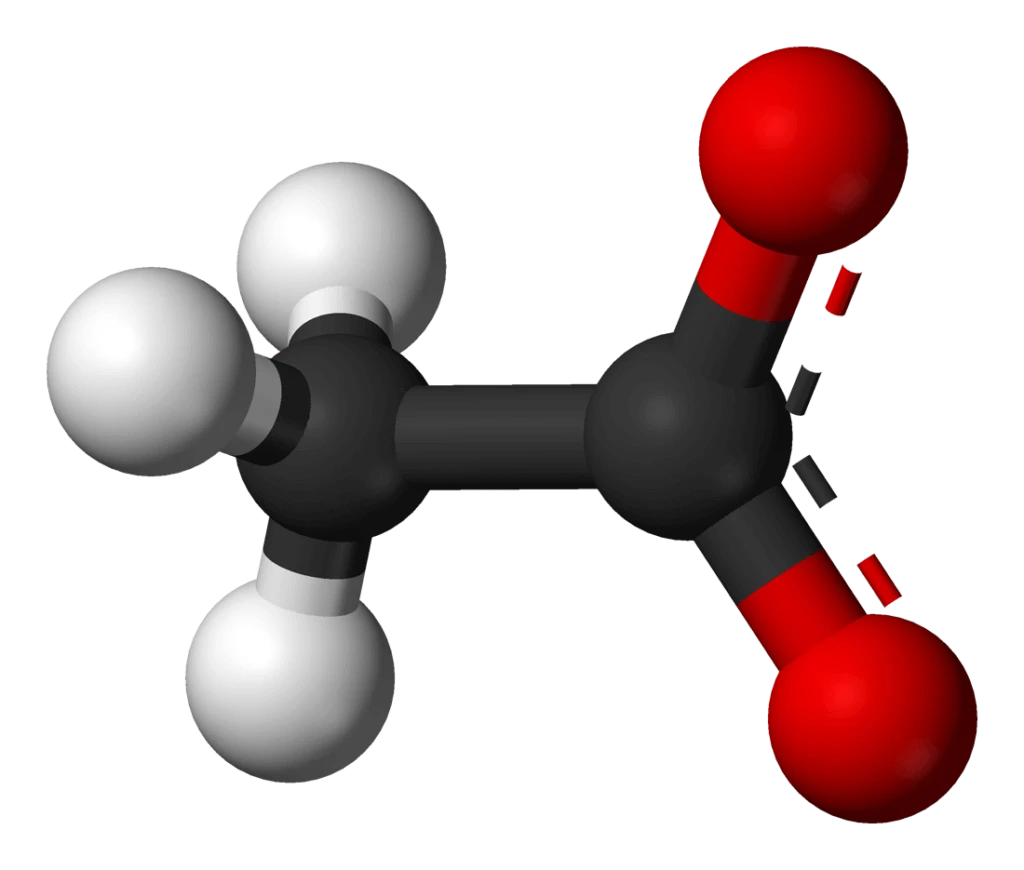
The technology uses a two-step electrocatalytic process to convert carbon dioxide, electricity, and water into acetate, the form of the main component of vinegar. Food-producing organisms then consume acetate in the dark to grow.
By increasing the efficiency of food production, less land is needed, lessening the impact agriculture has on the environment
Electrolysers are devices that use electricity to convert raw materials like carbon dioxide into useful molecules and products. Integrating all the components of the system, the output of the electrolyser was used to support the growth of food-producing organisms.
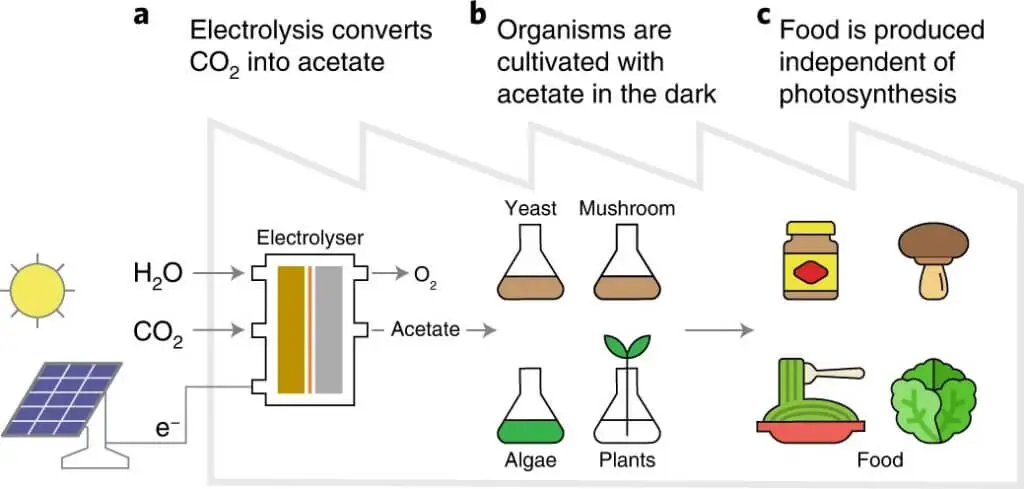
The amount of acetate produced was increased while the amount of salt used was decreased, resulting in the highest levels of acetate ever produced in an electrolyser to date.
Experiments showed that a wide range of food-producing organisms can be grown in the dark directly on the acetate-rich electrolyser output, including green algae, yeast, and fungal mycelium that produce mushrooms.
Producing algae with this technology is approximately fourfold more energy-efficient than growing it photosynthetically, where yeast production was about 18-fold more energy-efficient than how it is typically cultivated using sugar extracted from corn.
A more efficient method of turning solar energy into food
Corresponding author Feng Jiao at the University of Delaware said: “Using a state-of-the-art two-step tandem CO2 electrolysis setup developed in our laboratory, we were able to achieve a high selectivity towards acetate that cannot be accessed through conventional CO2 electrolysis routes.”
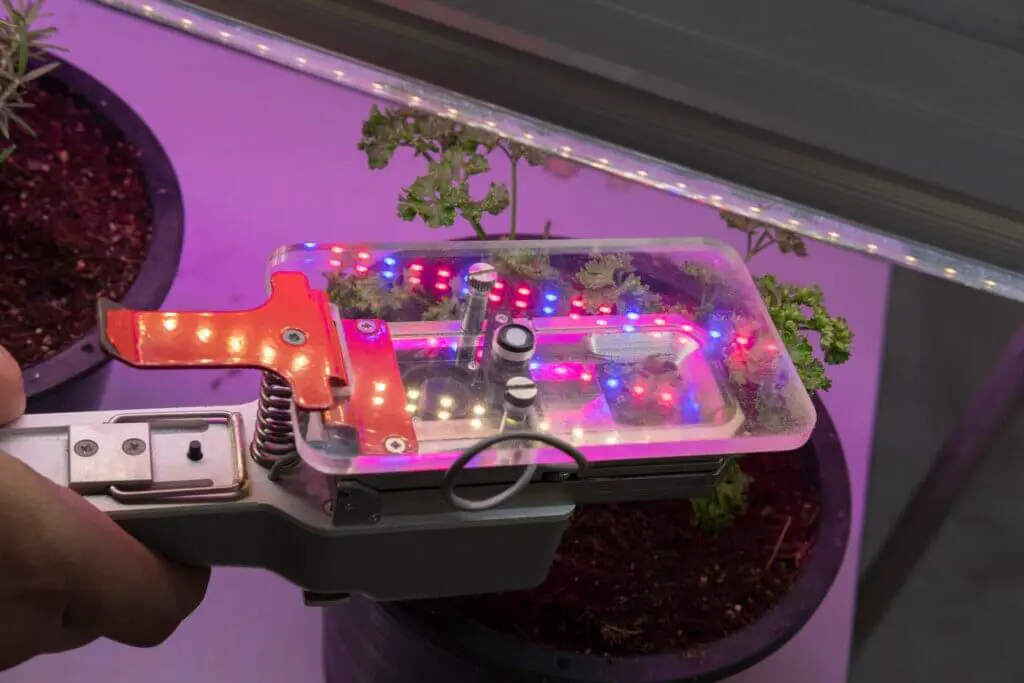
Credit: Psisaa via Dreamstime
Elizabeth Hann, a doctoral candidate in the Jinkerson Lab and co-lead author of the study, added: “We were able to grow food-producing organisms without any contributions from biological photosynthesis.
“Typically, these organisms are cultivated on sugars derived from plants or inputs derived from petroleum – which is a product of biological photosynthesis that took place millions of years ago.
“This technology is a more efficient method of turning solar energy into food, as compared to food production that relies on biological photosynthesis.”
The potential for employing this technology to grow crop plants
Cowpea, tomato, tobacco, rice, canola, and green pea were all able to use carbon from acetate when cultivated in the dark – creating the potential for more foods to be generated artificially, saving more land and time.
By liberating agriculture from complete dependence on the sun, artificial photosynthesis opens the door to countless possibilities for growing food under the increasingly difficult conditions imposed by anthropogenic climate change.
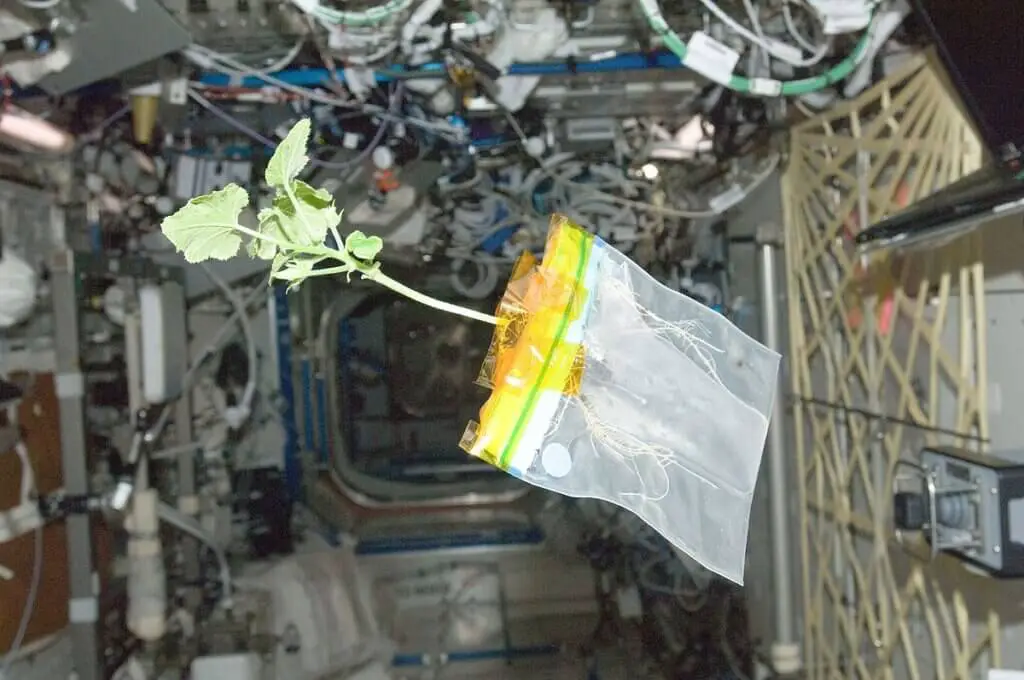
Drought, floods, and reduced land availability would be less of a threat to global food security if crops for humans and animals grew in less resource-intensive, controlled environments. Crops could also be grown in cities and other areas currently unsuitable for agriculture, and even provide food for future space explorers.
Jinkerson said: “Using artificial photosynthesis approaches to produce food could be a paradigm shift for how we feed people. By increasing the efficiency of food production, less land is needed, lessening the impact agriculture has on the environment.
“And for agriculture in non-traditional environments, like outer space, the increased energy efficiency could help feed more crew members with less inputs.”
Read the original post here

 | Videos | More... |

Video: Nuclear energy will destroy us? Global warming is an existential threat? Chemicals are massacring bees? Donate to the Green Industrial Complex!
 | Bees & Pollinators | More... |

GLP podcast: Science journalism is a mess. Here’s how to fix it

Mosquito massacre: Can we safely tackle malaria with a CRISPR gene drive?

Are we facing an ‘Insect Apocalypse’ caused by ‘intensive, industrial’ farming and agricultural chemicals? The media say yes; Science says ‘no’
 | Infographics | More... |

Infographic: Global regulatory and health research agencies on whether glyphosate causes cancer
 | GMO FAQs | More... |
Why is there controversy over GMO foods but not GMO drugs?

How are GMOs labeled around the world?
How does genetic engineering differ from conventional breeding?
 | GLP Profiles | More... |

Alex Jones: Right-wing conspiracy theorist stokes fear of GMOs, pesticides to sell ‘health supplements’

 Viewpoint — Fact checking MAHA mythmakers: How wellness influencers and RFK, Jr. undermine American science and health
 Viewpoint: Video — Big Solar is gobbling up productive agricultural land and hurting farmers yet providing little energy or sustainabilty gains
 Fighting deforestation with CO2: Biotechnology breakthrough creates sustainable palm oil alternative for cosmetics
 Trust issues: What happens when therapists use ChatGPT?
 California, Washington, Oregon forge immunization alliance to safeguard vaccine access against federal undermining
 30-year-old tomato line shows genetic resistance to devastating virus
 The free-range chicken dilemma: Better for birds, but with substantial costs
 ‘You have to treat the brain first’: Rethinking chronic pain with Sanjay Gupta