More than 3,000 plants — including some organic crops — developed by mutating seeds using radiation or chemicals. Here’s an explainer


Plant mutation breeding, also called variation breeding, is a method that uses physical radiation or chemical means to induce spontaneous genetic variation in plants to develop new crop varieties. “Mutation” is the source of most genetic variation and the motor of evolution.
Plant varieties bred using radiation are equally safe as the varieties developed through conventional or marker assisted breeding, since radiation does not pass on to further generations of the bred variety. Thus, plants can be bred for many generations to achieve the best result without suffering damage or becoming radioactive. Many crop varieties developed though mutation breeding have been grown all over the world in the last 100 years. Check out a few examples from Bulgaria, China, Cuba, Uganda and other countries.
Space mutagenesis, is a method that involves the use of cosmic rays in outer space to induce spontaneous mutations. Scientists typically send plant seeds into space, and then grow, screen and breed them once they return to Earth. As in conventional mutation breeding, scientists try to identify the plants with the most useful traits, and those which may provide an advantage over more traditional crop varieties. Wheat, rice and cotton have already visited space.
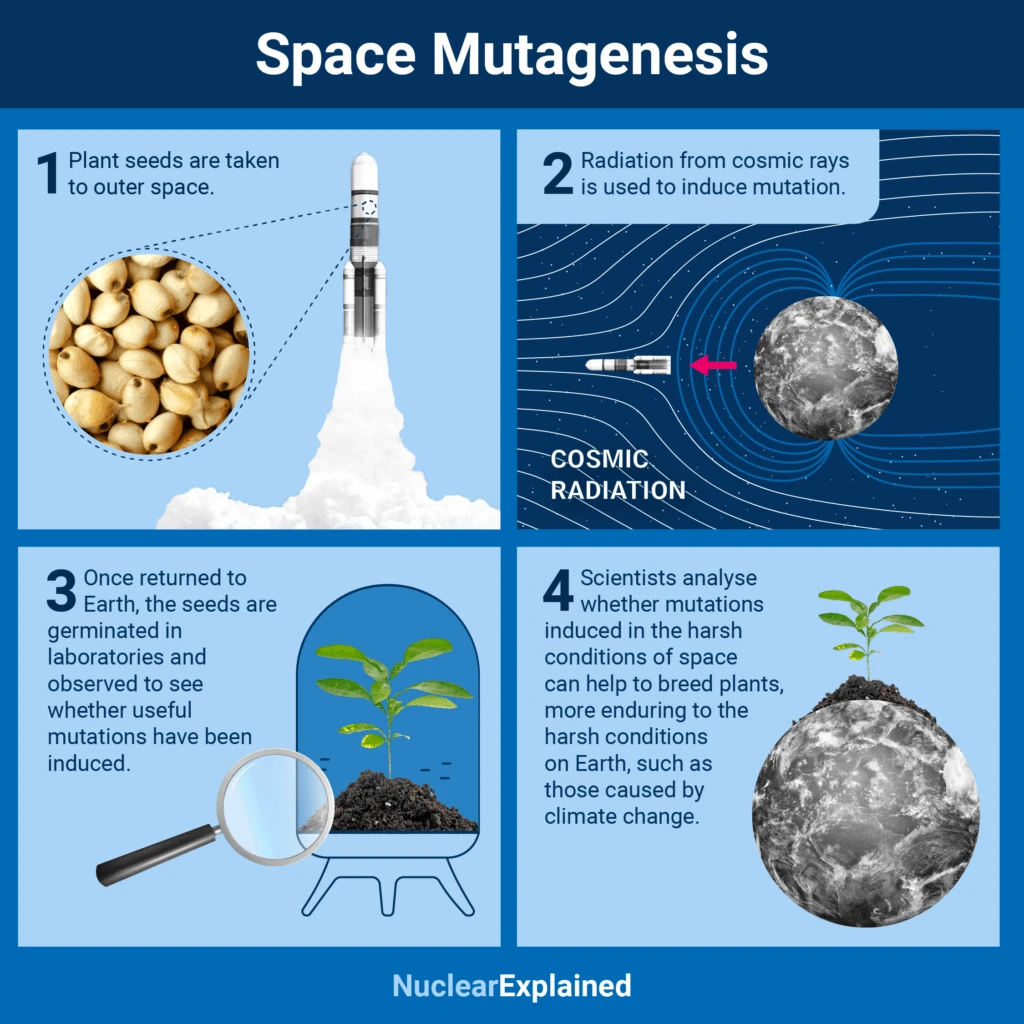 Credit: Adriana Vargas via IAEA
This is an excerpt. Read the original post here

 | Videos | More... |

Video: Nuclear energy will destroy us? Global warming is an existential threat? Chemicals are massacring bees? Donate to the Green Industrial Complex!
 | Bees & Pollinators | More... |

GLP podcast: Science journalism is a mess. Here’s how to fix it

Mosquito massacre: Can we safely tackle malaria with a CRISPR gene drive?

Are we facing an ‘Insect Apocalypse’ caused by ‘intensive, industrial’ farming and agricultural chemicals? The media say yes; Science says ‘no’
 | Infographics | More... |

Infographic: Global regulatory and health research agencies on whether glyphosate causes cancer
 | GMO FAQs | More... |

Why is there controversy over GMO foods but not GMO drugs?

How are GMOs labeled around the world?

How does genetic engineering differ from conventional breeding?
 | GLP Profiles | More... |

Alex Jones: Right-wing conspiracy theorist stokes fear of GMOs, pesticides to sell ‘health supplements’

 Viewpoint — Fact checking MAHA mythmakers: How wellness influencers and RFK, Jr. undermine American science and health
 Viewpoint: Video — Big Solar is gobbling up productive agricultural land and hurting farmers yet providing little energy or sustainabilty gains
 Fighting deforestation with CO2: Biotechnology breakthrough creates sustainable palm oil alternative for cosmetics
 Trust issues: What happens when therapists use ChatGPT?
 California, Washington, Oregon forge immunization alliance to safeguard vaccine access against federal undermining
 30-year-old tomato line shows genetic resistance to devastating virus
 The free-range chicken dilemma: Better for birds, but with substantial costs
 ‘You have to treat the brain first’: Rethinking chronic pain with Sanjay Gupta