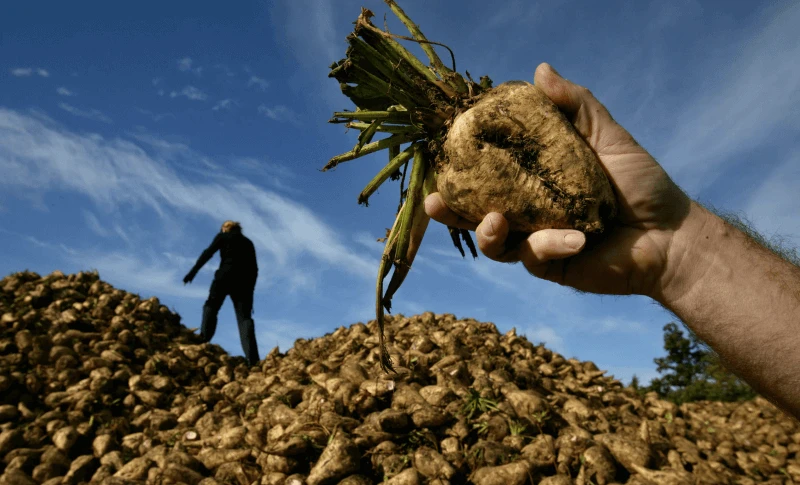
The [French] government has just issued a decree authorizing, by way of exemption, the use in 2023 of sugar beet seeds coated with neonicotinoids. The practice has been banned since 2016 by the Biodiversity law, but in the absence of alternatives, crops are at the mercy of aphids and the diseases they transmit. In 2020, jaundice had caused the loss of 35% to 40% of harvests [a yellowing virus introduced by aphids], putting the entire sector in danger. “Whatever happens, this is the last exemption” granted to beet growers, assured, on January 6 on Franceinfo, Christophe Béchu, the Minister of Ecological Transition. “It’s a matter of consistency, health and respect for the environment,” he added.
The Technical Beet Institute (ITB) is working on ways to do without neonicotinoids. So far, nothing deployable on a large scale has come out of laboratories and experimental fields.
“Many statements are made in the media, but concretely, we know that it will be complex, hybrid. It’s a race against time. Currently, the sugar beet industry does not have a solution to prevent the consequences of vector/virosis multiplication like neonicotinoids do.”













 Viewpoint — Fact checking MAHA mythmakers: How wellness influencers and RFK, Jr. undermine American science and health
 Viewpoint: Video — Big Solar is gobbling up productive agricultural land and hurting farmers yet providing little energy or sustainabilty gains
 Fighting deforestation with CO2: Biotechnology breakthrough creates sustainable palm oil alternative for cosmetics
 Trust issues: What happens when therapists use ChatGPT?
 California, Washington, Oregon forge immunization alliance to safeguard vaccine access against federal undermining
 30-year-old tomato line shows genetic resistance to devastating virus
 The free-range chicken dilemma: Better for birds, but with substantial costs
 ‘You have to treat the brain first’: Rethinking chronic pain with Sanjay Gupta