New Radiotracer Uncovers Biomarker Associated with Triple-Negative Breast Cancer
New Radiotracer Uncovers Biomarker Associated with Triple-Negative Breast Cancer
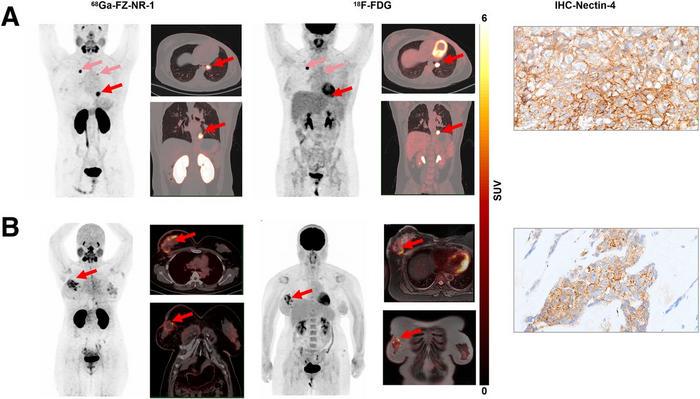
A groundbreaking advancement in the realm of nuclear medicine has emerged with the recent development of a novel PET radiotracer known as 68Ga-FZ-NR-1. This radiotracer has demonstrated a remarkable ability to visualize Nectin-4, an innovative biomarker that is increasingly recognized for its potential significance in the assessment and treatment of triple-negative breast cancer (TNBC). Research findings published in the esteemed journal, The Journal of Nuclear Medicine, elucidate the transformative potential of this agent in improving the diagnostic and therapeutic landscape for a disease that has historically posed significant challenges due to its aggressive nature and variable prognosis.
Triple-negative breast cancer, a subtype of breast cancer that accounts for approximately 15-20% of cases, is known for its highly invasive characteristics. With existing treatment options often falling short and a disheartening five-year survival rate hovering around 40%, significant advancements in diagnostic methodologies are essential. TNBC is a heterogeneous disease, frequently marked by high rates of recurrence. As such, the quest for effective biomarker-driven imaging tools has never been more urgent. The emergence of Nectin-4 as a promising biomarker may represent a pivotal step forward.
Researchers led by Shaoli Song, PhD, who serves as the director of nuclear medicine at the Fudan University Shanghai Cancer Center, have dedicated their efforts to address a critical gap in TNBC diagnosis. Dr. Song and her colleagues recognized that although Nectin-4 is significantly overexpressed in TNBC tissues, the absence of efficient imaging modalities has hindered its clinical applicability. Thus, the idea to develop targeted radiotracers that could bind to Nectin-4 was born, leading to the creation of a series of agents including 68Ga-FZ-NR-1, 68Ga-FZ-NR-2, and 68Ga-FZ-NR-3.
In their comprehensive studies, the research team meticulously evaluated the efficacy of these radiotracers through a series of rigorous preclinical experiments, both in vitro and in vivo. These investigations included a murine tumor model, where the targeting abilities and specificity of each radiotracer were analyzed. Ultimately, 68Ga-FZ-NR-1 emerged as the frontrunner, demonstrating superior targeting efficacy against Nectin-4. Encouraged by these promising results, the researchers proceeded to embark on a first-in-human study involving nine TNBC patients.
The application of 68Ga-FZ-NR-1 PET/CT imaging in these patients yielded remarkable outcomes, enabling the identification of tumors that were corroborated by conventional imaging techniques such as 18F-FDG PET/CT. This validation process underscored the accuracy of the novel radiotracer in pinpointing areas with elevated Nectin-4 expression. By comparing the findings from PET imaging with biopsy samples taken from the identified lesions, researchers could confirm the correlation between the radiotracer’s detection capabilities and the actual expression levels of the biomarker, thus reinforcing the scientific foundation of this innovative approach.
Dr. Song expressed the significance of this research in revolutionizing the diagnostic landscape for TNBC patients. With the advent of 68Ga-FZ-NR-1, the potential for achieving higher precision in tumor detection has opened doors to more reliable diagnostic information. This progress could lead to improvements in treatment outcomes through more accurate disease assessment and tailored therapeutic strategies, highlighting the importance of personalized medicine in oncology.
The implications of 68Ga-FZ-NR-1 extend beyond TNBC alone. The researchers anticipate that their findings will inspire further investigation into Nectin-4-targeted imaging agents, potentially enhancing the diagnostic efficacy of nuclear medicine not just for TNBC, but for a broader spectrum of malignancies as well. The hope is that this trajectory may lead to the development of new imaging tools that can assist in the management of various cancers characterized by heterogeneity and complex treatment responses.
As the medical community eagerly awaits the subsequent phases of research, the introduction of an innovative biomarker such as Nectin-4 represents a hopeful turning point in the ongoing battle against cancer. Such advancements remind us of the pressing need for continued research and innovation within the field of molecular imaging and nuclear medicine. The endeavor undertaken by Dr. Song and her collaborators reinforces the commitment to tackling the major challenges posed by aggressive cancers, ultimately aiming to enhance survival rates and the quality of life for patients worldwide.
Their pioneering work not only illuminates the path for future studies but also establishes a foundation on which new therapeutic initiatives can be built. As we move into an era where precision medicine becomes increasingly central to cancer treatment, developments like 68Ga-FZ-NR-1 symbolize the crucial intersection of research and clinical application, fostering hope for better diagnostic and therapeutic outcomes.
In conclusion, the advancement of 68Ga-FZ-NR-1 as a targeted imaging agent for Nectin-4 in TNBC represents a significant stride toward bridging the gaps in cancer diagnosis and treatment. With its potential to revolutionize personalized medicine strategies, this groundbreaking research encourages the scientific community to persist in exploring innovative solutions to the multifaceted challenges cancer poses. As research continues to unfold, collaboration and ingenuity will be essential to changing the narrative of cancer treatment and improving patient care in the years to come.
Subject of Research: Nectin-4-targeted PET imaging in triple-negative breast cancer
Article Title: Pilot Study of Nectin-4–Targeted PET Imaging Agent 68Ga-FZ-NR-1 in Triple-Negative Breast Cancer from Bench to First-in-Human
News Publication Date: March 1, 2025
Web References: Journal of Nuclear Medicine
References: DOI
Image Credits: Created by Dr. Li Sun and Dr. Xiaoping Xu, Shanghai Cancer Center
Keywords: Molecular imaging, Breast cancer, Positron emission tomography
Exploring the Interplay Between Aging, Circadian Rhythms, and Cancer Development
Next PostQuantifying Marine Litter: Why Precise Estimates Are Crucial for Contaminant Management
Related Posts

FBXW11 Ubiquitinates YB1, Suppressing Hepatocarcinoma Growth
Advancing Liver Transplantation for Cancer with Genomics
Tumor Microenvironment Dynamics in Breast Cancer Therapy
Blocking Tumors: PD-L1 siRNA Boosts Immunotherapy
Non-Coding RNAs Crucial in Topotecan Cancer Response