New research confirms that GM corn is safe for beneficial insects

And it is far less harmful to non-target organisms than growing corn through conventional methods, where insecticides are used to fight off pests that can destroy the crop, the study found. It was conducted by a researcher with the United States Department of Agriculture (USDA-ARS) and his Swiss colleagues.
The meta-analysis, published in the journal Environmental Evidence, attempted to address concerns raised by critics of GM corn, including contentions that previous assessments of potential impacts were limited in scope.
In response, researchers reviewed hundreds of international studies published between 1997 to 2020 that looked at whether growing genetically modified Bt corn changed the abundance of non-target animals such as arthropods, earthworms and nematodes.
“But after all the number crunching was done, what we found was that, overall, Bt corn just does not have negative impacts on nontarget organisms,” said Steve Naranjo, an ARS entomologist and director of the Arid-Lands Agricultural Research Center in Maricopa, Arizona, who co-authored the study.
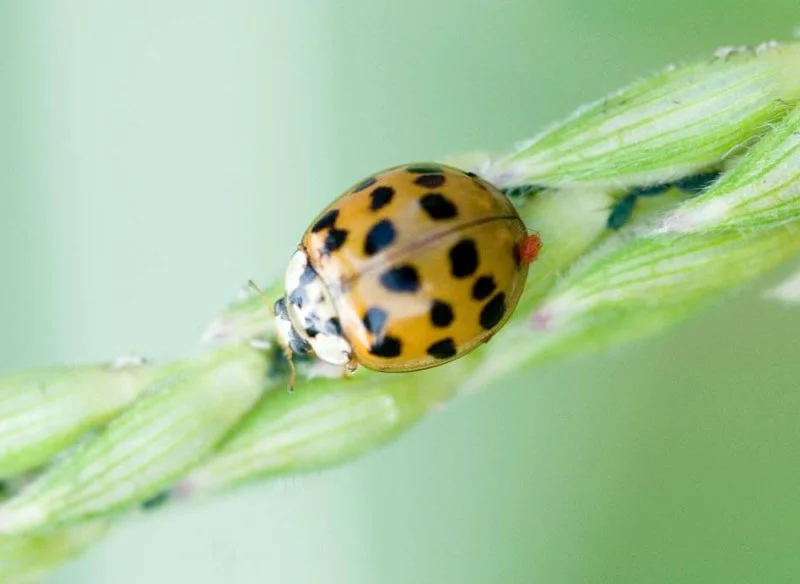
Bt corn controls harmful insect pests by producing proteins from a common soil bacterium, Bacillus thuringiensis, that is also used for pest management in organic farming. It is the most widely grown GM crop in the world. While Bt corn is successful in warding off attacks by corn borers, corn rootworms and other major corn pests, it has no negative effects on ladybeetles, flower bugs, lacewings and other non-target insects, researchers found.
The analysis compiled the largest pool of high-quality data ever analyzed for the purpose of assessing GM corn’s impact on non-target organisms. The data set, comprising 7,279 individual invertebrate records from 233 experiments in 120 articles, three-quarters of which were published in peer-reviewed journals, was published in BMC Research Notes.
The researchers also investigated claims that studies showing no impact were authored by scientists working for companies that produce GM seeds and so might have conflicts of interest.
“It might be a bit surprising, but according to the analysis, when any negative effects by Bt corn on nontarget organisms were found in the data they were attributed more often in studies with private sector support than when no backing by biotech companies was declared,” said co-author Michael Meissle, a senior scientist with Agroscope, ARS’ Swiss counterpart.
In a further attempt to ensure the impartiality and thoroughness of the review, scientists who were not involved in the meta-analysis project, various stakeholders and members of the journal’s review board vetted the quality standards for which studies would be included in the meta-analysis. None of them knew whether any particular study’s data showed a negative impact on non-target organisms, helping avoid inadvertent bias.
“The effects of Bt maize on the community of non-target invertebrates inhabiting maize fields were small and mostly neutral, especially when compared with the effects of broad-spectrum pyrethroid insecticide treatments,” the authors concluded.
Joan Conrow has more than 35 years of experience as a journalist and editor. She specializes in environmental issues, biotechnology, and agriculture, and is especially interested in how these highly charged topics are playing out globally. Joan holds a BA in history and journalism and is certified in beekeeping, mediation, and facilitation. Find Joan on Twitter @joanconrow
A version of this article was originally posted at the Cornell Alliance for Science and is reposted here with permission. The Cornell Alliance for Science can be found on Twitter @ScienceAlly
 | Videos | More... |

Video: Nuclear energy will destroy us? Global warming is an existential threat? Chemicals are massacring bees? Donate to the Green Industrial Complex!
 | Bees & Pollinators | More... |

GLP podcast: Science journalism is a mess. Here’s how to fix it

Mosquito massacre: Can we safely tackle malaria with a CRISPR gene drive?

Are we facing an ‘Insect Apocalypse’ caused by ‘intensive, industrial’ farming and agricultural chemicals? The media say yes; Science says ‘no’
 | Infographics | More... |

Infographic: Global regulatory and health research agencies on whether glyphosate causes cancer
 | GMO FAQs | More... |

Why is there controversy over GMO foods but not GMO drugs?

How are GMOs labeled around the world?

How does genetic engineering differ from conventional breeding?
 | GLP Profiles | More... |

Alex Jones: Right-wing conspiracy theorist stokes fear of GMOs, pesticides to sell ‘health supplements’

 Viewpoint — Fact checking MAHA mythmakers: How wellness influencers and RFK, Jr. undermine American science and health
 Viewpoint: Video — Big Solar is gobbling up productive agricultural land and hurting farmers yet providing little energy or sustainabilty gains
 Fighting deforestation with CO2: Biotechnology breakthrough creates sustainable palm oil alternative for cosmetics
 Trust issues: What happens when therapists use ChatGPT?
 California, Washington, Oregon forge immunization alliance to safeguard vaccine access against federal undermining
 30-year-old tomato line shows genetic resistance to devastating virus
 The free-range chicken dilemma: Better for birds, but with substantial costs
 ‘You have to treat the brain first’: Rethinking chronic pain with Sanjay Gupta