Nigeria: Learn from our experience with GMO crops

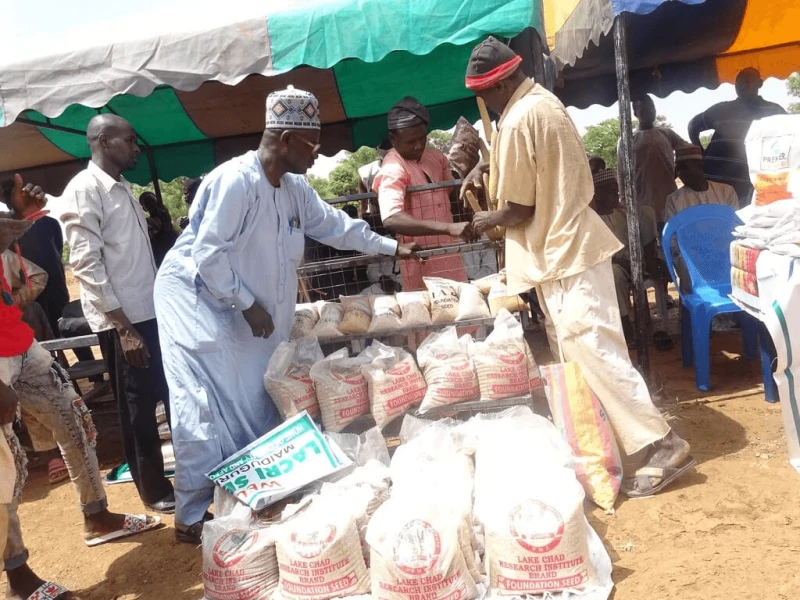
They’re also sharing tips on how to avoid the mistakes they made in rolling out GM crops, including cowpea engineered to include a gene from bacillus thuringiensis (Bt), which provides inherent protection against the destructive pod borer pest.
Prof. Celestine Aguoru, president of Nigeria’s National Biotechnology and Biosafety Consortium (NBBC), also stressed the need for public enlightenment — starting with the policymakers, rural populace and farmers — to enhance the acceptability of the new product.
Public education is crucial
People are afraid of change and skeptical of new things, hence the need for public education to remove the prevailing misinformation based on ignorance, he said.
Aguoru pointed out that Nigeria didn’t start its public education in a timely manner, which created a vacuum that technology opponents used to sow the seeds of doubt in the hearts of many. He said Ghana does not have to go through the same process but should learn from Nigeria to educate and sensitize its citizens to wade off unnecessary attacks.
“Nigeria had some issues with its new technology because most people know cowpea as ‘beans,’” he explained. “So, when you call it cowpea, they find it difficult to relate with it and anti-technologists took advantage of that to come up with conspiracy theories. That is why public education is necessary, to build people’s confidence to trust, accept and adopt this new variety. And eventually, everyone will benefit from it.”
Regional regulatory approach
“The decision to adopt Bt cowpea is a sovereign one,” said Dr. Rufus Ebegba, director-general of the National Biosafety Management Agency (NBMA). “However, if they want to take advantage of safe biotechnology products since Nigeria has approved it, our advice is that they tow the path of Nigeria so that, together, as members of the West African sub-region we will effectively regulate the product.”
His comments were directed primarily toward officials in Ghana, who are considering whether to allow farmers to grow the pod borer-resistant (PBR) varieties developed by Ghanaian scientists.
“Whether Ghana approves it or not, it might likely enter Ghanaian territory,” he said of PBR cowpea. “We have a legal system [in] which if what we have approved is the same product in Ghana it will make it easier to regulate so that both countries can work together.”
The Nigerian biotechnology regulator urged politicians to allow science and technology to thrive as the engine of growth and said they should have no fears about standing behind proven scientific discoveries.
Biosafety regulations
Similarly, the NBMA boss advised the Ghana National Biosafety Authority (GNBA) to ensure it has the requisite knowledge to regulate the product. He added that, if the agency is armed with the right skills, it will effectively regulate the product when commercialized.
“Also, they should not allow themselves to be intimidated when it comes to doing their job (in terms of approving the product when it has passed all the necessary checks) to make it accessible to farmers,” he said.
Harping on the urgency of the action to make sure farmers who are the direct beneficiaries of the product can access improved seed, Dr. Onyekachi Nwankwo, the West Africa representative for the Africa Agricultural Technology Foundation (AATF), asserted that commercialization is very important.
Ghana needs to deregulate and approve the product immediately to start the commercialization process, given that farmers in that country are already yearning for the product, he said.
Dr. Rose Gidado, country coordinator of the Open Forum on Agricultural Biotechnology (OFAB), Nigeria chapter, urged scientists to break down the jargon to help Ghanaians understand the technology used in developing the product. She cited adoption, uptake, usage and acceptance as being key.
Improving yields, reducing pesticides
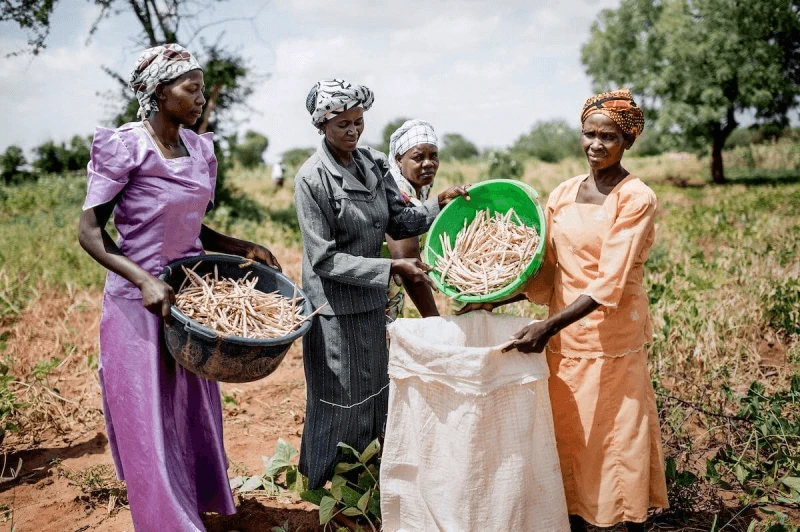
Because the improved cowpea is resistant to Maruca Vitrata, an insect pest responsible for up to 80 percent crop losses, it will improve farmers’ yield, she said. Additionally, it will reduce the use of pesticide spray, which is expensive and harmful to human and environmental health, and will invariably enhance food security and economic development.
“They have spent so many years researching and ending up with a very good product,” Gidado explained. “If the product is not put to use, then they haven’t done anything because their research aims to impact society, especially the poor, in the enhancement of food security. You cannot enhance food security if people — not just the farmers, but everyone in the society — are not using it.
“So, it is important for scientists to make Ghanaians understand that the PBR cowpea developed by local scientists in Ghana is safe and has no negative health implications,” she continued. “They have to assure them that all the safety measures and valves were put in place and evaluations are carried out. This is the [only way] to instill confidence” in the product.
Correcting misinformation
Tackling misinformation is important in modern biotechnology, where facts are frequently misrepresented and distorted, Gidado said.
“They also have to engage the critics, listen to them — we have to have empathy and put ourselves in their shoes — and make them understand,” she said. “Everyone in society has a right to the right information. This is so people take the right decision and have the liberty to choose what they do with the available, correct information they have.”
She pointed out that some people misconstrue what scientists do. Some people believe the GM seeds are imported, which is not true. Instead, African scientists “have indigenized the technology and that’s the best way to grow.”
Ebegba concurred. The notion that this technology is coming from outside Ghana must be forgotten because local citizens have the capacity and capability to develop technologies to tackle that country’s food security challenges, he said.
Nkechi Isaac is a deputy editor with Leadership Newspaper, a national publication headquartered in Abuja, Nigeria. She frequently covers biotechnology and biosafety issues. Follow her on Twitter @enkaybc
A version of this article was originally posted at the Cornell Alliance for Science and has been reposted here with permission. The Cornell Alliance for Science can be found on Twitter @ScienceAlly
 | Videos | More... |
Video: Nuclear energy will destroy us? Global warming is an existential threat? Chemicals are massacring bees? Donate to the Green Industrial Complex!
 | Bees & Pollinators | More... |

GLP podcast: Science journalism is a mess. Here’s how to fix it

Mosquito massacre: Can we safely tackle malaria with a CRISPR gene drive?

Are we facing an ‘Insect Apocalypse’ caused by ‘intensive, industrial’ farming and agricultural chemicals? The media say yes; Science says ‘no’
 | Infographics | More... |
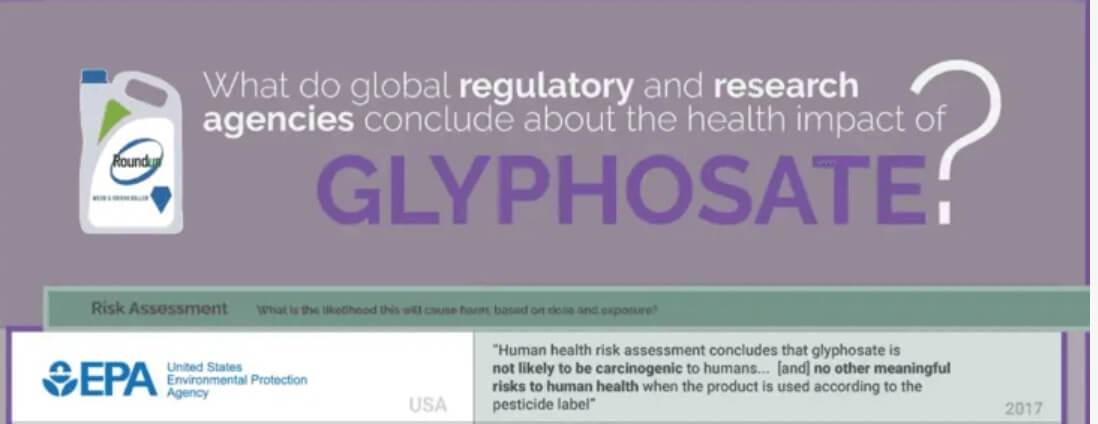
Infographic: Global regulatory and health research agencies on whether glyphosate causes cancer
 | GMO FAQs | More... |

Why is there controversy over GMO foods but not GMO drugs?

How are GMOs labeled around the world?
How does genetic engineering differ from conventional breeding?
 | GLP Profiles | More... |

Alex Jones: Right-wing conspiracy theorist stokes fear of GMOs, pesticides to sell ‘health supplements’

 Viewpoint — Fact checking MAHA mythmakers: How wellness influencers and RFK, Jr. undermine American science and health
 Viewpoint: Video — Big Solar is gobbling up productive agricultural land and hurting farmers yet providing little energy or sustainabilty gains
 Fighting deforestation with CO2: Biotechnology breakthrough creates sustainable palm oil alternative for cosmetics
 Trust issues: What happens when therapists use ChatGPT?
 California, Washington, Oregon forge immunization alliance to safeguard vaccine access against federal undermining
 30-year-old tomato line shows genetic resistance to devastating virus
 The free-range chicken dilemma: Better for birds, but with substantial costs
 ‘You have to treat the brain first’: Rethinking chronic pain with Sanjay Gupta