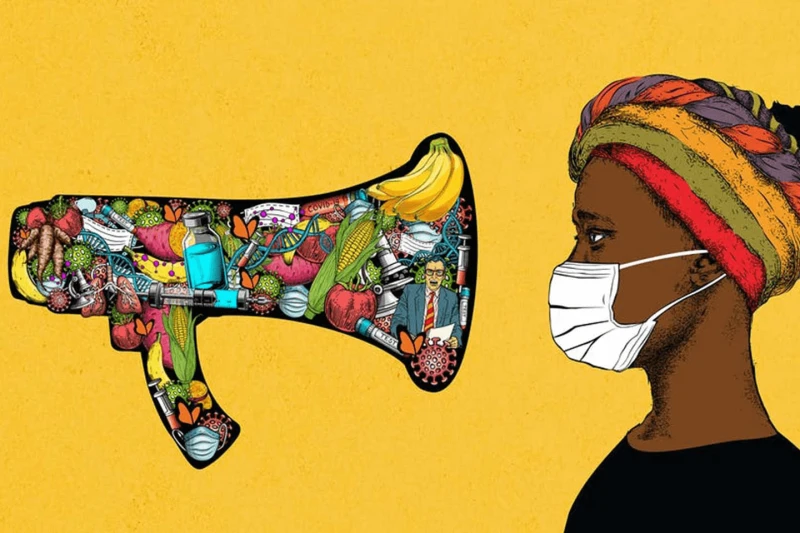
One-fifth of African media coverage of genetically modified foods contains misinformation, a new scientific study published by the Alliance for Science has revealed. The corresponding figures for North America and Europe were 5% and 7%, respectively.
The study assessed top English-language media from around the world, with stories published over a two-year period between January 2019 and January 2021. Articles were assessed for misinformation, defined as statements that disagreed with the scientific consensus on the safety of genetic engineering.
Overall, 9% (47) of the 535 relevant articles containing ‘GMO’-related keywords contained misinformation. This false information was considered likely to have had a potential reach of 256 million people.
As well as regional tags, the articles were also subjected to sentiment analysis. While an overwhelming majority of articles were categorized as ‘neutral,’ the majority of misinformation was rated as ‘negative’ in tone. There were no articles containing misinformation with a positive tone towards GMOs.
The biggest category of misinformation concerned human health. This category includes articles containing claims that GMOs cause cancer or other health impacts without refutation, because such claims contradict a worldwide scientific consensus that food from genetically engineered crops is as safe as food from non-genetically engineered crops. Misinformation on GMOs and human health also had the highest readership, achieving a potential reach of 139 million people.
The study was conducted in partnership with Cision Media, using its NextGen database of global media. Sentiment analysis and categorization was performed manually, not by machine.
The paper, which is published in the peer-reviewed journal GM Crops & Food, is titled “Misinformation in the media: global coverage of GMOs 2019-2021.” The lead author is Mark Lynas, climate and research lead at the Alliance for Science, which is based at the Boyce Thompson Institute in Ithaca, New York.
Lynas has previously published work with the Alliance for Science quantifying the scientific consensus on climate change, and examining media misinformation both on COVID-19 and vaccines. This new paper is thought to be the first to quantify the extent of GMO-related misinformation in the world’s media based on a comprehensive dataset.
On the issue of GMO misinformation, Lynas said: “Our results show that misinformation about GMOs is still a huge problem, and that hundreds of millions of people are being given false information that contradicts the scientific consensus on the safety of genetic engineering. Make no mistake: misinformation about GMOs can be as harmful to society as misinformation on vaccines or climate change. The media must do better, and stop publishing false claims on this subject spread by anti-science activists.”
Dr Sheila Ochugboju, executive director the Alliance for Science, added: “What is most worrying is that the problem of misinformation on GMOs is particularly acute in Africa, where it is harming the livelihoods of smallholder farmers by preventing them from accessing new crop varieties that are resistant to pests and to drought caused by climate change.”
She added: “It is vital that the benefits of scientific innovation are not denied to people in the Global South,” and vowed that the Alliance for Science will continue to combat misinformation on this subject and others via its Nairobi-based Global South Hub, and by working with partners including the Open Forum for Agricultural Biotechnology in Africa (OFAB).
Citation: Lynas, M., Adams, J., Conrow, J. Misinformation in the media: global coverage of GMOs 2019-2021. GM Crops & Food (2022) DOI: 10.1080/21645698.2022.2140568
A version of this article was originally posted at the Cornell Alliance for Science and is reposted here with permission. The Cornell Alliance for Science can be found on Twitter @ScienceAlly












 Viewpoint — Fact checking MAHA mythmakers: How wellness influencers and RFK, Jr. undermine American science and health
 Viewpoint: Video — Big Solar is gobbling up productive agricultural land and hurting farmers yet providing little energy or sustainabilty gains
 Fighting deforestation with CO2: Biotechnology breakthrough creates sustainable palm oil alternative for cosmetics
 Trust issues: What happens when therapists use ChatGPT?
 California, Washington, Oregon forge immunization alliance to safeguard vaccine access against federal undermining
 30-year-old tomato line shows genetic resistance to devastating virus
 The free-range chicken dilemma: Better for birds, but with substantial costs
 ‘You have to treat the brain first’: Rethinking chronic pain with Sanjay Gupta