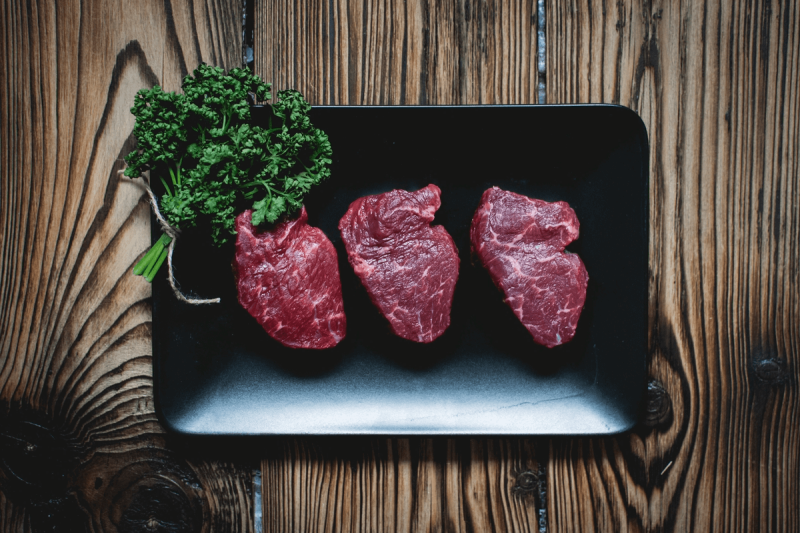
Last week I asked, “What do you think about meat grown in a lab? Would you eat it? Will your grandchildren?”
Evolutionary leaps in our development have been marked by the development of tools, farming, domesticated animals, and sadly and tragically, industrial farming and food processing. Lab-grown meat is the next evolution of our meat consumption as a species.
My spidey senses are telling me this is much ado about nothing. I doubt that the human population of Earth can be supported by lab-grown meat. If it tastes like chicken and costs a similar price, yes, I would eat it. But generally, I think putting our food in the hands of engineers, chemists, and industrialists is a bad, if unavoidable, plan.

















 Viewpoint — Fact checking MAHA mythmakers: How wellness influencers and RFK, Jr. undermine American science and health
 Viewpoint: Video — Big Solar is gobbling up productive agricultural land and hurting farmers yet providing little energy or sustainabilty gains
 Fighting deforestation with CO2: Biotechnology breakthrough creates sustainable palm oil alternative for cosmetics
 Trust issues: What happens when therapists use ChatGPT?
 California, Washington, Oregon forge immunization alliance to safeguard vaccine access against federal undermining
 30-year-old tomato line shows genetic resistance to devastating virus
 The free-range chicken dilemma: Better for birds, but with substantial costs
 ‘You have to treat the brain first’: Rethinking chronic pain with Sanjay Gupta