Potato farming experts push back on restrictive EPA pesticide regulations


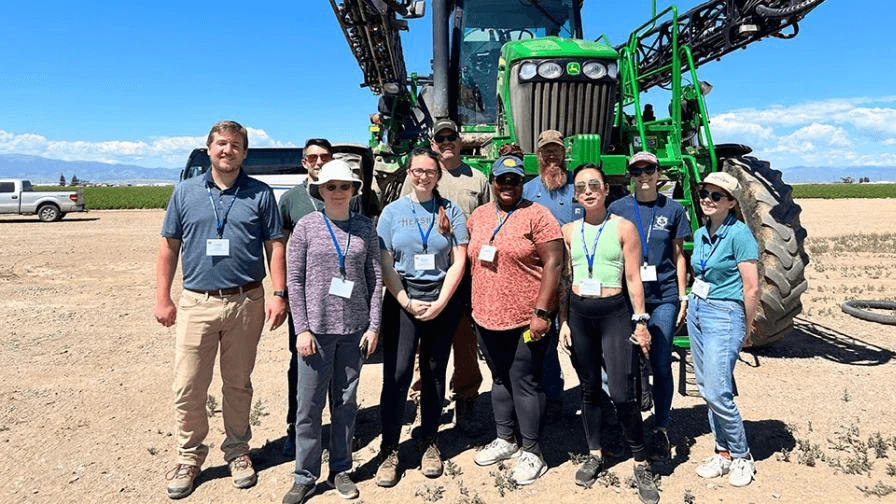
As part of that mission, the National Potato Council (NPC), in cooperation with the Colorado Potato Administrative Committee, hosted a tour of potato production for staff of the EPA’s Office of Pesticide Programs in Colorado’s San Luis Valley. The farm tour — hosted annually in various growing areas around the country — allows federal regulators to better understand how their decisions have real-world implications on our farms.
This year EPA participants (many who were new hires during COVID) were provided information on pest management related to growing seed and in the pre-plant, planting, in-the-field, and post-harvest stages. They had the opportunity to spend time in the fields and in the facilities where their decisions will be implemented with all the potential consequences, both negative and positive, that may result. Presenters included growers, extension educators, and researchers from across the country on weeds, pathogens, nematodes, and insects.
The tour provides the industry an opportunity to educate regulators on the pest challenges faced by potato growers and the value we place on retaining the regulated tools growers need to succeed.
This year’s tour came at a time when EPA and other federal regulators are under increasingly vocal activist pressure to consider eliminating valuable tools from the grower toolbox to control pests and weeds. Here are just a few examples of how NPC is working to maintain access to important chemistries.
Imidacloprid, Clothianidin and Thiamethoxam
As part of an Endangered Species Act evaluation that identifies potential impacts on endangered and threatened species and their critical habitats, EPA released the final Biological Evaluations for the neonicotinoid insecticides clothianidin, imidacloprid, and thiamethoxam.
NPC and the state potato organizations submitted comments with examples of product utilization and challenges of alternative products during the open comment period. Unfortunately, those real-word examples and usage data were not incorporated into EPA’s evaluation, which could result in the loss of those tools.
The next stage is formal consultation with the U.S. Fish and Wildlife Service and National Marine Fisheries Service, where we hope the evaluation can be refined to present a more realistic assessment of the impacts of these products on listed species populations.
EPA may cancel blocker (PCNB)
In September, EPA proposed the cancellation of Pentachloronitrobenzene (PNCB), the active ingredient in AMVAC’s BLOCKER. It would result in the elimination of all registered uses of PCNB to address human health and ecological risk concerns.
PCNB is registered for use in-furrow to control rhizoctonia, white mold, black dot disease, and common scab in potato production.
In the proposed final decision, EPA has identified multiple alternative products as economically and effective alternatives to PCNB in the control of these pests.
In response, AMVAC argues, “the loss of this product would have economic consequences for potato seed producers where it is utilized to preserve quality and integrity within production of seed potatoes. For commercial potato growers the poorer aesthetics due to presence of common scab decreases the (grade and) value of their crop at market.”
NPC is currently evaluating the proposed final decision and providing comments based on grower input on how they control these pests.
Don’t revoke organophosphate registrations
NPC and 10 state potato organizations recently submitted formal comments to EPA in response to a petition by Earthjustice to revoke tolerances and cancel registrations for certain organophosphate uses.
In the comments, NPC urges EPA to deny the Earthjustice petition, calling it “a blatant attempt to short-circuit the administrative regulatory review process that Congress and the agency have established to assess pesticide chemicals.”
The petition notes that the U.S. potato industry relies on organophosphates such as dimethoate, ethoprop, malathion, phorate, and phosmet as a part of an integrated pest management system for the control of a host of damaging pests and preventing insect-borne pathogens.
Maintain pesticide availability
Every 15 years, EPA’s congressional mandate requires a review of all 726 registered pesticides, of which 461 are conventional agricultural pesticides. To date, EPA has completed draft risk assessments on 99% of the agricultural products, while 90% have been through the proposed interim decisions, and 80% have a final or interim decision.
NPC recognizes the importance of funding the agency offices which conduct this mandated review. This summer, NPC and a coalition of agriculture and other associations urged the House and Senate Appropriations Committees to fund various agencies in the federal government with responsibility for pesticide registration, review, and regulations.
Without this funding, the timely processes that are required to ensure that vital pesticides remain available would stall or end completely. Additionally, the ability for new products to be approved would be threatened along with necessary consultations between EPA and “the Services” (National Marine Fisheries Service and the U.S. Fish and Wildlife Service) on Endangered Species Act regulation.
As of October 15, included language in appropriations bill included increases for EPA pesticide programs ($158.7million in the House, $140.8million in the Senate) both increased from $129.4million in FY22.
Eliminating certain classes of chemicals would be cheered by environmentalists but come at a cost of sound science. To prevent regulators from acting on emotion rather than science, NPC and our industry partners will continue to educate regulators about how policy decisions impact growers’ operations and their responsibly to put food on our dinner tables. To learn more about NPC’s regulatory efforts, visit nationalpotatocouncil.org/environment.
Read the original post here
 | Videos | More... |
Video: Nuclear energy will destroy us? Global warming is an existential threat? Chemicals are massacring bees? Donate to the Green Industrial Complex!
 | Bees & Pollinators | More... |

GLP podcast: Science journalism is a mess. Here’s how to fix it

Mosquito massacre: Can we safely tackle malaria with a CRISPR gene drive?

Are we facing an ‘Insect Apocalypse’ caused by ‘intensive, industrial’ farming and agricultural chemicals? The media say yes; Science says ‘no’
 | Infographics | More... |
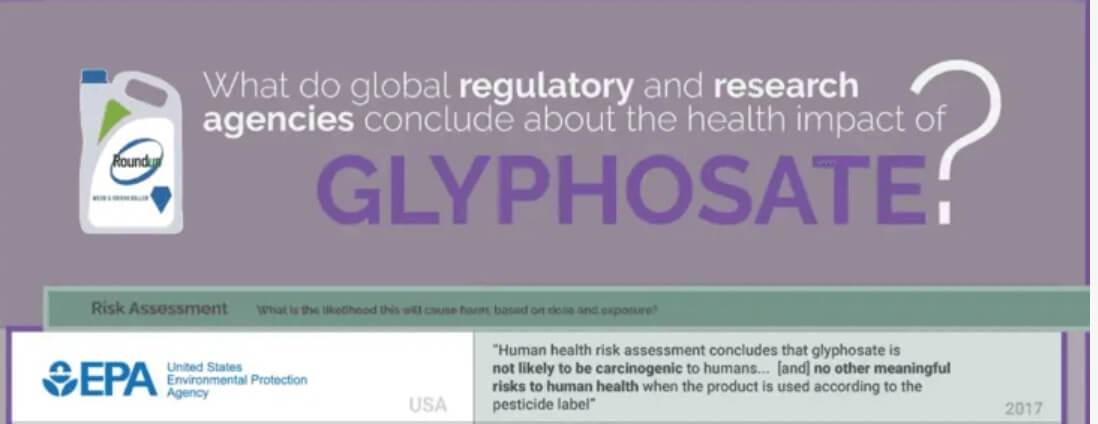
Infographic: Global regulatory and health research agencies on whether glyphosate causes cancer
 | GMO FAQs | More... |

Why is there controversy over GMO foods but not GMO drugs?

How are GMOs labeled around the world?

How does genetic engineering differ from conventional breeding?
 | GLP Profiles | More... |

Alex Jones: Right-wing conspiracy theorist stokes fear of GMOs, pesticides to sell ‘health supplements’

 Viewpoint — Fact checking MAHA mythmakers: How wellness influencers and RFK, Jr. undermine American science and health
 Viewpoint: Video — Big Solar is gobbling up productive agricultural land and hurting farmers yet providing little energy or sustainabilty gains
 Fighting deforestation with CO2: Biotechnology breakthrough creates sustainable palm oil alternative for cosmetics
 Trust issues: What happens when therapists use ChatGPT?
 California, Washington, Oregon forge immunization alliance to safeguard vaccine access against federal undermining
 30-year-old tomato line shows genetic resistance to devastating virus
 The free-range chicken dilemma: Better for birds, but with substantial costs
 ‘You have to treat the brain first’: Rethinking chronic pain with Sanjay Gupta