Public comments reveal overwhelming support for GM cowpea in Ghana

Of the 889 letters received following a public comment solicitation period that closed in early May, only one expressed objection, with the other 888 urging approval, said Eric Okoree, chief executive officer of the NBA. Almost 50 percent of the public comments supporting the GM cowpea approval came from university students studying agriculture, biotechnology and related sciences, with the rest coming from rural farmers.
“We will invite the group that’s objecting to hear further details on why they don’t want it approved,” Okoree noted. “The public comments will be considered when we take the necessary decisions.”
The NBA Board has referred the application to its technical advisory committee for review. The application’s risk assessment began in mid-May, with a decision expected in August.
Cowpea, popularly called beans, is a popular, protein-rich staple crop consumed by millions in Ghana and the rest of Africa. But the crop is extremely vulnerable to the Maruca pod borer insect pest. To control the pest, farmers typically spray their fields with insecticides between eight and 12 times in the 12-week life cycle of the crop.
Scientists at the state-run Savannah Agricultural Research Institute (SARI) developed the GM variety using a gene from a naturally occurring soil bacterium known as Bt that provides inherent resistance to the pest. Confined field trials have shown farmers growing GM cowpea can reduce their spray regimen to just twice per season while gaining a five-fold increase in yield.
Farmers and students in support
Mohammed Hafiz Alhassan, one of the farmers who submitted a letter urging approval, said the overwhelming support for GM cowpea was expected.
“If you look at the data from the NBA, most of the respondents are from cowpea growing communities,” he said. “And the majority are probably cowpea producers like I am. And that is why the response has been overwhelming in support. A lot of those who go against this technology are not in touch with cowpea farmers on the ground.
“Anybody who is doing cowpea will understand the suffering farmers go through in terms of the cost and exposure to harmful chemicals,” he continued. “So obviously, any cowpea farmer will want interventions that will reduce these sufferings, like GM cowpea.”
Alhassan said the benefits approving the insect-resistant variety will be enormous.
“If GM cowpea can help us reduce the spraying to four or even three, it will help us greatly,” he said, noting that farmers will be able to slash the money they spend on insecticides and the labor costs associated with application. “Secondly, the exposure of farmers to these harmful chemicals will be reduced greatly. And the environment would have been spared these chemicals we are using.”
The lower production costs “will help boost our morale. And we are going to get more yield for putting in less. That means more profit. And consumers would also get cowpea at a moderate rate,” Alhassan told the Alliance for Science in an interview.
Paulina Atinga Ayimbila, a biotechnology and molecular biology student at the University for Development Studies, also wrote in support of the GM cowpea.
“The overwhelming support is not surprising because anybody who understands the importance of GMO, and specifically the Bt [GM] cowpea, will vote for its approval in Ghana,” Ayimbila said. “Cowpea farming is being near impossible in Ghana. GM will increase yield, confer resistance to pests and reduce the cost of production, which is going to help the country as a whole and help farmers. It will also help consumers because there will be low pesticide spraying and reduced pesticide poisoning of consumers. So yes, GM cowpea is going to help we consumers, and farmers.”
In 2020, Nigeria approved the world’s first GMO cowpea, which farmers are now growing. Demand for the seed developed by the Institute for Agricultural Research at Ahmadu Bello University has outstripped supply as farmers see the crop’s ability to resist pests. Nigerian farmers have also reported a huge drop in their use of pesticides as a result of growing of GMO cowpea.
Joseph Gakpo is a journalist for many Ghanaian outlets, has a master’s degree in communications studies from the University of Ghana and writes for the Alliance for Science. You can follow Joseph on Twitter @josephopoku1990
A version of this article as posted at the Cornell Alliance for Science and is used here with permission. You can follow Alliance for Science on Twitter @ScienceAlly
 | Videos | More... |
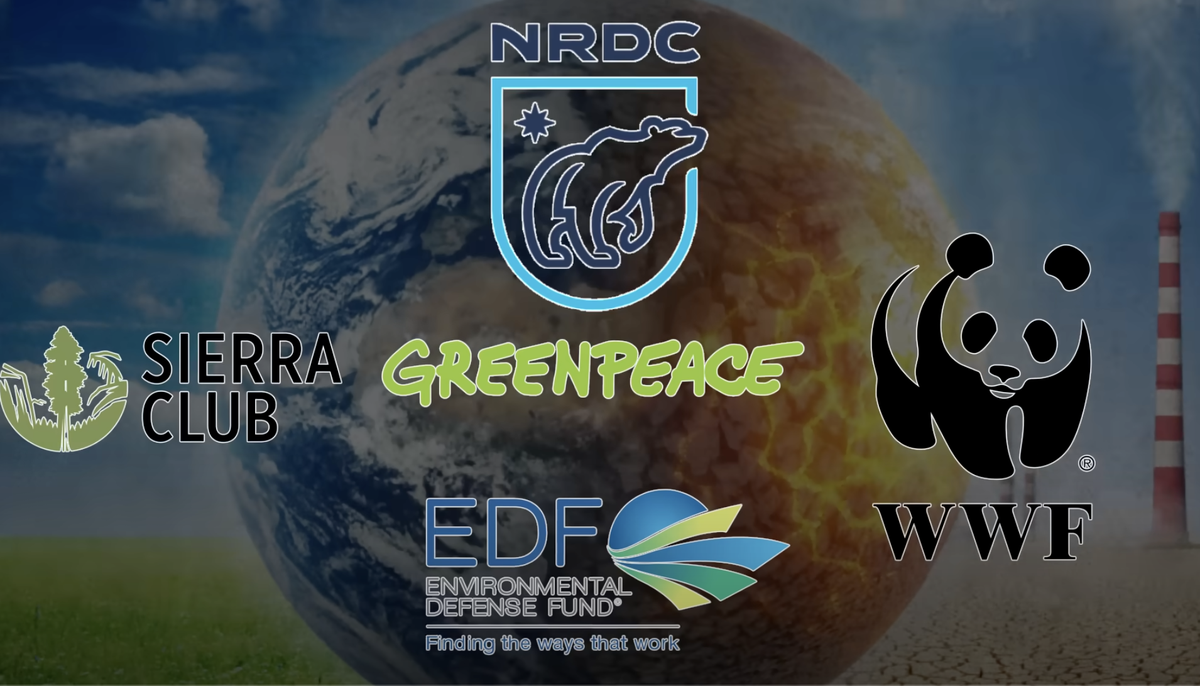
Video: Nuclear energy will destroy us? Global warming is an existential threat? Chemicals are massacring bees? Donate to the Green Industrial Complex!
 | Bees & Pollinators | More... |

GLP podcast: Science journalism is a mess. Here’s how to fix it

Mosquito massacre: Can we safely tackle malaria with a CRISPR gene drive?

Are we facing an ‘Insect Apocalypse’ caused by ‘intensive, industrial’ farming and agricultural chemicals? The media say yes; Science says ‘no’
 | Infographics | More... |

Infographic: Global regulatory and health research agencies on whether glyphosate causes cancer
 | GMO FAQs | More... |

Why is there controversy over GMO foods but not GMO drugs?

How are GMOs labeled around the world?

How does genetic engineering differ from conventional breeding?
 | GLP Profiles | More... |

Alex Jones: Right-wing conspiracy theorist stokes fear of GMOs, pesticides to sell ‘health supplements’

 Viewpoint — Fact checking MAHA mythmakers: How wellness influencers and RFK, Jr. undermine American science and health
 Viewpoint: Video — Big Solar is gobbling up productive agricultural land and hurting farmers yet providing little energy or sustainabilty gains
 Fighting deforestation with CO2: Biotechnology breakthrough creates sustainable palm oil alternative for cosmetics
 Trust issues: What happens when therapists use ChatGPT?
 California, Washington, Oregon forge immunization alliance to safeguard vaccine access against federal undermining
 30-year-old tomato line shows genetic resistance to devastating virus
 The free-range chicken dilemma: Better for birds, but with substantial costs
 ‘You have to treat the brain first’: Rethinking chronic pain with Sanjay Gupta