Shonen Jump's Newest Manga Is Great, But It Has Me Feeling Surprisingly Traumatized
Even though it was entertaining, the first chapter of Shonen Jump's new manga Star of Beethoven actually traumatized me instead, and every other reader who's still reeling from the premature cancelation of PPPPPP by Mapollo 3 undoubtedly experienced a similar reaction. For me, I foolishly went in hoping that Star of Beethoven by Morihiro Hayashi would be the next PPPPPP, but that didn't end up being the case. While everything can change in chapter #2,Star of Beethoven is clearly going in another direction that feels more akin to the series Hikaru no Go.
Although fans of Hikaru no Go will rejoice, they at least have 155 chapters plus an entire anime adaptation, while PPPPPP's fandom will only have 70 chapters. Of course, it was obviously unwise for any fan to get their hopes up at the prospect of a PPPPPP revival, even though it did receive a few reprints a few times over its brief tenure with Shonen Jump. It eventually succumbed to what befalls many new Shonen Jump titles that fail to reach a certain threshold. The manga was forced to end early to make way for another title.
Star of Beethoven Should Have Been More Like PPPPPP
There's Never Been Anything Quite Like Experiential-Visual Music
Despite this harsh reality, it's difficult to deny that PPPPPP left a lasting impact. The manga featured an excellent premise, where the protagonist - an estranged, discarded septuplet named Lucky - had to compete against his famous siblings, all of which was complemented by a very unique art style. However, the main reason to look forward to a manga following in PPPPPP's footsteps is because of the incredible concept of experiential-visual music, which was introduced as early as the first chapter. Unfortunately, Star Of Beethoven, despite similar subject matter, went a different route in its presentation of music.

Shonen Jump Wants to Revisit Slam Dunk's Glory Days And It's Really Working
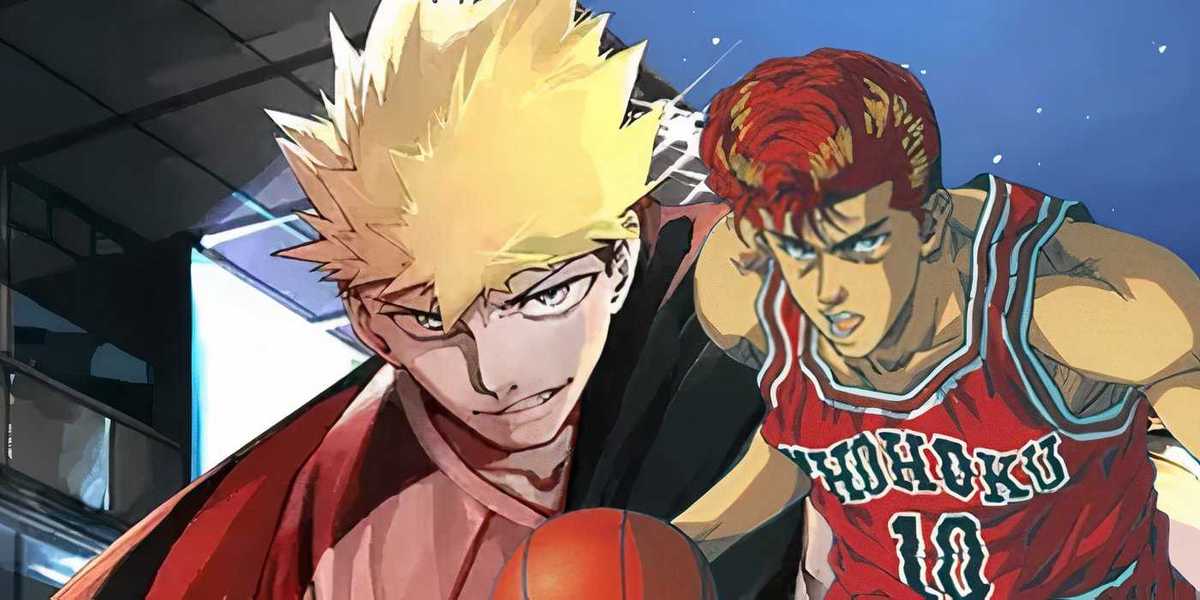
The newest series on Shonen Jump, Embers, is clearly inspired by the iconic Slam Dunk masterpiece by legendary Takehiko Inoue.
On one hand, PPPPPP's experiential-visual music can be interpreted as an incredibly effective way of making musical performances as shonen-esque as possible by transforming an art form that's usually a very cerebral, abstract experience into something physically tangible. In fact, the manga began pushing the boundaries of this already unique concept even further like all great manga do when PPPPPP recontextualizes it into something violent or even a drug.
In essence, the concept of experiential-visual music is very similar to what Disney's Fantasia revolutionized by creating stories and images through song. As Fantasia's host Deems Taylor said, Fantasia illustrated and brought to life "the designs and pictures and stories that music inspired in the minds and imaginations of a group of artists." Not only getting to experience something that again in a manga, but adapted into an anime would have been a PPPPPP fan's greatest dream come true.
Star of Beethoven is the Next Hikaru No Go
Beethoven is Sai if Sai Reincarnated

Instead, Star of Beethoven was obviously inspired more by Hikaru no Go. Both series star a protagonist who eventually finds himself accompanied by an ancient master of a particular art form or hobby that the hero has or will have some emotional connection to. In the case of Hikaru no Go, Hikaru Shindo initially thinks little of the eponymous board game until he gets haunted by a Go player named Fujiwara-no-Sai from the Heian era and realizes he shares the same passion as Sai.
In Star of Beethoven, Yaso was a piano prodigy who gave up on playing before the real Beethoven reincarnates into the present day and tries to convince Yaso to continue.

Isekai Can Be Repetitive, But a New Anime Proves the Tropes Make the Genre Great
Magic Maker: How to Make Magic in Another World's mixture of innovative and generic storytelling proves that sometimes it's better to be conventional.
The obvious difference between the two series is that only Hikaru is aware of the ghost haunting him, while everyone can see and hear Beethoven, since he reincarnates. This doesn't mean that Yaso and Beethoven's relationship isn't special. After extraneous circumstances, Beethoven has no choice but to follow Yaso around and eventually learns of Yaso's tragic past with the piano. Then, upon playing alongside him for some acquaintances, Beethoven decides to take him on as his pupil.
Star of Beethoven Shares Other Similarities with Hikaru no Go and PPPPPP
What Does This Mean for Shonen Jump's New Series?

When taking into consideration how much influence Hikaru no Go has on Star of Beethoven, it's very unlikely that the new manga will also adopt a system so complex and all-encompassing as PPPPPP's experiential-visual music. After all, the relationship between Hikaru and Sai in Hikaru no Go naturally takes up the majority of the series, and it's very likely that Star of Beethoven will follow suit with Yasa and Beethoven. In fact, the debut chapter has already proven that it most likely will.

Wait, Was 2024 Was the Best Year For Shonen Jump Anime... Ever?
2024's lineup of shōnen anime might be one of the best of all time, with solid returns for giants of the genre, and new series that dominated too.
Similarly, Star of Beethoven has also devoted a number of pages to exploring Beethoven's past and explaining why Beethoven is acting the way he does with Yasa. However, there is one major similarity between Star of Beethoven and PPPPPP that's promising. Both Yasa and Lucky are failures in music. It's just presented very differently. Although this isn't as exciting as experiential-visual music, I think I'll still give this new series a chance. I hope that Shonen Jump will, too.
- Created by
- Takashi Isono, Kazuhiko Torishima
- First Film
- Dragon Ball: Curse of the Blood Rubies