
Sid Meier's Civilization 7 Preview: Civilization Never Looked So Good
After spending hands-on time with Sid Meier’s Civilization 7, it's clear the gamebrings some exciting changes to the franchise that are - for the most part - as welcome as they are surprising. The Civilization series, in general, tends to do a good job of retaining the game’s core appeal while adding something new to the experience with each new release. However, where Civilization 6 felt like it was more concerned with adding new content to the game, Civilization 7 seems more focused on making what was already present more streamlined with new city management and a new combat system.
Civilization 7 feels largely focused on two things: customization, and a reduction in micromanagement. Civilization 7’s new customization options for its leaders and civilizations are a big win for the game. However, some of its attempts to trim the game’s fat may have gone a bit too far.
Civilization Never Looked So Good
Civilization 7 Has More Detailed Graphics Than Previous Games

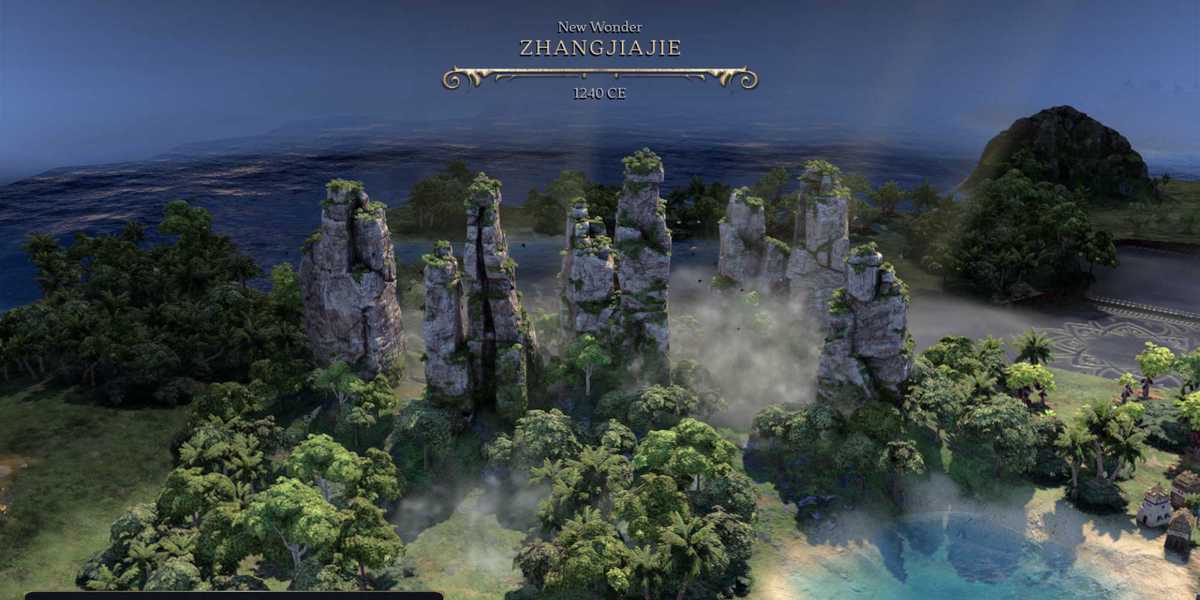
Video games are at a point where having “good graphics” is basically expected from most AAA titles. That said, it’s still worth mentioning that Civilization 7 is the best-looking entry in the series by far. Where Civilization 6’s mountains were smooth, 7’s have a detailed rocky texture. Zooming in on settlements, they actually look like little cities. The game’s water effects are also much nicer-looking and give a genuine feeling of exploring uncharted waters when out on the ocean.
When discovering or creating a wonder, Civilization 7 gives players a close-up look at them. For natural wonders, this means the camera rotates around it, previewing its beautifully detailed design from every angle. For constructed wonders, the game shows a time-lapse of their construction. These little additions make finding or building wonders feel like a huge accomplishment, and show off just how great the game looks.
Civilization 7 Allows For More Customization In Setup
Players Can Mix & Match Leaders & Civilizations
One example of Civilization 7’s new customization options that is immediately apparent is its handling of leaders. In previous entries, leaders were tied to one specific civilization for the entire game. Now, players can mix and match leaders with different civilizations across different Ages. Gameplay bonuses like buffs or unique units are split between leaders and civilizations, allowing for a wider range of customizable societies.
At first, this new change may seem somewhat overwhelming. Instead of simply reading what a given leader does, Civilization 7 tasks players with reading each leader, understanding how their bonuses work, and then comparing them with the unique qualities of a given civilization. However, more combinations also mean more chances to craft the perfect society for any given play style.
Additionally, players aren’t stuck with one civilization for the entire game. Instead of having to choose between some civilizations with a better early game, and some with good late-game bonuses, Civilization 7 allows players to choose a new society with each new Age. Players pick a starting society, which unlocks future options once Ages progress. For example, starting as Greece in the Antiquity Age will allow players to choose Spain or Norman when they progress to the Exploration Age. This flexibility allows for more adaptive strategies as the game progresses. Similarly, different leaders also unlock different civilizations during each Age.
Additionally, leaders now have levels that unlock different bonuses. Players can also unlock over 90 unique Mementos that add additional bonuses to their chosen leader. This is another great example of more customizable civilizations and provides a sense of progression that wasn’t present in previous installments.
Civilization 7’s New Age System Is Interesting (And Potentially Polarizing)
The New Age System Is Unique, But Removes Some Features From Previous Games

Perhaps the biggest change to Civilization 7 has been the handling of Ages. In Civilization 6, players advance through eight or nine different eras (depending on what DLC they have installed). Each era blends somewhat seamlessly together, though players could earn a Golden Age or be punished with a Dark Age depending on their Era Score. Civilization 7 does away with this and instead splits the game into several distinct Ages.
A new Age occurs after a set number of turns, determined by the speed at which players choose to play the game. When transitioning from one Age to the next, several things happen. First, a new civilization must be chosen based on the ones available through leaders and the civilization chosen in the previous Age. Then, players will lose a certain percentage of their existing units. Those that remain will be upgraded to comparable units from the new Age.
Some changes brought about by the new Age system may be somewhat polarizing. For example, instead of there being one Technology Tree for the entire game, it is divided by era. This prevents any one civilization from advancing too far beyond others in a given area. While this can prevent one civilization from snowballing out of control, it also somewhat flattens the experience by reducing choices within a given Age. It may be nice for new players not to be overwhelmed by one contiguous tree throughout the entire game, but veteran players may feel its limitations.
Civilization 7 has also added a long-awaited feature that allows games to take place entirely within a given Age. This means, if players want to set their game in a distinct period, they can do so. That said, the game currently doesn’t have an option to allow a game to last indefinitely, a feature that many will miss from previous games if it is not added.
Civilization 7 Has Minimized Micromanaging
Civilization 7 Has Streamlined Several Areas Of Gameplay To Make Them Move Quicker

Similar to how the new Ages system has streamlined the Technology Tree, Civilization 7 has also simplified the process of expanding and upgrading settlements. Tiles for each settlement are now upgraded either through expansion or the production of specialized buildings or districts. Workers no longer exist, with their responsibilities of upgrading tiles and repairing damage being absorbed by settlement expansion and production. This speeds up the process of expanding and maintaining one’s settlements as it is all largely done within the same interface.
Combat has been similarly sped up thanks to the addition of new Commander units. These units can absorb a certain number of other combat units, transport them across the map, and then unpack them. This allows large armies to travel long distances without the need to click and move every individual unit. Once units are unpacked, they can move independently, so Civilization 7 allows for the same level of strategy, but with an option to speed up some of the more tedious aspects of combat.
Unlike previous Civilization games, Civilization 7 only allows Commander units to gain experience and promotions. Then, they provide any bonuses earned for all units within their area of effect. This prevents having to micromanage the levels of all individual combat units, and the need to delay combat for a turn when promoting a unit. This does, however, come with a few drawbacks. For one, all upgrades being on a single unit gives enemies a pretty clear target, and losing a high-level commander feels much worse than a single powerful unit. Additionally, there is no more immediate healing for individual units.
Final Thoughts On Civilization 7 So Far
Civilization 7 Is Highly Polished & Fun, But Has It Left A Little Too Much Behind?
Civilization 7 is probably the most palatable Civilization game for a first-time player. A lot of the elements that were potentially confusing or tedious have been ironed out. Additionally, the increased level of flexibility with leader and civilization bonuses throughout the game prevents players from painting themselves into a corner. These are solid changes to the already strong base that Civilization 7 started with. On top of that, the game looks better than ever.
On the flip side, one can’t help but wonder if too much streamlining is going to hurt Civilization 7's appeal for some players. The developers put a big emphasis on reducing micromanagement, but the entire game is built around managing a civilization. There is a certain level of micromanagement that players want from a game like Civilization 7 because that’s where one’s unique strategy usually emerges from in this type of game. Taking too much control from players might be a mistake for this type of game.
Overall, Civilization 7 is a more streamlined experience than previous entries, but not a bad one. Anyone complaining that they’ve never actually finished a game of Civilization won’t have that problem with this entry in the series. That said, some of the series’ wrinkles that have been ironed out are also what gave previous entries a bit more character.


Sid Meier's Civilization VII
 OpenCritic Reviews
- Released
- February 11, 2025
- ESRB
- Everyone 10+ // Alcohol and Tobacco Reference, Mild Language, Mild Violence, Suggestive Themes
- Developer(s)
- Firaxis Games
- Publisher(s)
- 2K
- Engine
- Gamebryo Engine
- Platform(s)
- PlayStation 5, PlayStation 4, Xbox Series X, Xbox Series S, Xbox One, Nintendo Switch 2, Nintendo Switch, PC


A digital review/preview code for PC was provided to Screen Rant for the purposes of this preview.






Your comment has not been saved