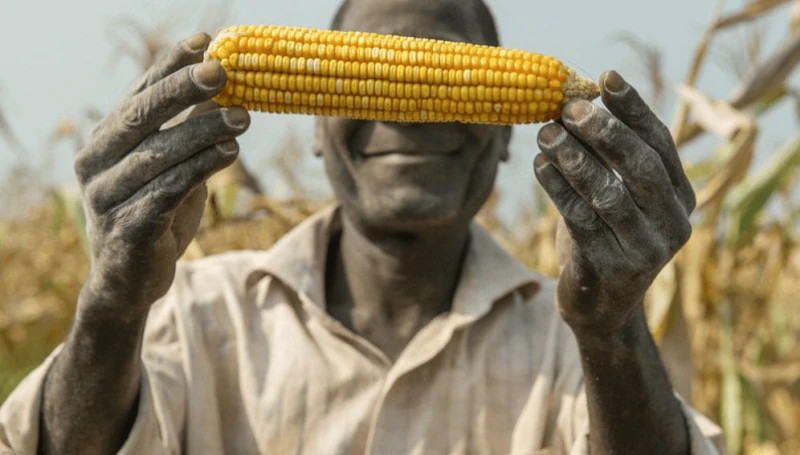
As Kenya prepares to commercialise genetically modified crops, there is resistance from some farmers and campaign groups, who question their safety.
“You are making what we eat worse than it is,” accuses farmer Eva Wanjiru.
Kenya is currently facing a severe water shortage caused by four failed consecutive rainy seasons, amid one of the harshest droughts the East African region has seen in four decades. This means crops are not able to grow, prompting warnings of potential famine.
GM seeds are those which have been genetically altered to produce what are seen as desirable qualities such as drought and pest resistance – and it is due to this resilience that some have a more positive view than Ms Wanjiru.
They say the lifting of the GMO ban was prompted by the real need to ensure food security and to safeguard the environment.
“Climate change, the severity of drought and the emergence of new pests such as fall armyworms and maize stalk borer, and diseases such as maize lethal necrosis pose a real threat to food, [cattle] feed and nutritional security,” said Dr Eliud Kireger, director general of the Kenya Agricultural and Livestock Research Organization.














 Viewpoint — Fact checking MAHA mythmakers: How wellness influencers and RFK, Jr. undermine American science and health
 Viewpoint: Video — Big Solar is gobbling up productive agricultural land and hurting farmers yet providing little energy or sustainabilty gains
 Fighting deforestation with CO2: Biotechnology breakthrough creates sustainable palm oil alternative for cosmetics
 Trust issues: What happens when therapists use ChatGPT?
 California, Washington, Oregon forge immunization alliance to safeguard vaccine access against federal undermining
 30-year-old tomato line shows genetic resistance to devastating virus
 The free-range chicken dilemma: Better for birds, but with substantial costs
 ‘You have to treat the brain first’: Rethinking chronic pain with Sanjay Gupta