Tranding
The Broadband Commission for Sustainable Development’s Working Group on Technologies in Space and the Upper-Atmosphere, launched a report today, Identifying the Potential of New Communications Technologies for Sustainable Development.
The Working Group, chaired by Rupert Pearce, CEO, Inmarsat, found that satellite and high altitude systems offer significant advantages for expanding broadband coverage in developing countries as well as driving solutions essential to meeting the United Nation’s 17 Sustainable Development Goals (SDGs). In addition to their broad coverage, versatility and reliability, deployment of these systems can be relatively quick, cost-effective and environmentally responsible.
More than half the world’s population remain unable to connect regularly to the Internet. The Working Group’s report explains that new space-based and upper-atmosphere technologies, including high throughput satellites (HTS), massive non-geostationary satellite orbit (NGSO) constellations, and high-altitude platform stations (HAPS) systems can help address this challenge, by bringing reliable broadband connectivity across the globe, including to the hardest-to-reach corners of the Earth.
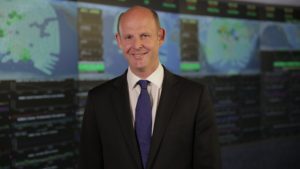
Rupert Pearce, CEO, Inmarsat, said, “Recent technological advances and an explosion in capacity will enable satellite and high altitude technologies to play a critical role in connecting the world’s four billion unconnected people and meeting the Sustainable Development Goals. Space-based connectivity can have a profound effect across various aspects of society, ranging from industry, health and education, to sustainability, e-government and facilitating the development of smart cities and societies.”
The report is a collaborative effort of several Commissioners and Working Group Members, which concludes that governments and other stakeholders should support policy decisions that will promote further development and adoption of space-based and upper-atmosphere technologies. The report classifies its recommendations in three categories, covering spectrum, regulation and technology, which together can help these technologies move toward their full potential for aiding the realization of the SDGs.
The Broadband Commission for Sustainable Development was established in 2010 and comprises more than 50 leaders from across a range of government and industry sectors who are committed to actively supporting countries, UN experts and NGO teams to fully leverage the huge potential of ICTs to drive national SDG strategies in key areas such as education, healthcare and environmental management.
A copy of the Broadband Commission Working Group on Technologies in Space and the Upper-Atmosphere report, ”Identifying The Potential Of New Communications Technologies For Sustainable Development” can be found http://bit.ly/BroadbandResources
More information about the Broadband Commission and its Working Group on Technologies in Space and the Upper-Atmosphere is available at: www.BroadbandCommission.org.




Be the first to know about new products and promotions.