Sustainable metrics: How much carbon, land and energy does your dinner require?

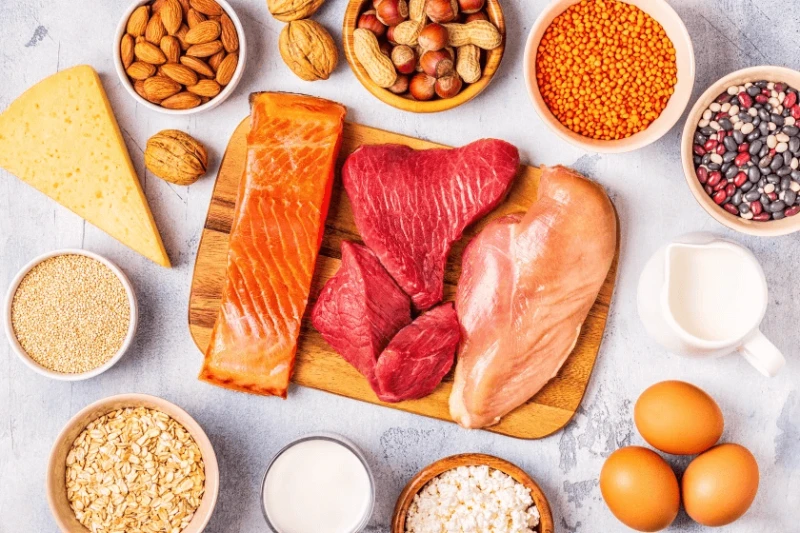
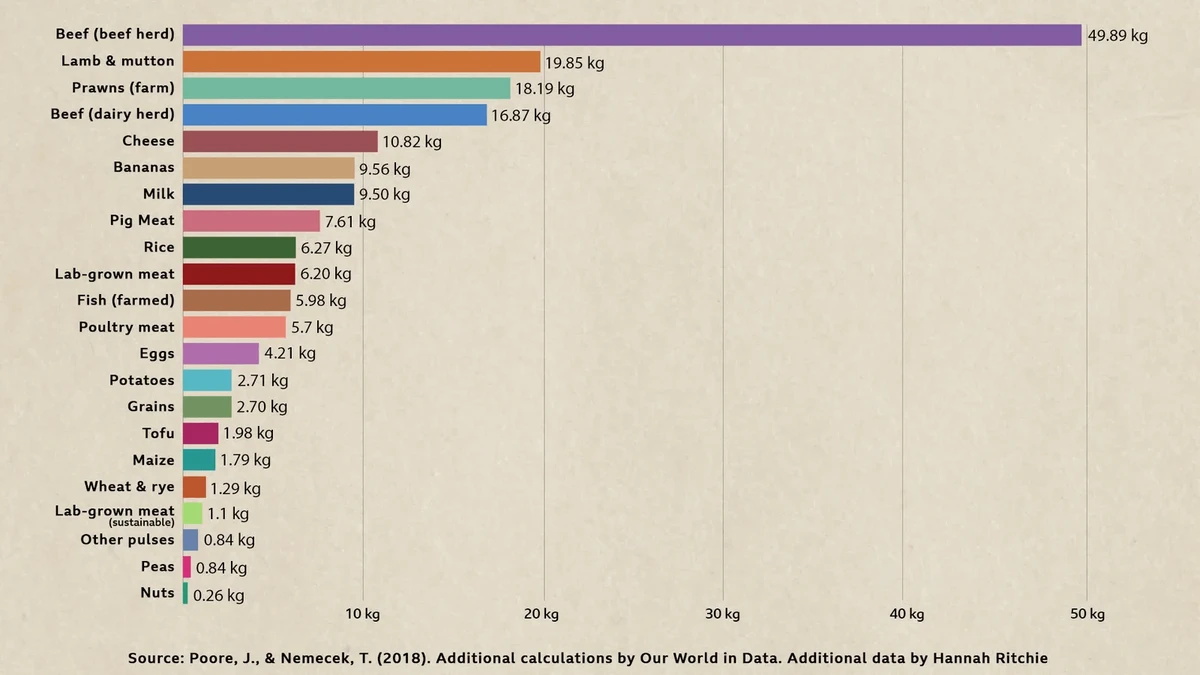
So, what would a protein-rich, low-carbon diet really look like? Just how bad for the climate are meat and dairy? How much more sustainable is it to only eat plant-based proteins, such as tofu, chickpeas and peas? Is it better to cut out cheese or chicken? Which animal-free alternatives have the lowest emissions’ output?
BBC Future set out to answer these questions, using data from the largest ever analysis of food systems, compiled by Joseph Poore, a researcher at the University of Oxford, and Thomas Nemecek, who studies the lifecycle of food at Swiss research institute Agroscope.
Meat from small, non-ruminant animals, such as chicken, turkey, rabbit and duck, has a much lower GHG footprint than beef and lamb. Chicken, for example, has a GHG footprint almost nine times lower than beef’s – generating 5.7kg of CO2e per 100g of protein.
…
It is cheese, not chicken or pork, that generates the third-highest emissions in agriculture, after lamb and beef.
“There’s this consensus that ‘being vegetarian is great’, but then we sort of forget that cheese is actually pretty carbon intensive,” says Marbach, noting that this is due to cows’ high methane output and the fact that they require “a lot of inputs for not much output”.
…
“Plant-based meat substitutes have smaller GHG footprints than most farmed meats and cell-based meat, but wild tuna (1.2kg), insects (0.9kg), tofu (1.2kg) and less processed pulses (0.4kg) and peas (0.3kg) have the lowest footprints of all protein-rich foods,” says [Rachel] Santo.
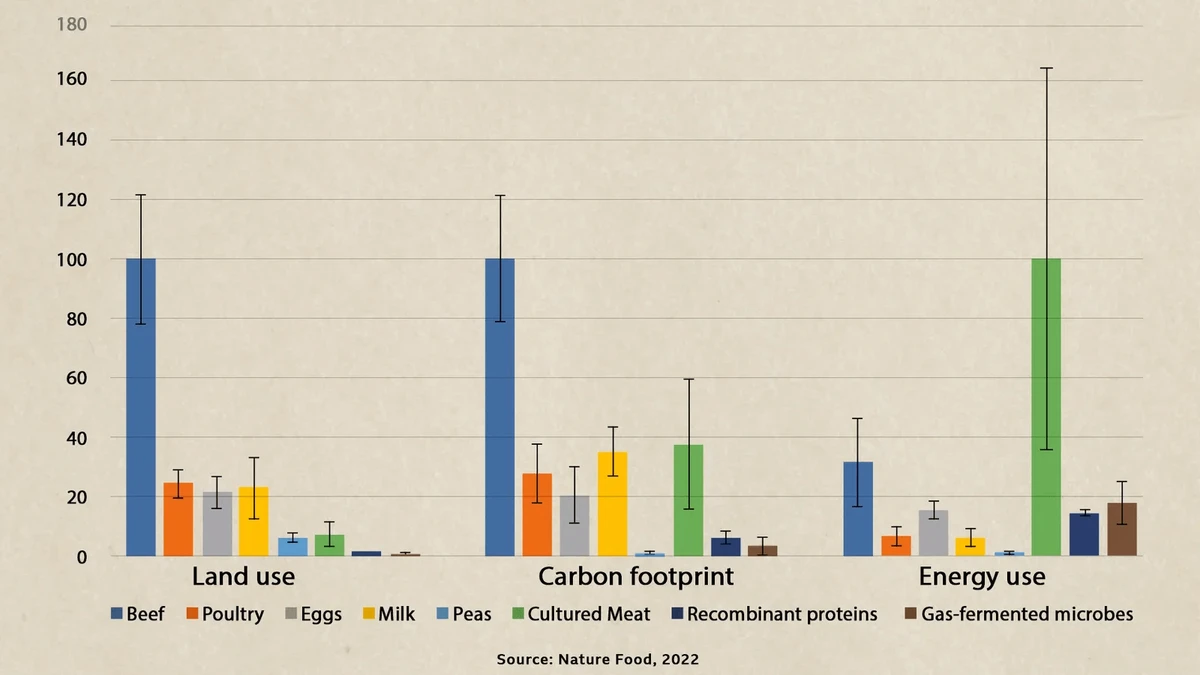
According to [Hanna] Tuomisto’s analysis, completely replacing traditional meat with cultured meat would result in a massive 78-98% reduction in GHG emissions, a 99% reduction in land use and 45% reduction in energy use.
 | Videos | More... |
Video: Nuclear energy will destroy us? Global warming is an existential threat? Chemicals are massacring bees? Donate to the Green Industrial Complex!
 | Bees & Pollinators | More... |

GLP podcast: Science journalism is a mess. Here’s how to fix it

Mosquito massacre: Can we safely tackle malaria with a CRISPR gene drive?

Are we facing an ‘Insect Apocalypse’ caused by ‘intensive, industrial’ farming and agricultural chemicals? The media say yes; Science says ‘no’
 | Infographics | More... |
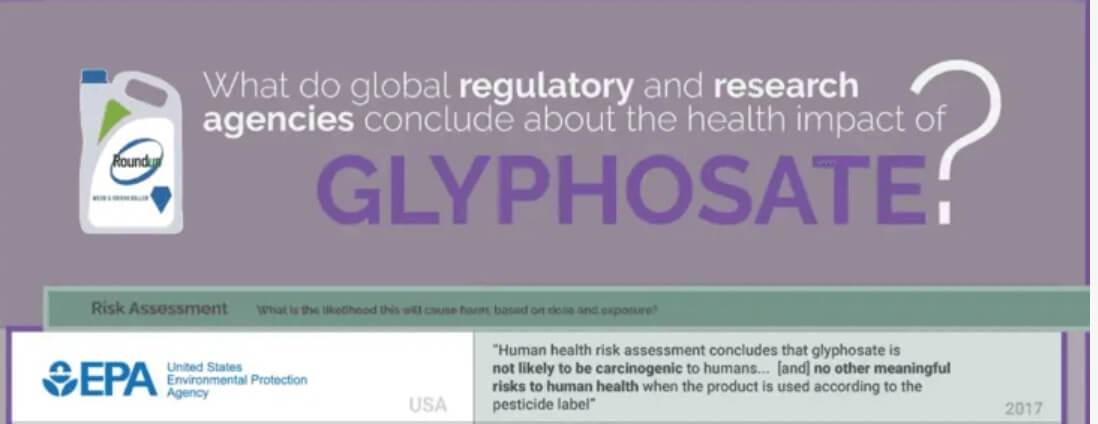
Infographic: Global regulatory and health research agencies on whether glyphosate causes cancer
 | GMO FAQs | More... |

Why is there controversy over GMO foods but not GMO drugs?

How are GMOs labeled around the world?
How does genetic engineering differ from conventional breeding?
 | GLP Profiles | More... |

Alex Jones: Right-wing conspiracy theorist stokes fear of GMOs, pesticides to sell ‘health supplements’

 Viewpoint — Fact checking MAHA mythmakers: How wellness influencers and RFK, Jr. undermine American science and health
 Viewpoint: Video — Big Solar is gobbling up productive agricultural land and hurting farmers yet providing little energy or sustainabilty gains
 Fighting deforestation with CO2: Biotechnology breakthrough creates sustainable palm oil alternative for cosmetics
 Trust issues: What happens when therapists use ChatGPT?
 California, Washington, Oregon forge immunization alliance to safeguard vaccine access against federal undermining
 30-year-old tomato line shows genetic resistance to devastating virus
 The free-range chicken dilemma: Better for birds, but with substantial costs
 ‘You have to treat the brain first’: Rethinking chronic pain with Sanjay Gupta