Switch to more organic farming would lead to higher food prices, lower profits — California Farm Bureau study

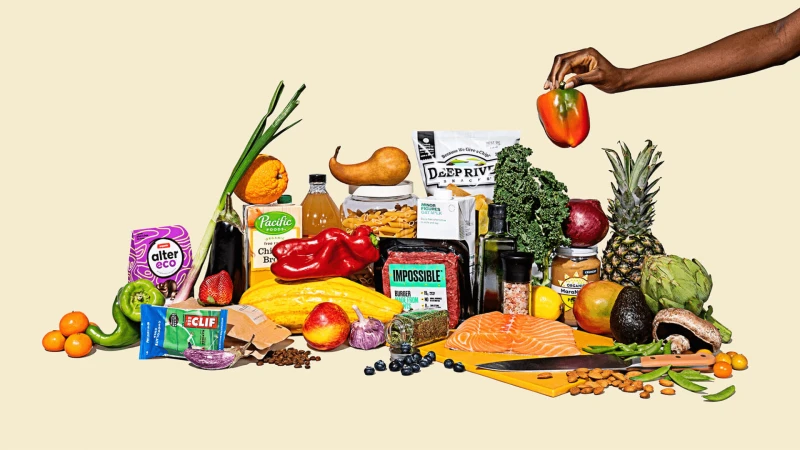
California currently has an estimated 7.35 million acres of irrigated cropland, of which 460,000 acres—or 6%—is certified as organic and not all of that is farmed in any given year.
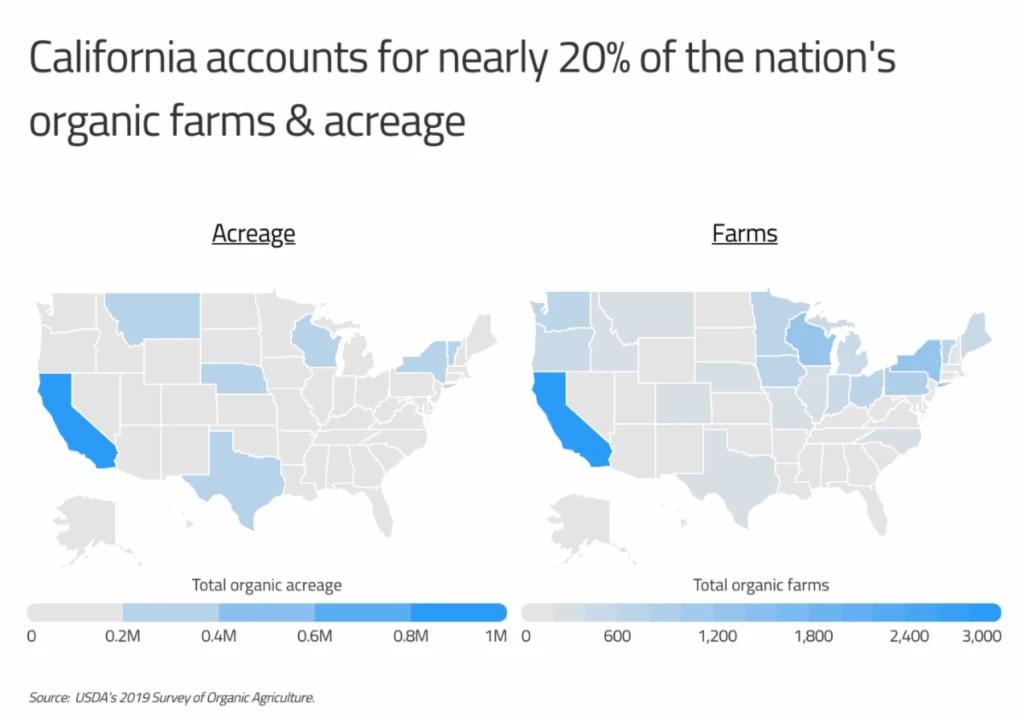
A preliminary analysis by ERA Economics, a Davis-based consultancy specializing in the economics of agriculture and water resources in California, focused on the potential challenges of applying the EU standards to one California crop: tomatoes. The state produces 95% of America’s processing tomatoes and the total annual tomato crop is valued at $1.2 billion.
Only 5% of California’s 228,000 processing tomato acreage is currently needed to meet consumer demand for organic. The study found that reaching 30% organic production by 2030 would cause substantial disruptions to the market. The farmgate price of conventional tomatoes was estimated to rise by more than 11%. And, importantly, the price for organic tomatoes was estimated to fall by 28% at the farmgate level—potentially putting the market price below the cost of production.
That could mean organic farmers would be forced to cease production, sell, or farm something else—a result that could potentially crash the organic market and ultimately drive-up consumer prices. Mandating an increase in organic acreage without a clear connection to consumer demand could result in market disruptions that would hurt farmers, farm employees and consumers alike, the study noted.
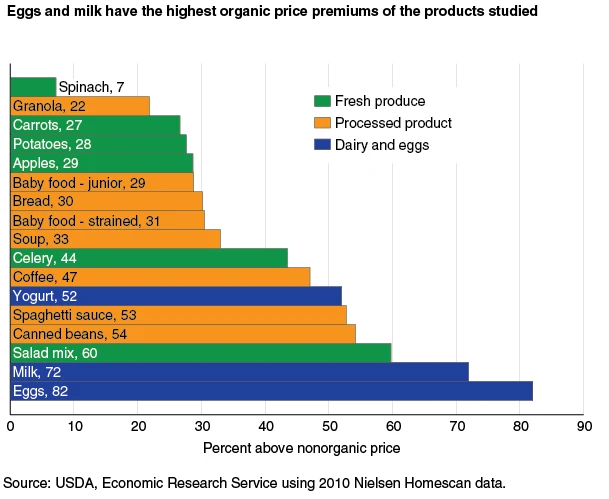
Any initial organic price drop would mostly benefit wealthier consumers who purchase organically grown products, with lower-income customers paying more for traditionally grown products. All tomato farmers, organic or not, could see reduced profits, according to the analysis.
“Farming works when we are able to grow what the consumer actually wants and not what government mandates. California consumers are already struggling to afford higher prices for food than other states because of government mandates and these types of proposals just make things worse,” said Jamie Johansson, president of the California Farm Bureau. “When the government increases the price of food, it acts like a regressive tax, hurting lower- and middle-income families the hardest. At the end of the day, the government needs to let organic markets grow organically.”
The study was funded by Californians for Smart Pesticide Policy, a coalition of farmers and businesses the rely on farmers, focused on educating policymakers on the benefits of modern scientific agricultural tools. It was undertaken on behalf of the California Bountiful Foundation, the 501(c)(3) science and research arm of the California Farm Bureau. The full report may be found at https://www.californiabountifulfoundation.com/research/.
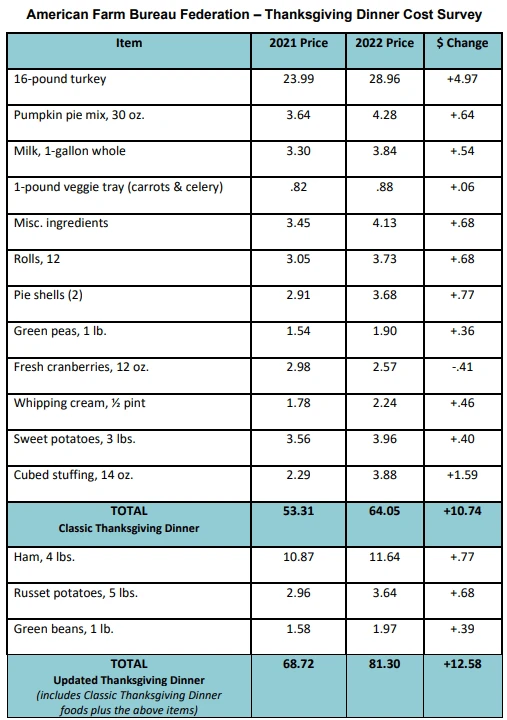
A recently released report (https://www.fb.org/newsroom/farm-bureau-survey-shows-thanksgiving-dinner-cost-up-20) by the American Farm Bureau Federation shows that the average cost of a family’s Thanksgiving dinner—now $64.05—is up 20% from 2021 and nearly 36% from 2020.
The findings by ERA Economics include the following:
- To increase organic acreage for processing tomatoes from an average of 4% to 30% would represent a five- to six-fold increase in current acreage. Tomato growers and processors interviewed for the analysis confirmed industry data regarding consumers’ finite desire to purchase organic tomato products.
- Tomato growers may specialize in organic, non-organic or both, depending on market demands and conditions. By mandating a specific growing method, it could greatly impact the ability of farmers to keep their operation sustainable, both financially and as they encounter other challenges, such as climate change and pests and disease.
- Both conventional and organic farmers of processing tomatoes face risks of economic losses. Conventional growers, with likely reduced acreage, could see a 17% potential downside cost from expected earnings.
- Organic production presents greater risk of crop failure, higher production costs and lower crop yields. As a result, organic farmers are likely to see less stability. They face a potential downside cost of 36% of anticipated net returns, making it potentially unprofitable to grow organic processing tomatoes.
The California Farm Bureau works to protect family farms and ranches on behalf of nearly 29,000 members statewide and as part of a nationwide network of 5.3 million Farm Bureau members.
A version of this article was posted at California Farm Bureau and is used here with permission. Check out California Farm Bureau on Twitter @CAFarmBureau

 | Videos | More... |
Video: Nuclear energy will destroy us? Global warming is an existential threat? Chemicals are massacring bees? Donate to the Green Industrial Complex!
 | Bees & Pollinators | More... |

GLP podcast: Science journalism is a mess. Here’s how to fix it

Mosquito massacre: Can we safely tackle malaria with a CRISPR gene drive?

Are we facing an ‘Insect Apocalypse’ caused by ‘intensive, industrial’ farming and agricultural chemicals? The media say yes; Science says ‘no’
 | Infographics | More... |

Infographic: Global regulatory and health research agencies on whether glyphosate causes cancer
 | GMO FAQs | More... |

Why is there controversy over GMO foods but not GMO drugs?

How are GMOs labeled around the world?

How does genetic engineering differ from conventional breeding?
 | GLP Profiles | More... |

Alex Jones: Right-wing conspiracy theorist stokes fear of GMOs, pesticides to sell ‘health supplements’

 Viewpoint — Fact checking MAHA mythmakers: How wellness influencers and RFK, Jr. undermine American science and health
 Viewpoint: Video — Big Solar is gobbling up productive agricultural land and hurting farmers yet providing little energy or sustainabilty gains
 Fighting deforestation with CO2: Biotechnology breakthrough creates sustainable palm oil alternative for cosmetics
 Trust issues: What happens when therapists use ChatGPT?
 California, Washington, Oregon forge immunization alliance to safeguard vaccine access against federal undermining
 30-year-old tomato line shows genetic resistance to devastating virus
 The free-range chicken dilemma: Better for birds, but with substantial costs
 ‘You have to treat the brain first’: Rethinking chronic pain with Sanjay Gupta