
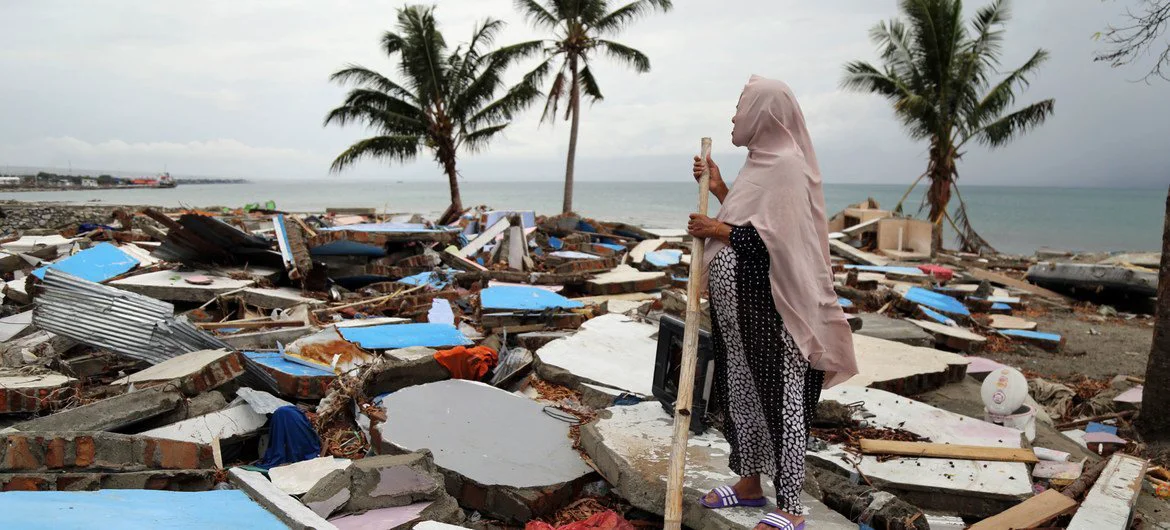
Twenty years on: Indonesia ‘better prepared’ following tsunami | UN News
When Ahmadi, a local storyteller on the Indonesian island of Simeulue, sings a lullaby to his one-year-old grandson, the song is not one about fairies and angels but rather about the precautions to take in a potential tsunami.
The UN’s Office for Coordination of Humanitarian Affairs (OCHA) facilitated the emergency response phase in 2004 and, together with partners, advocated for the importance of building community resilience through disaster education since 2006 based on international best practices.
OCHA, along with other UN agencies, the Red Cross Society, universities, the private sector and NGOs, has remained involved long after the tsunami to support Indonesia and the Province of Aceh in improving disaster risk preparedness.
Structured disaster management
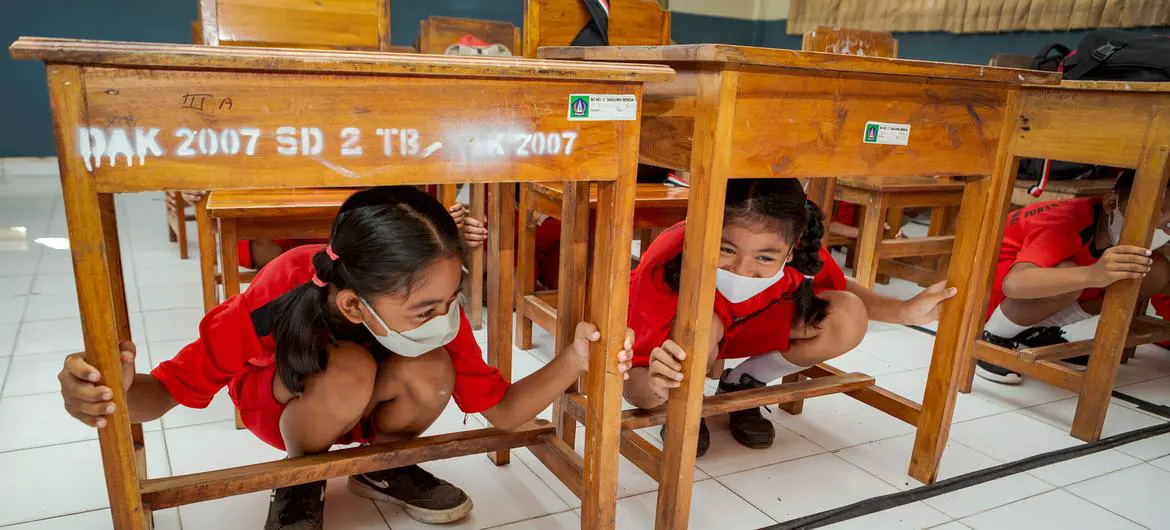
The tsunami has ushered in a new era of a more systematized and structured disaster management across the country, based on international best practices.
Regulations have been put in place to establish and streamline processes in providing health care and food in case of disasters and also to establish local agencies to coordinate humanitarian efforts on the ground.
The National Agency for Disaster Management (BNBP) has strengthened engagement with stakeholders across emergency response, recovery and development to implement global policies.
“We believe that disaster risk reduction, sustainable development and climate change must be addressed holistically,” said Raditya Jayi, Deputy Minister at the National Agency for Disaster Management (BNBP). “Sustainable resilience ensures that we protect our development gains by investing in resilience building.”
The country has mainstreamed the post-2015 frameworks on Sustainable Development (SDGs), the UNFCCCParis Agreement and the Sendai Framework for Disaster Risk Reduction 2015-2030, an international agreement adopted by UN member states at the Third UN World Conference on Disaster Risk Reduction in 2015.
“There have been major strides by the national and provincial governments, supported by multi-stakeholder partners, including community and faith-based organisations, on increased preparedness,” said Thandie Mwape, Head of OCHA Indonesia.
The focal areas include education, and regular tsunami preparedness drills have been mandatory in all the schools in the province since 2010, she said. The implementation of a disaster-safe school programme was followed nationwide in 2012 leading to further increased preparedness.
A siren system has been installed in some provinces and the population educated on what to do in case the alarms go off.
By now, thanks to the progress on disaster management in the country, the Humanitarian Country Team, which is made up of the UN, development partners and local NGOs, is focusing its support to the government on strengthening disaster preparedness capacity and enhancing anticipatory action, as well as the haring of best practices from Indonesia to countries in the region and worldwide.
“Indonesia is a knowledge hub and there is much that the world can learn from here, learnings that will lead to saving lives,” Ms Mwape said.
Support provided by UN agencies in emergency response in Indonesia following the 2004 tsunami
- United Nations Office for the Coordination of Humanitarian Affairs (OCHA):
- Coordinated international response efforts and facilitated the distribution of aid.
- United Nations Children's Fund (UNICEF):
- Provided emergency supplies such as clean water, sanitation, health care, nutrition, and education for children.
- World Food Programme (WFP):
- Delivered food aid to the affected populations and supported logistics and transportation of relief goods
- World Health Organization (WHO):
- Addressed public health concerns, provided medical supplies, and helped rebuild health infrastructure.
- United Nations High Commissioner for Refugees (UNHCR):
- Assisted with shelter and protection for displaced persons.
- United Nations Development Programme (UNDP):
- Supported early recovery efforts, including debris removal, rebuilding infrastructure, and restoring livelihoods.
- International Organization for Migration (IOM):
- Provided support for displaced people, including temporary housing and transportation.
- Food and Agriculture Organization of the United Nations (FAO):
- Assisted with the recovery of agricultural and fisheries sectors to restore food security.
- United Nations Population Fund (UNFPA):
- Focused on reproductive health services and supported women and girls affected by the disaster.
- United Nations Educational, Scientific and Cultural Organization (UNESCO):
- Worked on early warning systems and disaster preparedness education.
- United Nations Office for Project Services (UNOPS):
- Constructed earthquake-resistant schools and health centers for post-tsunami recovery

