Viewpoint: ‘A fool’s errand’ — Here’s why the FDA’s new ‘healthy’ label for foods won’t move the needle on chronic disease

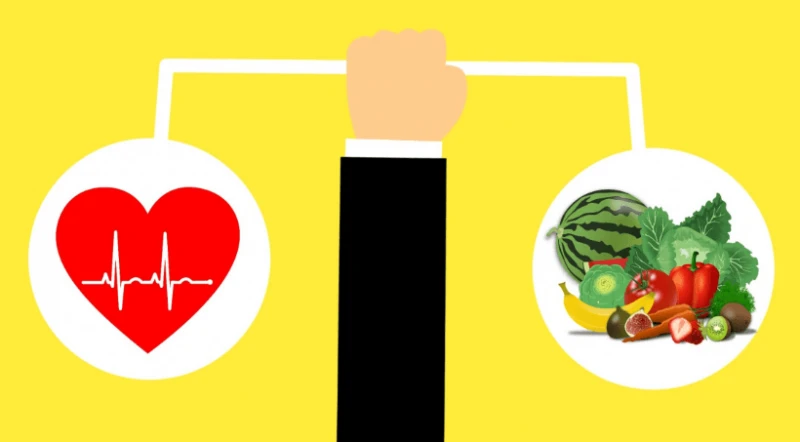
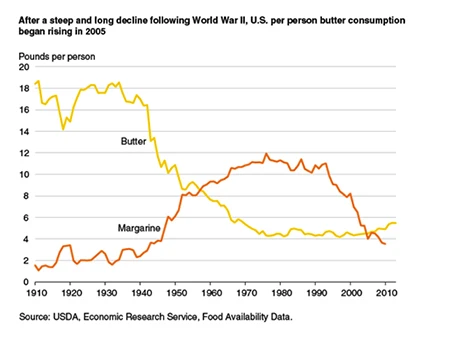
The key word here is can, not does. A recent marketing study noted that labels promoting products, like using the term healthy, increased consumption, especially when placed on the front of packages. But according to the FDA’s proposed rule
Some consumers use nutrient content claims such as ‘healthy’ to inform their food purchases. We estimate that a small number (0 to 0.4 percent of people that try to follow current dietary guidelines) of these consumers would use the ‘healthy’ implied nutrient content claim to make meaningful, long-lasting food purchasing decisions.
According to the regulators, the impact barely moves the needle in reducing chronic disease or promoting health equity.
To qualify as a healthy food, it must contain
- “meaningful amount of food from at least one of the main food groups or subgroups — fruits, vegetables, dairy, whole grains, etc.”
- “… limited amounts of added sugars — which were not previously included in the standards — and sodium: generally speaking the FDA suggested no more than 230 milligrams of sodium, and 2.5 grams of added sugars.”
- “… the new rules will assess the type of fat, with a focus on limiting saturated fat. Because of this change, healthy, high-fat food —like avocados, nuts, seeds, and fish — that previously didn’t qualify as healthy, now will.”
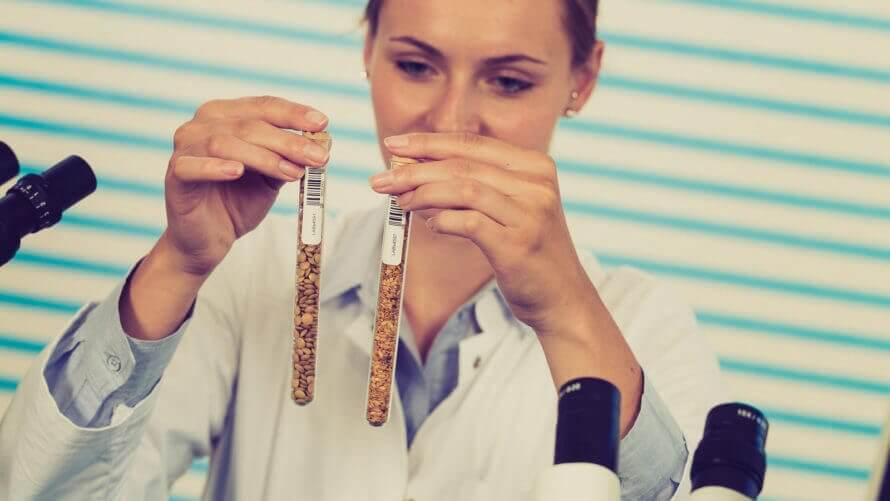
Among the foods which will now be considered healthy are game meats, nuts, and seeds. Since few of us are hunters, let us move on from game meats and consider nuts and seeds. Nuts and seeds are not currently “healthy” because of their high-fat content, although most are “good” unsaturated fats. This mis-measurement of the meaning of healthy came to light in 2015 when the FDA notified Kind, the snack manufacturer, that its product was not healthy due to the high-fat content in its nut-filled snack bars. Kind and others submitted a formal petition for the FDA “to update its regulations around the term healthy when used as a nutrient content claim in food labeling” to reflect current science. The FDA reversed its course in 2016.
According to Kind and now the FDA, nuts, and seeds are healthy foods. Of course, that doesn’t pertain to the roughly 1% of U.S. consumers with allergies to nuts and seeds. For those individuals, no matter what the FDA or Kind say or label, nuts are unhealthy; they may even be lethal. And that, in short, encapsulates the real problem: there is no overall consensus about your healthy diet. There are general agreements for what is healthy for a population, but for precise dietary advice, labels can be misleading.
Is there a difference between nutritious and healthy?
Nutritious food provides the building blocks our metabolisms need to grow, maintain and repair our bodies. Healthy foods support those nutritional needs without inflicting harm. But as in the nut example, nutritious and healthy are not equivalent. That makes a top-down regulatory approach a fool’s errand; food science is not wise enough to fully identify the healthy from the nutritious because it deals with populations, not individuals. But because regulators must regulate, and advocacy groups concerned with our “health” or the market niche of their product must advocate, we are treated to a new cycle sideshow of conflicting beliefs presented as truths. We should be more humble in the face of our ignorance.
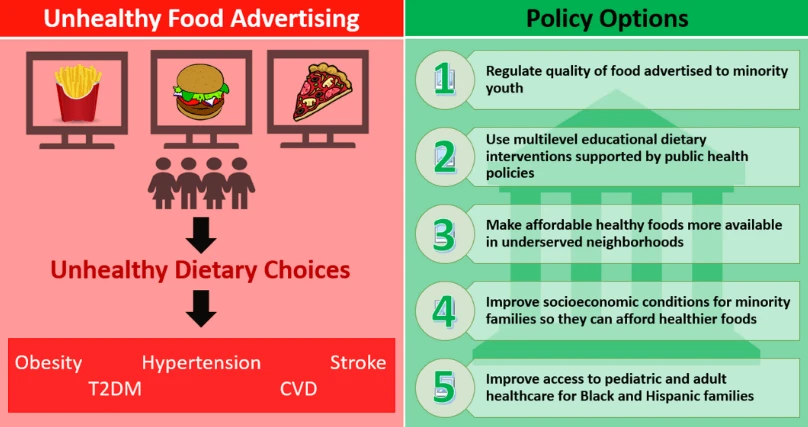
As to advancing health equity, labels are not access or education. Health equity concerning our diet comes from making “healthy” foods both desirable and less expensive; what’s considered a “healthy” diet is often more costly than a simply nutritious one.
Give a Man a Fish, and You Feed Him for a Day.
Teach a Man To Fish, and You Feed Him for a Lifetime.
We have stopped teaching the practical art of choosing and making our meals. We have failed at least two generations because these life skills could either be learned at home or were unimportant compared to more pressing marketable skills. The same holds for the life skill of being active, which only is taught in the context of a game like soccer.
Using regulations to create labels to promote better dietary choices is like giving a man a fish; it is transient at best, and breeds continued dependency upon others to constantly guide you. The real solution lies in teaching our children to “fish” for those foods that are healthy for them.
Dr. Charles Dinerstein, M.D., MBA, FACS is Senior Medical Fellow at the American Council on Science and Health. He has over 25 years of experience as a vascular surgeon. He completed his MBA with distinction in the George Washington University Healthcare MBA program and has served as a consultant to hospitals. While no longer clinically active, he has had his writing featured at KevinMD and Doximity. Follow him on Twitter @CRDtoday
A version of this article was originally posted at American Council on Science and Health and has been reposted here with permission. Any reposting should credit the original author and provide links to both the GLP and the original article. Find American Council on Science and Healthon Twitter @ACSHorg
 | Videos | More... |
Video: Nuclear energy will destroy us? Global warming is an existential threat? Chemicals are massacring bees? Donate to the Green Industrial Complex!
 | Bees & Pollinators | More... |
GLP podcast: Science journalism is a mess. Here’s how to fix it

Mosquito massacre: Can we safely tackle malaria with a CRISPR gene drive?

Are we facing an ‘Insect Apocalypse’ caused by ‘intensive, industrial’ farming and agricultural chemicals? The media say yes; Science says ‘no’
 | Infographics | More... |
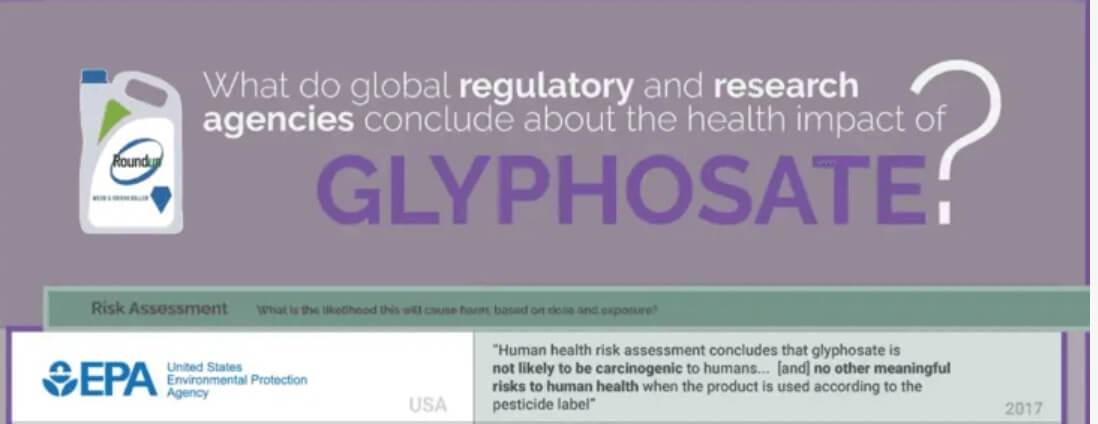
Infographic: Global regulatory and health research agencies on whether glyphosate causes cancer
 | GMO FAQs | More... |

Why is there controversy over GMO foods but not GMO drugs?

How are GMOs labeled around the world?
How does genetic engineering differ from conventional breeding?
 | GLP Profiles | More... |

Alex Jones: Right-wing conspiracy theorist stokes fear of GMOs, pesticides to sell ‘health supplements’

 Viewpoint — Fact checking MAHA mythmakers: How wellness influencers and RFK, Jr. undermine American science and health
 Viewpoint: Video — Big Solar is gobbling up productive agricultural land and hurting farmers yet providing little energy or sustainabilty gains
 Fighting deforestation with CO2: Biotechnology breakthrough creates sustainable palm oil alternative for cosmetics
 Trust issues: What happens when therapists use ChatGPT?
 California, Washington, Oregon forge immunization alliance to safeguard vaccine access against federal undermining
 30-year-old tomato line shows genetic resistance to devastating virus
 The free-range chicken dilemma: Better for birds, but with substantial costs
 ‘You have to treat the brain first’: Rethinking chronic pain with Sanjay Gupta