Viewpoint: Protectionist food trade policies — ‘EU’s obsessively unilateral embrace of organic farming is intransigent, impractical, and inconsiderate of other nations’

As the World Trade Organization is meeting in Geneva… Biden administration officials have taken aim at Europe’s protectionist trade policies.
The US Ambassador to the WTO, Maria Pagán, laid out ‘persistent barriers’ that American goods and services face to enter the European market. High on the agenda were EU food and wine standards, which disproportionately put American producers at a disadvantage.
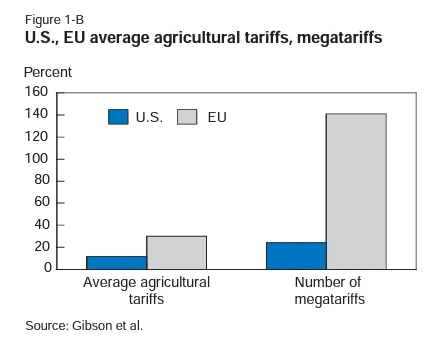
The EU’s ‘Farm to Fork’ strategy – a roadmap to fundamentally reform agricultural policies in the bloc – will only extend those existing transatlantic disputes. The core issue is not just that Brussels is already subsidising its farmers to an even larger extent than the US, but that it now increasingly requires trade partners to adopt its own policies.
A good example is the application of chemical crop protection: last year, the EU announced that it would demand importers refuse any food products treated with neonicotinoid insecticides, despite the fact that EU member countries still have emergency derogations for these chemicals. American farmers use these chemicals to prevent major crop losses through crop-eating insects.
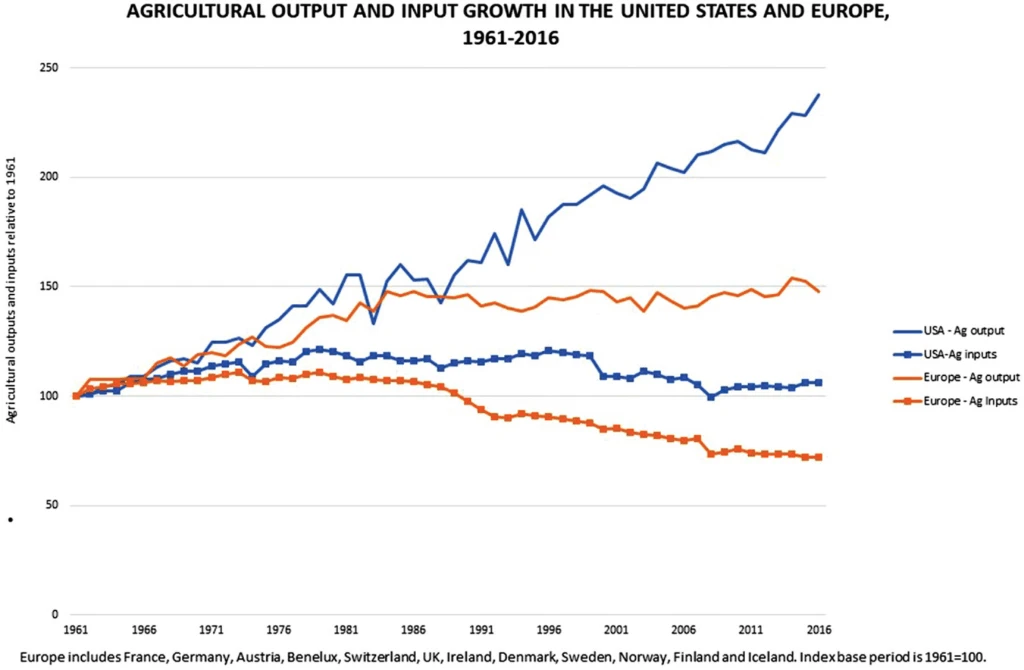
As Pagán rightly noted in Geneva, the EU’s insistence on exporting its production standards to trade partners are ‘not appropriate, effective, or efficient in other parts of the world’, and will reduce the sustainability of food systems for non-European producers. The correct application of crop protection ensures sustainability because it guarantees high yields and thus reduces inputs, which is why the American food model is not merely more productive, but also more sustainable than the European one.
Intriguingly, the EU’s experiment with farm policy is now being called into question in its own parliament. Indeed, the largest grouping in the European Parliament recently withdrew its support of a law that would cut pesticide use in half by 2030, citing concerns over rising food costs, as well as the effects of the policy on farmers. As Europe faces the repercussions of the war in Ukraine, the political goals of a policy dreamt up a decade prior seems like far less of a priority.
From the standpoint of trade policy, the EU is backing itself into a corner. During Donald Trump’s presidency, the US was widely seen as both protectionist and disorganised, with the administration treating the WTO more like a trading floor than a serious international organisation. However, there’s been little sign of a return to ‘normal’ since Joe Biden’s arrival in the White House – although that is not down to the US alone.
For in recent years the EU’s obsessively unilateral approach to agricultural reforms has been exposed as both impractical and inconsiderate of other nations’ food policies. It’s a stance that tells the rest of the world: no new breeding technologies, no conventional farming, no high-yield farming, no ostensible competition with European producers. To give a particularly absurd example, Brussels even restricts the words ‘tawny’, ‘ruby’, ‘reserve’, ‘classic’, and ‘chateau’ on imported bottles of American wine, just in case anyone mistakes them for the more ‘authentic’ European versions.
It is consumers on both sides of the Atlantic who pay the price for the EU’s intransigence and pettiness, with less product choice and higher prices. That’s why it’s encouraging to see the US Trade Representative and other officials holding the line when it comes to their farmers’ interests – and pushing back against Brussels’ protectionists, hyper-cautious, anti-consumer approach to agricultural policy.
Bill Wirtz is the senior policy analyst at the Consumer Choice Center, focusing on new technology, agriculture, trade, and lifestyle regulations. He recently published “No Copy-paste: What not to Emulate from Europe’s Agriculture Regulation.” Follow Bill Wirtz on Twitter @wirtzbill
 | Videos | More... |
Video: Nuclear energy will destroy us? Global warming is an existential threat? Chemicals are massacring bees? Donate to the Green Industrial Complex!
 | Bees & Pollinators | More... |

GLP podcast: Science journalism is a mess. Here’s how to fix it

Mosquito massacre: Can we safely tackle malaria with a CRISPR gene drive?

Are we facing an ‘Insect Apocalypse’ caused by ‘intensive, industrial’ farming and agricultural chemicals? The media say yes; Science says ‘no’
 | Infographics | More... |
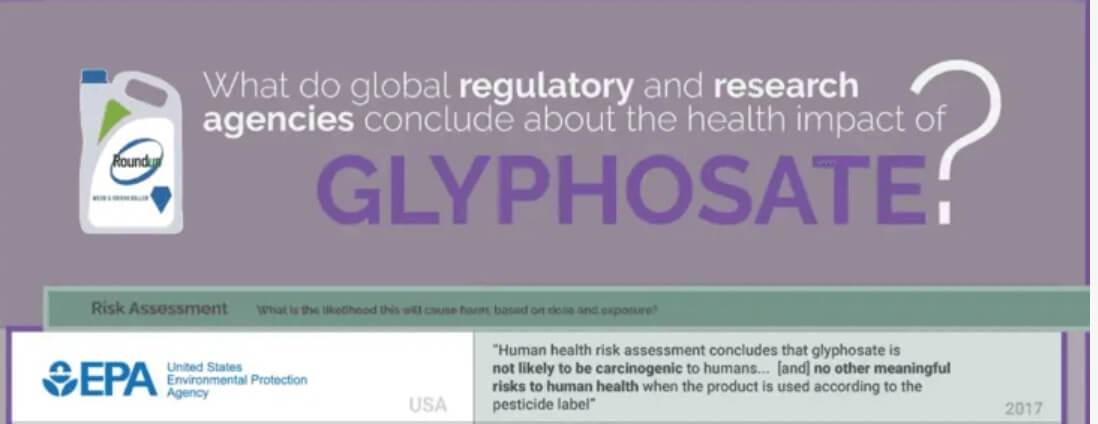
Infographic: Global regulatory and health research agencies on whether glyphosate causes cancer
 | GMO FAQs | More... |

Why is there controversy over GMO foods but not GMO drugs?

How are GMOs labeled around the world?
How does genetic engineering differ from conventional breeding?
 | GLP Profiles | More... |

Alex Jones: Right-wing conspiracy theorist stokes fear of GMOs, pesticides to sell ‘health supplements’

 Viewpoint — Fact checking MAHA mythmakers: How wellness influencers and RFK, Jr. undermine American science and health
 Viewpoint: Video — Big Solar is gobbling up productive agricultural land and hurting farmers yet providing little energy or sustainabilty gains
 Fighting deforestation with CO2: Biotechnology breakthrough creates sustainable palm oil alternative for cosmetics
 Trust issues: What happens when therapists use ChatGPT?
 California, Washington, Oregon forge immunization alliance to safeguard vaccine access against federal undermining
 30-year-old tomato line shows genetic resistance to devastating virus
 The free-range chicken dilemma: Better for birds, but with substantial costs
 ‘You have to treat the brain first’: Rethinking chronic pain with Sanjay Gupta