Viewpoint: What’s killing bees? Reviewing the impact of parasites and climate change on pollinators

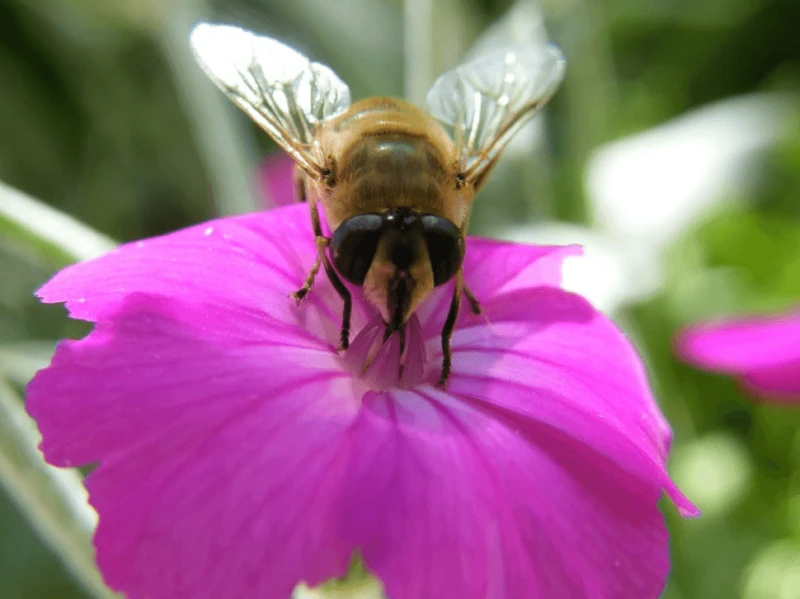
There is no doubt that Honey bees (Apis mellifera) are dying off, with the U.S. reporting a loss of 43% of bee colonies over one year. As The New York Times has reported, almonds, completely dependent upon bees for pollination, use 30,000,000,000 bees annually. That requires 2,000,000 hives. The simple truth is that bees are ranched and moved about the country to pollinate crops. To California to pollinate almonds in February; March to the Pacific Northwest to pollinate plums, cherries, and apples; in April, they arrive in Maine to pollinate blueberries, then down to Florida to help out citrus, finally relaxing in the Dakotas with clover and sunflowers in May.
The study in Nature used a range of data to describe the losses of our bee “livestock” and identify the causes. First, honeybee losses are largely seasonal; most deaths are during the wintering-over period before that initial push into California. They tend to diminish during the spring, the active pollination periods through May. Then there continues to be colony attrition during their time among the clover and other field crops in the Dakotas. Three primary causes of death are parasites and pathogens, pesticides, and climate. The Nature study gives us their relative contributions.
Pests – Varroa destructor
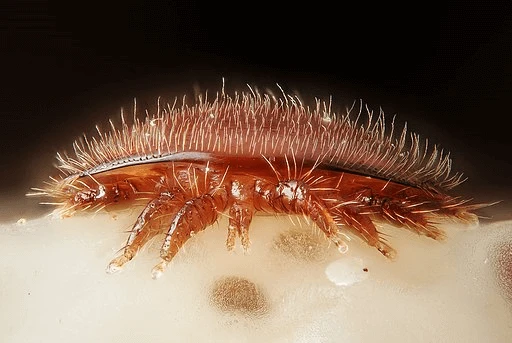
V. Destructor is a parasitic mite that latches onto a bee and derives its energy by sucking fat from the bee. They reproduce within the brood cells of the colony and spread, weakening the bees and ultimately killing the colony. Populations of V. Destructor rise and fall with colony populations, exerting their greatest effect in the late fall and the overwintering.
Pesticides
As with all creatures, the dose makes the poison, and bees are susceptible to pesticides sprayed onto crops and those spread on the ground that finds their way into the plant’s leaves and pollen. Neonicotinoids, derived from nicotine, are considered the “bad actor” in the loss of honey bees and colony collapse.
Climate
Bees are affected by the weather, “affecting the availability of forage, thermoregulatory ability during winter, and the initial brood rearing time during [the] spring. The study provides some fascinating information concerning climate and its change. Rather than simply consider temperature averages, the researchers looked at two other measures of the centrality of data. [1] They looked at how the temperatures skewed, accumulated “at one end or the other of the observed range of minimum temperatures,” and at kurtosis, a measure of how extreme the values are in those skewed ends.
The researchers put the data together into a regression model. I am using the coefficients in that model as the relative contribution of these three factors. For the sake of this discussion, pests will be the reference value for the losses of honey bees. Pesticides contributed 17% as much as V. destructor – not negligible, possibly preventable, but certainly not the “bad actor” it has been depicted. The standard range of minimum temperatures contributed 25%, but temperature extremes, those climactic changes contributed 90% as much as the pests. More importantly, the extremes in those changes were almost three-fold greater as a driver of honey bee loss when present.
Pests and climate had more to do with honey bee deaths than pesticides. Remember, honey bees are livestock, kept in structures humans built, just like chicken coops where disease can quickly spread. And bees move about just as we move cattle from one climate to another. Is it possible that humans “raising” honey bees are more of a problem than we had previously thought?
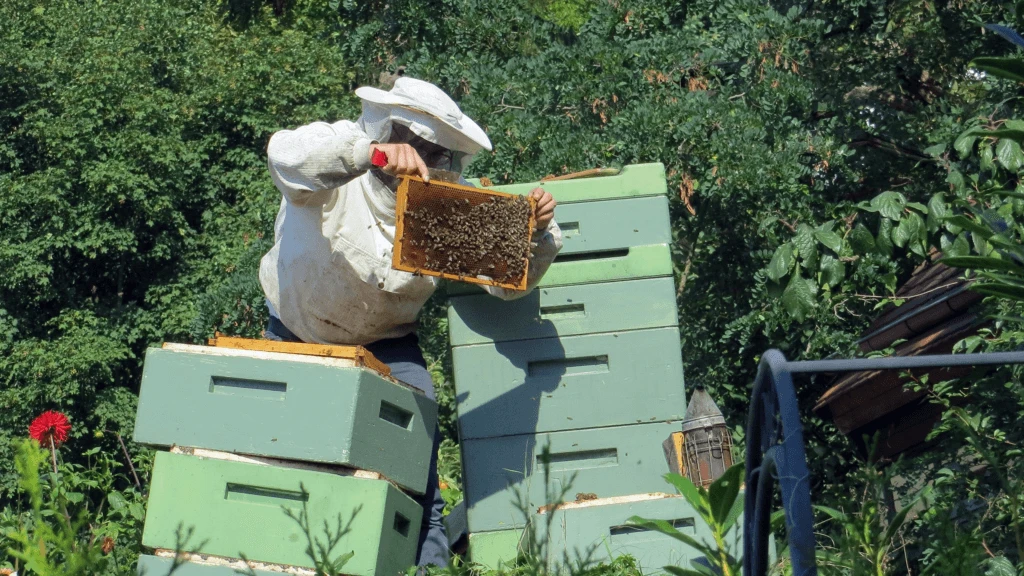
Honey bee ranchers do their best to protect the colonies from pests. The states with the least losses, Montana and Wyoming, had the most stable climate; states with the highest losses, like New Mexico, had the highest and most extreme variations. A stable climate allows beekeepers more predictability in creating the proper housing for their charges.
Our study suggests that, on a large spatio-temporal scale, parasites, extreme weather events and pesticides are among the potential drivers of honey bee colony loss.
Colony collapse and loss of honey bees are due to more than pesticides. It is entangled with our changing climate and with our agricultural methods. Honey bees are another form of livestock, and how we house and move them is just as manageable as how we deploy pesticides.
Notes:
[1] If you consider a bell-shaped curve, the average is a good representation of the most common central value. But as the curve is distorted towards one end or the other, the average is no longer as good a representation of that central value.Dr. Charles Dinerstein, M.D., MBA, FACS is Senior Medical Fellow at the American Council on Science and Health. He has over 25 years of experience as a vascular surgeon. He completed his MBA with distinction in the George Washington University Healthcare MBA program and has served as a consultant to hospitals. While no longer clinically active, he has had his writing featured at KevinMD and Doximity. Follow him on Twitter @CRDtoday
A version of this article was originally posted at American Council on Science and Health and has been reposted here with permission. Any reposting should credit the original author and provide links to both the GLP and the original article. Find American Council on Science and Healthon Twitter @ACSHorg
 | Videos | More... |
Video: Nuclear energy will destroy us? Global warming is an existential threat? Chemicals are massacring bees? Donate to the Green Industrial Complex!
 | Bees & Pollinators | More... |

GLP podcast: Science journalism is a mess. Here’s how to fix it

Mosquito massacre: Can we safely tackle malaria with a CRISPR gene drive?

Are we facing an ‘Insect Apocalypse’ caused by ‘intensive, industrial’ farming and agricultural chemicals? The media say yes; Science says ‘no’
 | Infographics | More... |
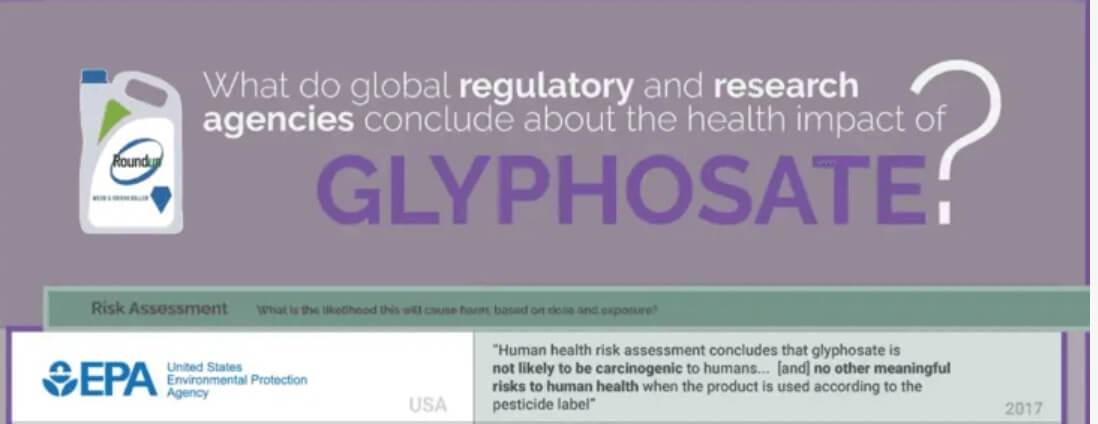
Infographic: Global regulatory and health research agencies on whether glyphosate causes cancer
 | GMO FAQs | More... |

Why is there controversy over GMO foods but not GMO drugs?

How are GMOs labeled around the world?

How does genetic engineering differ from conventional breeding?
 | GLP Profiles | More... |

Alex Jones: Right-wing conspiracy theorist stokes fear of GMOs, pesticides to sell ‘health supplements’

 Viewpoint — Fact checking MAHA mythmakers: How wellness influencers and RFK, Jr. undermine American science and health
 Viewpoint: Video — Big Solar is gobbling up productive agricultural land and hurting farmers yet providing little energy or sustainabilty gains
 Fighting deforestation with CO2: Biotechnology breakthrough creates sustainable palm oil alternative for cosmetics
 Trust issues: What happens when therapists use ChatGPT?
 California, Washington, Oregon forge immunization alliance to safeguard vaccine access against federal undermining
 30-year-old tomato line shows genetic resistance to devastating virus
 The free-range chicken dilemma: Better for birds, but with substantial costs
 ‘You have to treat the brain first’: Rethinking chronic pain with Sanjay Gupta