In a bid to revive dying crops in Niger Republic, scientists are using a mineral-rich, low-cost and easily accessible fertilizer – human urine.
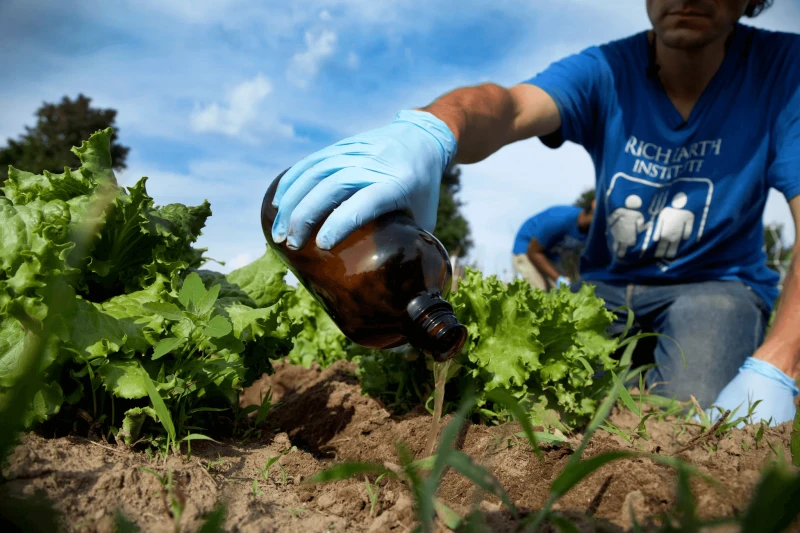
A team of researchers from Niger, the UK and Germany are combining Oga, sanitized urine, with organic manure to increase yield of pearl millet panicle, which is a robust, quick growing summer cereal.
The mixture was tested on farms from 2014 through 2016, showing a 30 percent increase in crops than compared to farms that did not fertilize with urine.
The only downfall, according to farmers using the new fertilizer, is the smell.
One farmer said in a video: ‘The only problem is the odor is not exactly good.
‘I always cover my nose whenever I apply urine and it is not a big problem,’ he continued while wrapping a scarf around his nose and mouth.
Niger, located in West Africa, has intense droughts due to climate change, which is resulting in dying crops and hungry people.
The issue is so extreme that in 2014 farmers had no choice but to use dangerous, black market pesticides, as nothing else was available.
However, science has stepped in to deliver a safe and affordable option.
Although the idea of using human urine to fertilize crops sounds disgusting, it has been used for thousands years due to its nutrients – phosphorus, nitrogen and potassium – that are the same found in commercial fertilizers.
This is an excerpt. Read the original post here
















 Viewpoint — Fact checking MAHA mythmakers: How wellness influencers and RFK, Jr. undermine American science and health
 Viewpoint: Video — Big Solar is gobbling up productive agricultural land and hurting farmers yet providing little energy or sustainabilty gains
 Fighting deforestation with CO2: Biotechnology breakthrough creates sustainable palm oil alternative for cosmetics
 Trust issues: What happens when therapists use ChatGPT?
 California, Washington, Oregon forge immunization alliance to safeguard vaccine access against federal undermining
 30-year-old tomato line shows genetic resistance to devastating virus
 The free-range chicken dilemma: Better for birds, but with substantial costs
 ‘You have to treat the brain first’: Rethinking chronic pain with Sanjay Gupta